

develop innovative consciousness, logical thinking abilities
toward the developments and trends in civil engineering
field. Therefore, it is well needed to adopt appropriate
teaching and learning methods by educators to develop
student’s understanding and learning capabilities. Consequently, the selected module was delivered through flipped
teaching methodology along with free online interactive
tools. This approach includes various types of pre-class,
in-class and post-class activities.
Required lecture materials were made available to students well in advance to acquire sufficient knowledge outside the classroom. Students were instructed to attempt
quizzes related to lecture resources helped the educator to
assess students’ understanding of the course content for the
respective class. In addition to this pre-classroom activity,
various interactive platforms were used to engage students
with online lecture videos. These e-tools allowed educator to
ask cognitive questions during the video which promoted
students’ interest to watch lecture videos completely. Various in-class activities were organized to enhance students’
learning experience like Think, Pair, and Share which
encouraged students to share their understanding of the
course content in their personal voice and developed communication among students. Furthermore, brainstorming
interactive activities on a certain topic were conducted in
group sessions to promote teamwork and developed learning
from other students. At the end of the classroom session,
Kahoot and Socrative were used to assess student’s wisdom
on the content delivered through various pre-class and
in-class activities. Periodically post-class activities like
quizzes and problem-solving were given to students and
especially student qualitative feedback was collected
through Padlet and SurveyMonkey to evaluate the effectiveness of the practices.
To assure the validity of the data and to enhance the
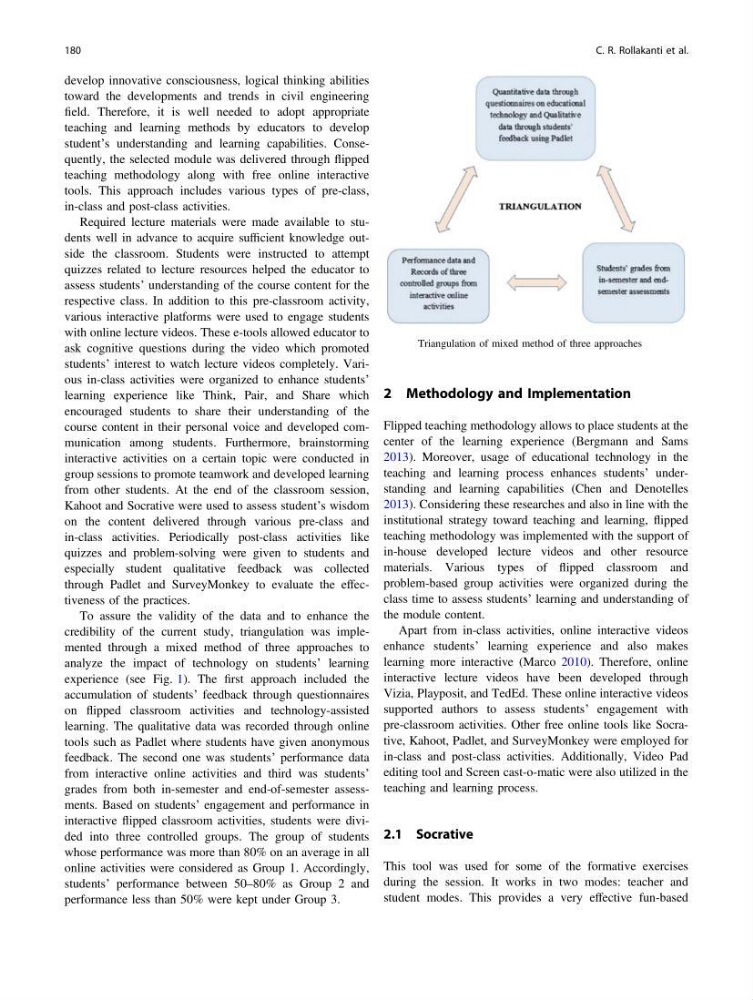
credibility of the current study, triangulation was implemented through a mixed method of three approaches to
analyze the impact of technology on students’ learning
experience (see Fig. 1). The first approach included the
accumulation of students’ feedback through questionnaires
on flipped classroom activities and technology-assisted
learning. The qualitative data was recorded through online
tools such as Padlet where students have given anonymous
feedback. The second one was students’ performance data
from interactive online activities and third was students’
grades from both in-semester and end-of-semester assessments. Based on students’ engagement and performance in
interactive flipped classroom activities, students were divided into three controlled groups. The group of students
whose performance was more than 80% on an average in all
online activities were considered as Group 1. Accordingly,
students’ performance between 50–80% as Group 2 and
performance less than 50% were kept under Group 3.
2 Methodology and Implementation
Flipped teaching methodology allows to place students at the
center of the learning experience (Bergmann and Sams
2013). Moreover, usage of educational technology in the
teaching and learning process enhances students’ understanding and learning capabilities (Chen and Denotelles
2013). Considering these researches and also in line with the
institutional strategy toward teaching and learning, flipped
teaching methodology was implemented with the support of
in-house developed lecture videos and other resource
materials. Various types of flipped classroom and
problem-based group activities were organized during the
class time to assess students’ learning and understanding of
the module content.
Apart from in-class activities, online interactive videos
enhance students’ learning experience and also makes
learning more interactive (Marco 2010). Therefore, online
interactive lecture videos have been developed through
Vizia, Playposit, and TedEd. These online interactive videos
supported authors to assess students’ engagement with
pre-classroom activities. Other free online tools like Socrative, Kahoot, Padlet, and SurveyMonkey were employed for
in-class and post-class activities. Additionally, Video Pad
editing tool and Screen cast-o-matic were also utilized in the
teaching and learning process.
2.1 Socrative
This tool was used for some of the formative exercises
during the session. It works in two modes: teacher and
student modes. This provides a very effective fun-based
Fig. 1 Triangulation of mixed method of three approaches
180
C. R. Rollakanti et al.
toward the developments and trends in civil engineering
field. Therefore, it is well needed to adopt appropriate
teaching and learning methods by educators to develop
student’s understanding and learning capabilities. Consequently, the selected module was delivered through flipped
teaching methodology along with free online interactive
tools. This approach includes various types of pre-class,
in-class and post-class activities.
Required lecture materials were made available to students well in advance to acquire sufficient knowledge outside the classroom. Students were instructed to attempt
quizzes related to lecture resources helped the educator to
assess students’ understanding of the course content for the
respective class. In addition to this pre-classroom activity,
various interactive platforms were used to engage students
with online lecture videos. These e-tools allowed educator to
ask cognitive questions during the video which promoted
students’ interest to watch lecture videos completely. Various in-class activities were organized to enhance students’
learning experience like Think, Pair, and Share which
encouraged students to share their understanding of the
course content in their personal voice and developed communication among students. Furthermore, brainstorming
interactive activities on a certain topic were conducted in
group sessions to promote teamwork and developed learning
from other students. At the end of the classroom session,
Kahoot and Socrative were used to assess student’s wisdom
on the content delivered through various pre-class and
in-class activities. Periodically post-class activities like
quizzes and problem-solving were given to students and
especially student qualitative feedback was collected
through Padlet and SurveyMonkey to evaluate the effectiveness of the practices.
To assure the validity of the data and to enhance the
credibility of the current study, triangulation was implemented through a mixed method of three approaches to
analyze the impact of technology on students’ learning
experience (see Fig. 1). The first approach included the
accumulation of students’ feedback through questionnaires
on flipped classroom activities and technology-assisted
learning. The qualitative data was recorded through online
tools such as Padlet where students have given anonymous
feedback. The second one was students’ performance data
from interactive online activities and third was students’
grades from both in-semester and end-of-semester assessments. Based on students’ engagement and performance in
interactive flipped classroom activities, students were divided into three controlled groups. The group of students
whose performance was more than 80% on an average in all
online activities were considered as Group 1. Accordingly,
students’ performance between 50–80% as Group 2 and
performance less than 50% were kept under Group 3.
2 Methodology and Implementation
Flipped teaching methodology allows to place students at the
center of the learning experience (Bergmann and Sams
2013). Moreover, usage of educational technology in the
teaching and learning process enhances students’ understanding and learning capabilities (Chen and Denotelles
2013). Considering these researches and also in line with the
institutional strategy toward teaching and learning, flipped
teaching methodology was implemented with the support of
in-house developed lecture videos and other resource
materials. Various types of flipped classroom and
problem-based group activities were organized during the
class time to assess students’ learning and understanding of
the module content.
Apart from in-class activities, online interactive videos
enhance students’ learning experience and also makes
learning more interactive (Marco 2010). Therefore, online
interactive lecture videos have been developed through
Vizia, Playposit, and TedEd. These online interactive videos
supported authors to assess students’ engagement with
pre-classroom activities. Other free online tools like Socrative, Kahoot, Padlet, and SurveyMonkey were employed for
in-class and post-class activities. Additionally, Video Pad
editing tool and Screen cast-o-matic were also utilized in the
teaching and learning process.
2.1 Socrative
This tool was used for some of the formative exercises
during the session. It works in two modes: teacher and
student modes. This provides a very effective fun-based
Fig. 1 Triangulation of mixed method of three approaches
180
C. R. Rollakanti et al.