

2 Systematic Descriptions
45
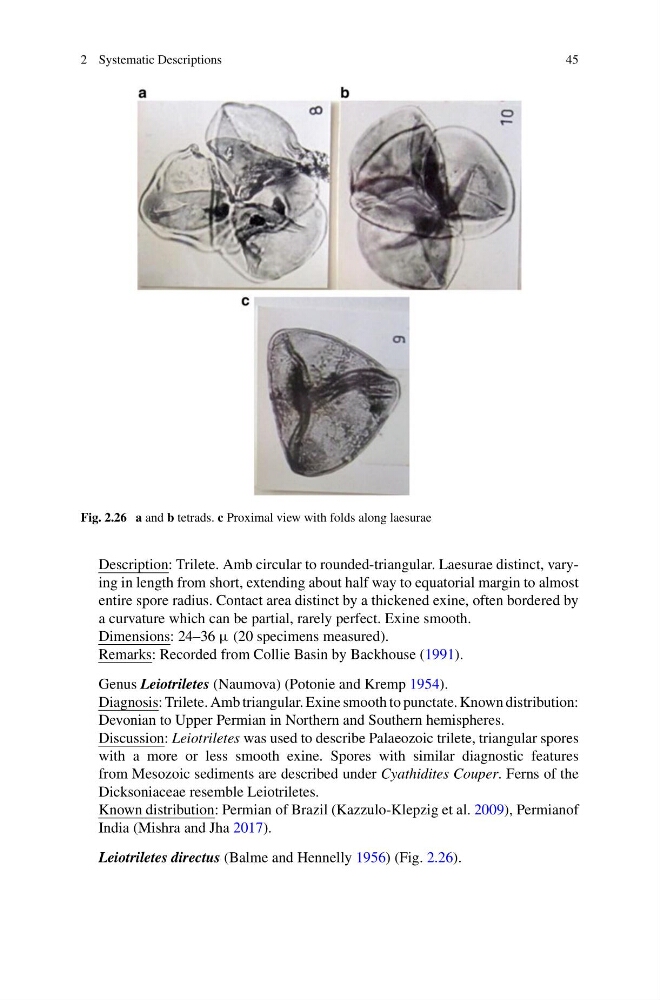
Fig. 2.26 a and b tetrads. c Proximal view with folds along laesurae
Description: Trilete. Amb circular to rounded-triangular. Laesurae distinct, varying in length from short, extending about half way to equatorial margin to almost
entire spore radius. Contact area distinct by a thickened exine, often bordered by
a curvature which can be partial, rarely perfect. Exine smooth.
Dimensions: 24–36 µ (20 specimens measured).
Remarks: Recorded from Collie Basin by Backhouse (1991).
Genus Leiotriletes (Naumova) (Potonie and Kremp 1954).
Diagnosis: Trilete. Amb triangular. Exine smooth to punctate. Known distribution:
Devonian to Upper Permian in Northern and Southern hemispheres.
Discussion: Leiotriletes was used to describe Palaeozoic trilete, triangular spores
with a more or less smooth exine. Spores with similar diagnostic features
from Mesozoic sediments are described under Cyathidites Couper. Ferns of the
Dicksoniaceae resemble Leiotriletes.
Known distribution: Permian of Brazil (Kazzulo-Klepzig et al. 2009), Permianof
India (Mishra and Jha 2017).
Leiotriletes directus (Balme and Hennelly 1956) (Fig. 2.26).
45
Fig. 2.26 a and b tetrads. c Proximal view with folds along laesurae
Description: Trilete. Amb circular to rounded-triangular. Laesurae distinct, varying in length from short, extending about half way to equatorial margin to almost
entire spore radius. Contact area distinct by a thickened exine, often bordered by
a curvature which can be partial, rarely perfect. Exine smooth.
Dimensions: 24–36 µ (20 specimens measured).
Remarks: Recorded from Collie Basin by Backhouse (1991).
Genus Leiotriletes (Naumova) (Potonie and Kremp 1954).
Diagnosis: Trilete. Amb triangular. Exine smooth to punctate. Known distribution:
Devonian to Upper Permian in Northern and Southern hemispheres.
Discussion: Leiotriletes was used to describe Palaeozoic trilete, triangular spores
with a more or less smooth exine. Spores with similar diagnostic features
from Mesozoic sediments are described under Cyathidites Couper. Ferns of the
Dicksoniaceae resemble Leiotriletes.
Known distribution: Permian of Brazil (Kazzulo-Klepzig et al. 2009), Permianof
India (Mishra and Jha 2017).
Leiotriletes directus (Balme and Hennelly 1956) (Fig. 2.26).