

32
2 Systematic Descriptions
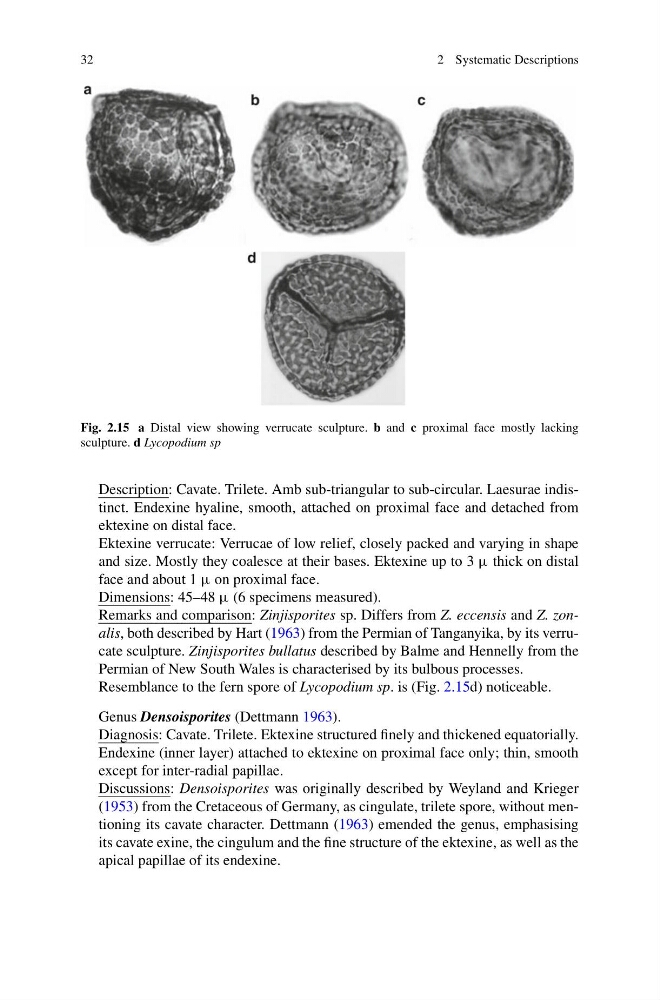
Fig. 2.15 a Distal view showing verrucate sculpture. b and c proximal face mostly lacking
sculpture. d Lycopodium sp
Description: Cavate. Trilete. Amb sub-triangular to sub-circular. Laesurae indistinct. Endexine hyaline, smooth, attached on proximal face and detached from
ektexine on distal face.
Ektexine verrucate: Verrucae of low relief, closely packed and varying in shape
and size. Mostly they coalesce at their bases. Ektexine up to 3 µ thick on distal
face and about 1 µ on proximal face.
Dimensions: 45–48 µ (6 specimens measured).
Remarks and comparison: Zinjisporites sp. Differs from Z. eccensis and Z. zonalis, both described by Hart (1963) from the Permian of Tanganyika, by its verrucate sculpture. Zinjisporites bullatus described by Balme and Hennelly from the
Permian of New South Wales is characterised by its bulbous processes.
Resemblance to the fern spore of Lycopodium sp. is (Fig. 2.15d) noticeable.
Genus Densoisporites (Dettmann 1963).
Diagnosis: Cavate. Trilete. Ektexine structured finely and thickened equatorially.
Endexine (inner layer) attached to ektexine on proximal face only; thin, smooth
except for inter-radial papillae.
Discussions: Densoisporites was originally described by Weyland and Krieger
(1953) from the Cretaceous of Germany, as cingulate, trilete spore, without mentioning its cavate character. Dettmann (1963) emended the genus, emphasising
its cavate exine, the cingulum and the fine structure of the ektexine, as well as the
apical papillae of its endexine.
2 Systematic Descriptions
Fig. 2.15 a Distal view showing verrucate sculpture. b and c proximal face mostly lacking
sculpture. d Lycopodium sp
Description: Cavate. Trilete. Amb sub-triangular to sub-circular. Laesurae indistinct. Endexine hyaline, smooth, attached on proximal face and detached from
ektexine on distal face.
Ektexine verrucate: Verrucae of low relief, closely packed and varying in shape
and size. Mostly they coalesce at their bases. Ektexine up to 3 µ thick on distal
face and about 1 µ on proximal face.
Dimensions: 45–48 µ (6 specimens measured).
Remarks and comparison: Zinjisporites sp. Differs from Z. eccensis and Z. zonalis, both described by Hart (1963) from the Permian of Tanganyika, by its verrucate sculpture. Zinjisporites bullatus described by Balme and Hennelly from the
Permian of New South Wales is characterised by its bulbous processes.
Resemblance to the fern spore of Lycopodium sp. is (Fig. 2.15d) noticeable.
Genus Densoisporites (Dettmann 1963).
Diagnosis: Cavate. Trilete. Ektexine structured finely and thickened equatorially.
Endexine (inner layer) attached to ektexine on proximal face only; thin, smooth
except for inter-radial papillae.
Discussions: Densoisporites was originally described by Weyland and Krieger
(1953) from the Cretaceous of Germany, as cingulate, trilete spore, without mentioning its cavate character. Dettmann (1963) emended the genus, emphasising
its cavate exine, the cingulum and the fine structure of the ektexine, as well as the
apical papillae of its endexine.