

ANNEXES
80
Price estimation
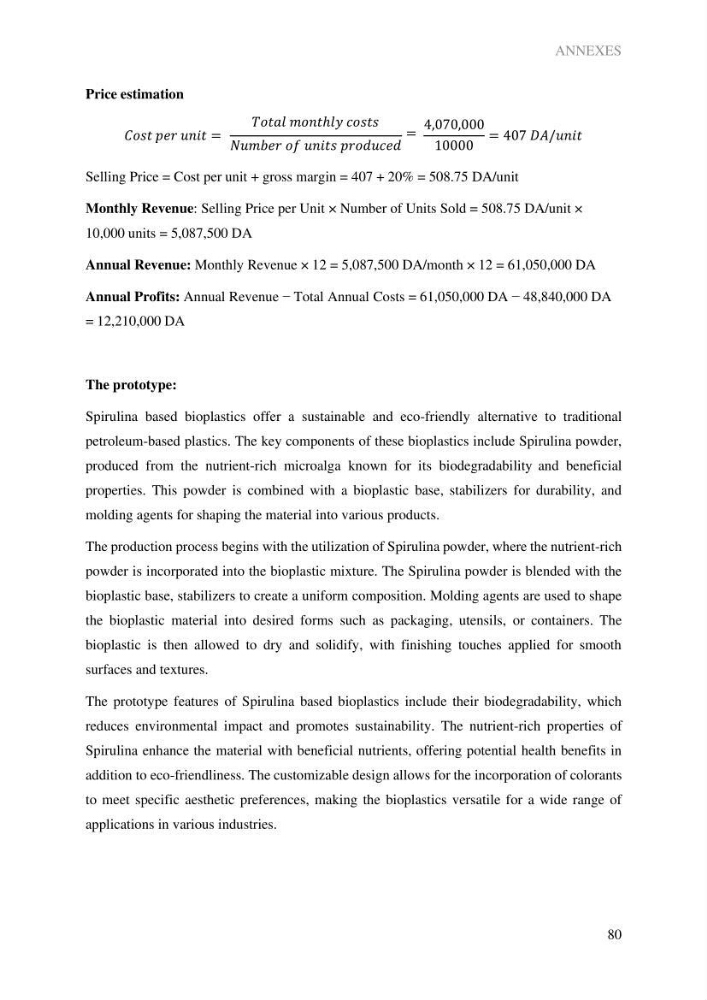
í µí°¶í µí±í µí± í µí±¡ í µí±í µí±í µí± í µí±¢í µí±í µí±í µí±¡ =
í µí±í µí±í µí±¡í µí±í µí± í µí±í µí±í µí±í µí±¡ℎí µí±í µí±¦ í µí±í µí±í µí± í µí±¡í µí±
=
í µí±í µí±¢í µí±í µí±í µí±í µí± í µí±í µí± í µí±¢í µí±í µí±í µí±¡í µí± í µí±í µí±í µí±í µí±í µí±¢í µí±í µí±í µí±
4,070,000
10000
= 407 í µí°·í µí°´/í µí±¢í µí±í µí±í µíSelling Price = Cost per unit + gross margin = 407 + 20% = 508.75 DA/unit
Monthly Revenue: Selling Price per Unit × Number of Units Sold = 508.75 DA/unit ×
10,000 units = 5,087,500 DA
Annual Revenue: Monthly Revenue × 12 = 5,087,500 DA/month × 12 = 61,050,000 DA
Annual Profits: Annual Revenue − Total Annual Costs = 61,050,000 DA − 48,840,000 DA
= 12,210,000 DA
The prototype:
Spirulina based bioplastics offer a sustainable and eco-friendly alternative to traditional
petroleum-based plastics. The key components of these bioplastics include Spirulina powder,
produced from the nutrient-rich microalga known for its biodegradability and beneficial
properties. This powder is combined with a bioplastic base, stabilizers for durability, and
molding agents for shaping the material into various products.
The production process begins with the utilization of Spirulina powder, where the nutrient-rich
powder is incorporated into the bioplastic mixture. The Spirulina powder is blended with the
bioplastic base, stabilizers to create a uniform composition. Molding agents are used to shape
the bioplastic material into desired forms such as packaging, utensils, or containers. The
bioplastic is then allowed to dry and solidify, with finishing touches applied for smooth
surfaces and textures.
The prototype features of Spirulina based bioplastics include their biodegradability, which
reduces environmental impact and promotes sustainability. The nutrient-rich properties of
Spirulina enhance the material with beneficial nutrients, offering potential health benefits in
addition to eco-friendliness. The customizable design allows for the incorporation of colorants
to meet specific aesthetic preferences, making the bioplastics versatile for a wide range of
applications in various industries.
80
Price estimation
í µí°¶í µí±í µí± í µí±¡ í µí±í µí±í µí± í µí±¢í µí±í µí±í µí±¡ =
í µí±í µí±í µí±¡í µí±í µí± í µí±í µí±í µí±í µí±¡ℎí µí±í µí±¦ í µí±í µí±í µí± í µí±¡í µí±
=
í µí±í µí±¢í µí±í µí±í µí±í µí± í µí±í µí± í µí±¢í µí±í µí±í µí±¡í µí± í µí±í µí±í µí±í µí±í µí±¢í µí±í µí±í µí±
4,070,000
10000
= 407 í µí°·í µí°´/í µí±¢í µí±í µí±í µíSelling Price = Cost per unit + gross margin = 407 + 20% = 508.75 DA/unit
Monthly Revenue: Selling Price per Unit × Number of Units Sold = 508.75 DA/unit ×
10,000 units = 5,087,500 DA
Annual Revenue: Monthly Revenue × 12 = 5,087,500 DA/month × 12 = 61,050,000 DA
Annual Profits: Annual Revenue − Total Annual Costs = 61,050,000 DA − 48,840,000 DA
= 12,210,000 DA
The prototype:
Spirulina based bioplastics offer a sustainable and eco-friendly alternative to traditional
petroleum-based plastics. The key components of these bioplastics include Spirulina powder,
produced from the nutrient-rich microalga known for its biodegradability and beneficial
properties. This powder is combined with a bioplastic base, stabilizers for durability, and
molding agents for shaping the material into various products.
The production process begins with the utilization of Spirulina powder, where the nutrient-rich
powder is incorporated into the bioplastic mixture. The Spirulina powder is blended with the
bioplastic base, stabilizers to create a uniform composition. Molding agents are used to shape
the bioplastic material into desired forms such as packaging, utensils, or containers. The
bioplastic is then allowed to dry and solidify, with finishing touches applied for smooth
surfaces and textures.
The prototype features of Spirulina based bioplastics include their biodegradability, which
reduces environmental impact and promotes sustainability. The nutrient-rich properties of
Spirulina enhance the material with beneficial nutrients, offering potential health benefits in
addition to eco-friendliness. The customizable design allows for the incorporation of colorants
to meet specific aesthetic preferences, making the bioplastics versatile for a wide range of
applications in various industries.