

CHAPTER II
MATERIALS AND METHODS
50
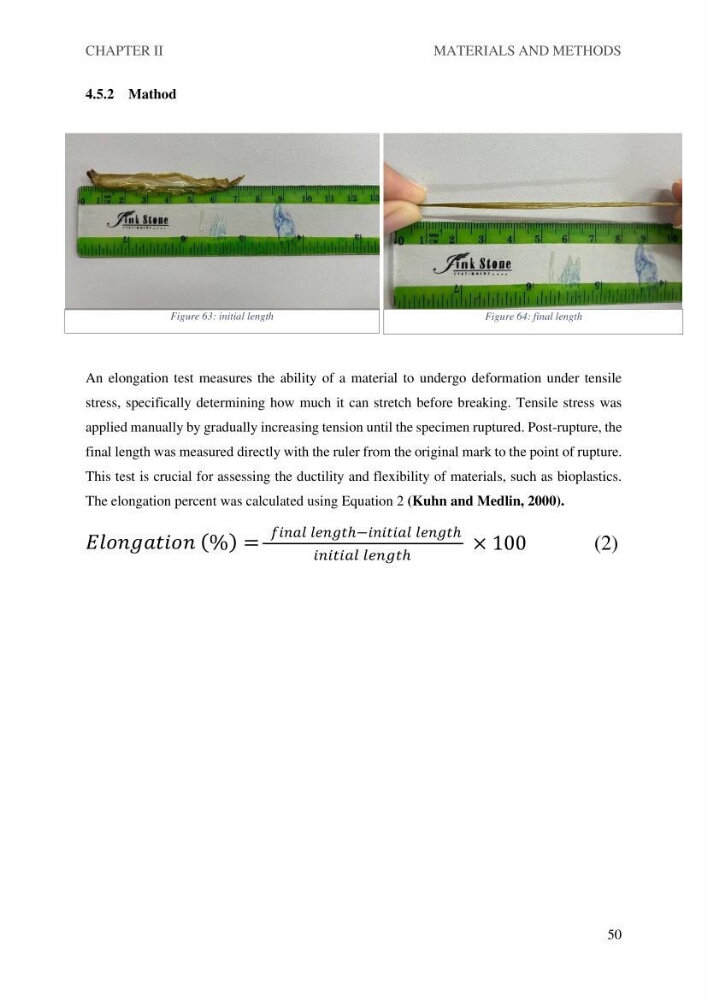
Figure 64: final length
Figure 63: initial length
4.5.2 Mathod
An elongation test measures the ability of a material to undergo deformation under tensile
stress, specifically determining how much it can stretch before breaking. Tensile stress was
applied manually by gradually increasing tension until the specimen ruptured. Post-rupture, the
final length was measured directly with the ruler from the original mark to the point of rupture.
This test is crucial for assessing the ductility and flexibility of materials, such as bioplastics.
The elongation percent was calculated using Equation 2 (Kuhn and Medlin, 2000).
í µí°¸í µí±í µí±í µí±í µí±í µí±í µí±¡í µí±í µí±í µí± (%) =
í µí±í µí±í µí±í µí±í µí± í µí±í µí±í µí±í µí±í µí±¡ℎ−í µí±í µí±í µí±í µí±¡í µí±í µí±í µí± í µí±í µí±í µí±í µí±í µí±¡ℎ
í µí±í µí±í µí±í µí±¡í µí±í µí±í µí± í µí±í µí±í µí±í µí±í µí±¡ℎ
× 100
(2)
MATERIALS AND METHODS
50
Figure 64: final length
Figure 63: initial length
4.5.2 Mathod
An elongation test measures the ability of a material to undergo deformation under tensile
stress, specifically determining how much it can stretch before breaking. Tensile stress was
applied manually by gradually increasing tension until the specimen ruptured. Post-rupture, the
final length was measured directly with the ruler from the original mark to the point of rupture.
This test is crucial for assessing the ductility and flexibility of materials, such as bioplastics.
The elongation percent was calculated using Equation 2 (Kuhn and Medlin, 2000).
í µí°¸í µí±í µí±í µí±í µí±í µí±í µí±¡í µí±í µí±í µí± (%) =
í µí±í µí±í µí±í µí±í µí± í µí±í µí±í µí±í µí±í µí±¡ℎ−í µí±í µí±í µí±í µí±¡í µí±í µí±í µí± í µí±í µí±í µí±í µí±í µí±¡ℎ
í µí±í µí±í µí±í µí±¡í µí±í µí±í µí± í µí±í µí±í µí±í µí±í µí±¡ℎ
× 100
(2)