

CHAPTER I
LITTERATURE REVIEW
18
One type of PHA, the poly(3-hydroxybutyrate) (P3HB), stands out as the most extensively
studied within the PHA family. It serves as the carbon reservoir for various bacterial colonies,
synthesized through bacterial fermentation from methane. This process involves the oxidation
of methane to methanol via the enzyme methane monooxygenase, followed by the conversion
of methanol to formaldehyde by methanol dehydrogenase (Atiwesh et al., 2021). The PHB
shows a linear structure composed of CH₃ and CH₂ sequences, coupled with an ester -COOR
group, imparting specific physical and chemical properties such as thermoplasticity and
hydrophobicity, as well as mechanical traits including crystallinity grade and fragility.
Commercial PHB closely resembles polypropylene derived from fossil fuels, featuring notable
stiffness, fragility, a crystallinity grade ranging between 60 and 80%, a fusion temperature near
180°C, and both amorphous and crystalline phases (Suzuki et al., 2021). PHB can be a virgin
polymer or with copolymers and additives in blends with better thermoplastic properties, such
as the poly (3-hydroxybutyrate-co-3-hydroxyvalerate) [P (3HB-co-HV)] (McAdam et al.,
2020).
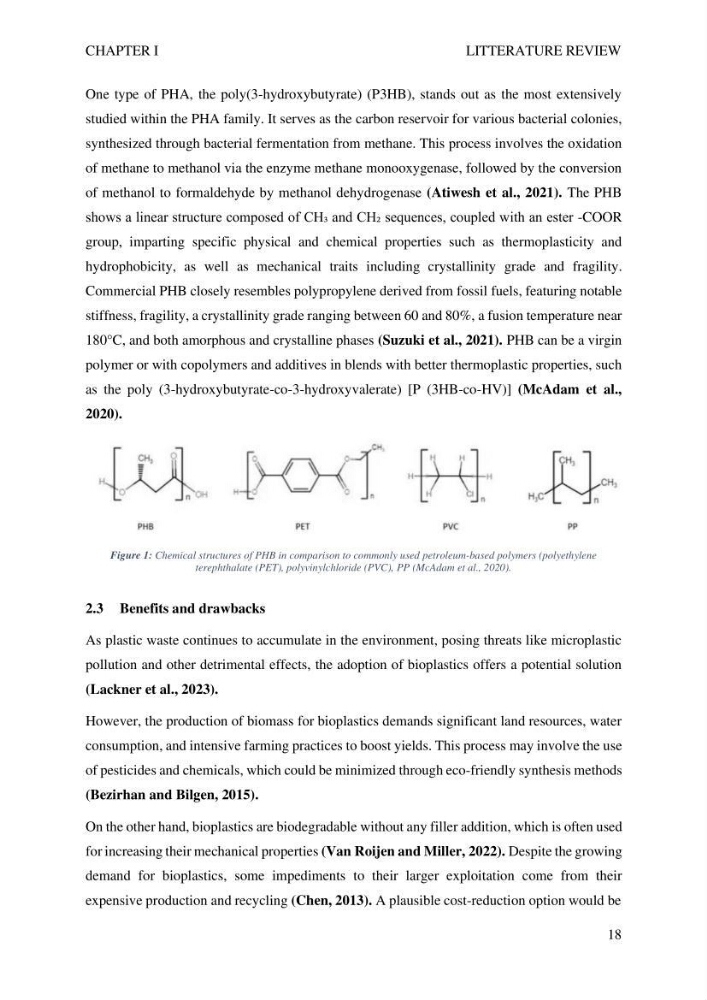
Figure 1: Chemical structures of PHB in comparison to commonly used petroleum-based polymers (polyethylene
terephthalate (PET), polyvinylchloride (PVC), PP (McAdam et al., 2020).
2.3 Benefits and drawbacks
As plastic waste continues to accumulate in the environment, posing threats like microplastic
pollution and other detrimental effects, the adoption of bioplastics offers a potential solution
(Lackner et al., 2023).
However, the production of biomass for bioplastics demands significant land resources, water
consumption, and intensive farming practices to boost yields. This process may involve the use
of pesticides and chemicals, which could be minimized through eco-friendly synthesis methods
(Bezirhan and Bilgen, 2015).
On the other hand, bioplastics are biodegradable without any filler addition, which is often used
for increasing their mechanical properties (Van Roijen and Miller, 2022). Despite the growing
demand for bioplastics, some impediments to their larger exploitation come from their
expensive production and recycling (Chen, 2013). A plausible cost-reduction option would be
LITTERATURE REVIEW
18
One type of PHA, the poly(3-hydroxybutyrate) (P3HB), stands out as the most extensively
studied within the PHA family. It serves as the carbon reservoir for various bacterial colonies,
synthesized through bacterial fermentation from methane. This process involves the oxidation
of methane to methanol via the enzyme methane monooxygenase, followed by the conversion
of methanol to formaldehyde by methanol dehydrogenase (Atiwesh et al., 2021). The PHB
shows a linear structure composed of CH₃ and CH₂ sequences, coupled with an ester -COOR
group, imparting specific physical and chemical properties such as thermoplasticity and
hydrophobicity, as well as mechanical traits including crystallinity grade and fragility.
Commercial PHB closely resembles polypropylene derived from fossil fuels, featuring notable
stiffness, fragility, a crystallinity grade ranging between 60 and 80%, a fusion temperature near
180°C, and both amorphous and crystalline phases (Suzuki et al., 2021). PHB can be a virgin
polymer or with copolymers and additives in blends with better thermoplastic properties, such
as the poly (3-hydroxybutyrate-co-3-hydroxyvalerate) [P (3HB-co-HV)] (McAdam et al.,
2020).
Figure 1: Chemical structures of PHB in comparison to commonly used petroleum-based polymers (polyethylene
terephthalate (PET), polyvinylchloride (PVC), PP (McAdam et al., 2020).
2.3 Benefits and drawbacks
As plastic waste continues to accumulate in the environment, posing threats like microplastic
pollution and other detrimental effects, the adoption of bioplastics offers a potential solution
(Lackner et al., 2023).
However, the production of biomass for bioplastics demands significant land resources, water
consumption, and intensive farming practices to boost yields. This process may involve the use
of pesticides and chemicals, which could be minimized through eco-friendly synthesis methods
(Bezirhan and Bilgen, 2015).
On the other hand, bioplastics are biodegradable without any filler addition, which is often used
for increasing their mechanical properties (Van Roijen and Miller, 2022). Despite the growing
demand for bioplastics, some impediments to their larger exploitation come from their
expensive production and recycling (Chen, 2013). A plausible cost-reduction option would be