

44
2 Basic Ecology
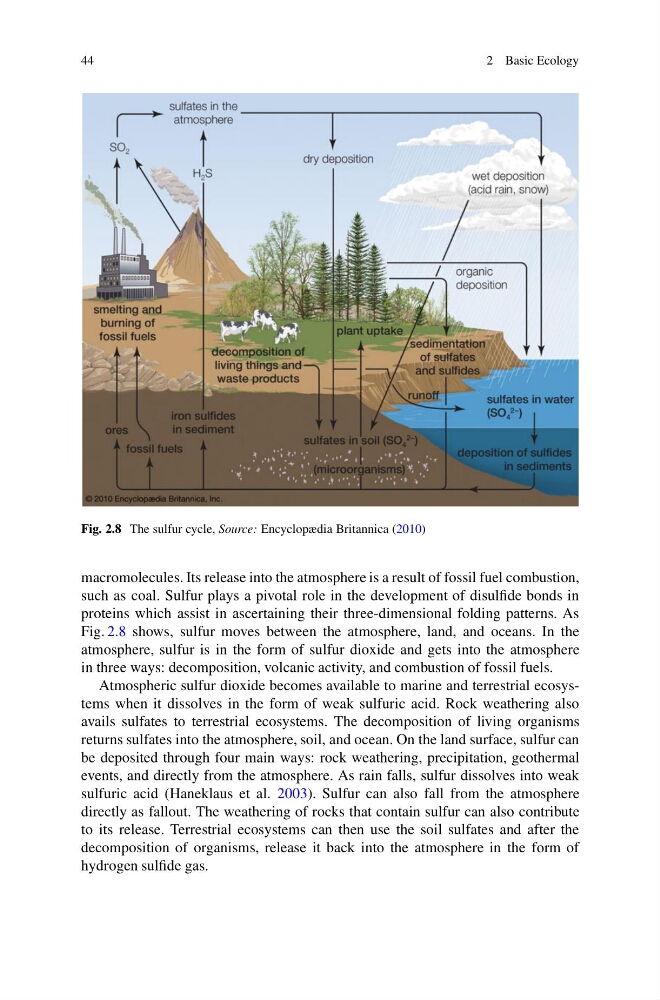
Fig. 2.8 The sulfur cycle, Source: Encyclopædia Britannica (2010)
macromolecules. Its release into the atmosphere is a result of fossil fuel combustion,
such as coal. Sulfur plays a pivotal role in the development of disulfide bonds in
proteins which assist in ascertaining their three-dimensional folding patterns. As
Fig. 2.8 shows, sulfur moves between the atmosphere, land, and oceans. In the
atmosphere, sulfur is in the form of sulfur dioxide and gets into the atmosphere
in three ways: decomposition, volcanic activity, and combustion of fossil fuels.
Atmospheric sulfur dioxide becomes available to marine and terrestrial ecosystems when it dissolves in the form of weak sulfuric acid. Rock weathering also
avails sulfates to terrestrial ecosystems. The decomposition of living organisms
returns sulfates into the atmosphere, soil, and ocean. On the land surface, sulfur can
be deposited through four main ways: rock weathering, precipitation, geothermal
events, and directly from the atmosphere. As rain falls, sulfur dissolves into weak
sulfuric acid (Haneklaus et al. 2003). Sulfur can also fall from the atmosphere
directly as fallout. The weathering of rocks that contain sulfur can also contribute
to its release. Terrestrial ecosystems can then use the soil sulfates and after the
decomposition of organisms, release it back into the atmosphere in the form of
hydrogen sulfide gas.
2 Basic Ecology
Fig. 2.8 The sulfur cycle, Source: Encyclopædia Britannica (2010)
macromolecules. Its release into the atmosphere is a result of fossil fuel combustion,
such as coal. Sulfur plays a pivotal role in the development of disulfide bonds in
proteins which assist in ascertaining their three-dimensional folding patterns. As
Fig. 2.8 shows, sulfur moves between the atmosphere, land, and oceans. In the
atmosphere, sulfur is in the form of sulfur dioxide and gets into the atmosphere
in three ways: decomposition, volcanic activity, and combustion of fossil fuels.
Atmospheric sulfur dioxide becomes available to marine and terrestrial ecosystems when it dissolves in the form of weak sulfuric acid. Rock weathering also
avails sulfates to terrestrial ecosystems. The decomposition of living organisms
returns sulfates into the atmosphere, soil, and ocean. On the land surface, sulfur can
be deposited through four main ways: rock weathering, precipitation, geothermal
events, and directly from the atmosphere. As rain falls, sulfur dissolves into weak
sulfuric acid (Haneklaus et al. 2003). Sulfur can also fall from the atmosphere
directly as fallout. The weathering of rocks that contain sulfur can also contribute
to its release. Terrestrial ecosystems can then use the soil sulfates and after the
decomposition of organisms, release it back into the atmosphere in the form of
hydrogen sulfide gas.