

10.4 Environmental Sustainability
261
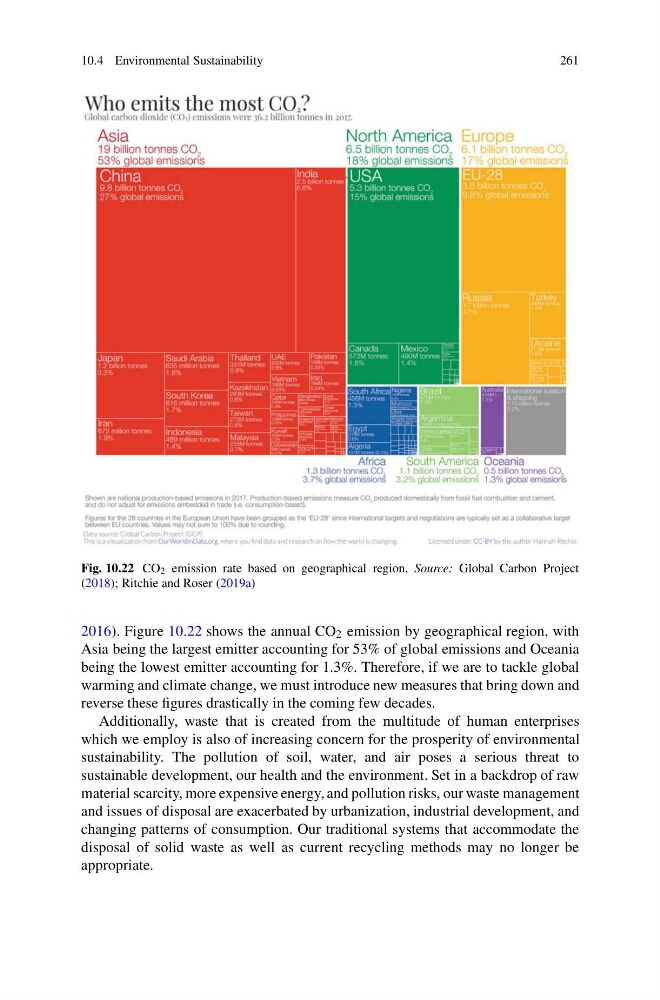
Fig. 10.22 CO 2 emission rate based on geographical region, Source: Global Carbon Project
(2018); Ritchie and Roser (2019a)
2016). Figure 10.22 shows the annual CO 2 emission by geographical region, with
Asia being the largest emitter accounting for 53% of global emissions and Oceania
being the lowest emitter accounting for 1.3%. Therefore, if we are to tackle global
warming and climate change, we must introduce new measures that bring down and
reverse these figures drastically in the coming few decades.
Additionally, waste that is created from the multitude of human enterprises
which we employ is also of increasing concern for the prosperity of environmental
sustainability. The pollution of soil, water, and air poses a serious threat to
sustainable development, our health and the environment. Set in a backdrop of raw
material scarcity, more expensive energy, and pollution risks, our waste management
and issues of disposal are exacerbated by urbanization, industrial development, and
changing patterns of consumption. Our traditional systems that accommodate the
disposal of solid waste as well as current recycling methods may no longer be
appropriate.
261
Fig. 10.22 CO 2 emission rate based on geographical region, Source: Global Carbon Project
(2018); Ritchie and Roser (2019a)
2016). Figure 10.22 shows the annual CO 2 emission by geographical region, with
Asia being the largest emitter accounting for 53% of global emissions and Oceania
being the lowest emitter accounting for 1.3%. Therefore, if we are to tackle global
warming and climate change, we must introduce new measures that bring down and
reverse these figures drastically in the coming few decades.
Additionally, waste that is created from the multitude of human enterprises
which we employ is also of increasing concern for the prosperity of environmental
sustainability. The pollution of soil, water, and air poses a serious threat to
sustainable development, our health and the environment. Set in a backdrop of raw
material scarcity, more expensive energy, and pollution risks, our waste management
and issues of disposal are exacerbated by urbanization, industrial development, and
changing patterns of consumption. Our traditional systems that accommodate the
disposal of solid waste as well as current recycling methods may no longer be
appropriate.