

40
as it gets higher rainfall, and because the sluggish winds around it keep temperatures relatively high: about 29 °C around the year. Warm air currents enhance this
surface temperature and trigger the formation of cyclones.
In addition, the Bay receives higher rainfall and constant inflow of fresh water
from the Ganga and the Brahmaputra Rivers. This means that the Bay’s surface
water keeps getting refreshed, making it impossible for the warm water to mix with
the cooler water below, making it ideal for a depression. On the other hand, the
Arabian Sea receives stronger winds that help dissipate the heat, and the lack of
constant fresh water supply helps the warm water mix with the cool water, reducing
the temperature. A list of cyclones that passed across Bay of Bengal is highlighted
in Table 2.4.
The incidence of AILA (a severe tropical cyclonic storm) in the Gangetic plain
region of India on 25th May 2009 posed severe impacts in terms of embankment
damage in areas not protected by mangroves. Although significant changes in water
quality were documented due to AILA (Table 2.5), the infrastructural damage was
greatly retarded by mangroves that reduced the momentum of waves and tidal
surges.
Mangrove forests play a great role in the protection of coastal communities from
the fury of cyclones and storms. The example of the Odisha super-cyclone is very
relevant in this context. It hit the Odisha coast on 29th October 1999 with a wind
speed of 310 km hr
−1
and played havoc largely in the areas devoid of mangroves. On
the contrary, practically no or negligible damage occurred in regions with luxuriant
mangrove growth. Similarly, in the Mahanadi delta, where large-scale deforestation
and reclamation of mangrove land for several purposes have been undertaken, maximum losses of life and property have been reported from time to time during stormy
weather. These events are periodic confirmatory tests to prove that mangroves can
form the best shelter-belt against cyclones and storms.
There are several examples on record that can be cited to prove the protective
role of mangroves against storms and tidal surges. For instance, the l970 typhoon
and the accompanying tidal waves that claimed about 3 lakhs human lives in
Bangladesh probably would not have been so devastative if thousands of hectares of
mangrove swamps would not have been cleared and replaced with paddy fields for
short-term economic gains. Likewise, in the Kutch areas of Gujarat, where mangrove trees were illegally cut, the effect of the heavy cyclone during l983 was felt
deep inside the human habitation, which took a heavy toll of lives.
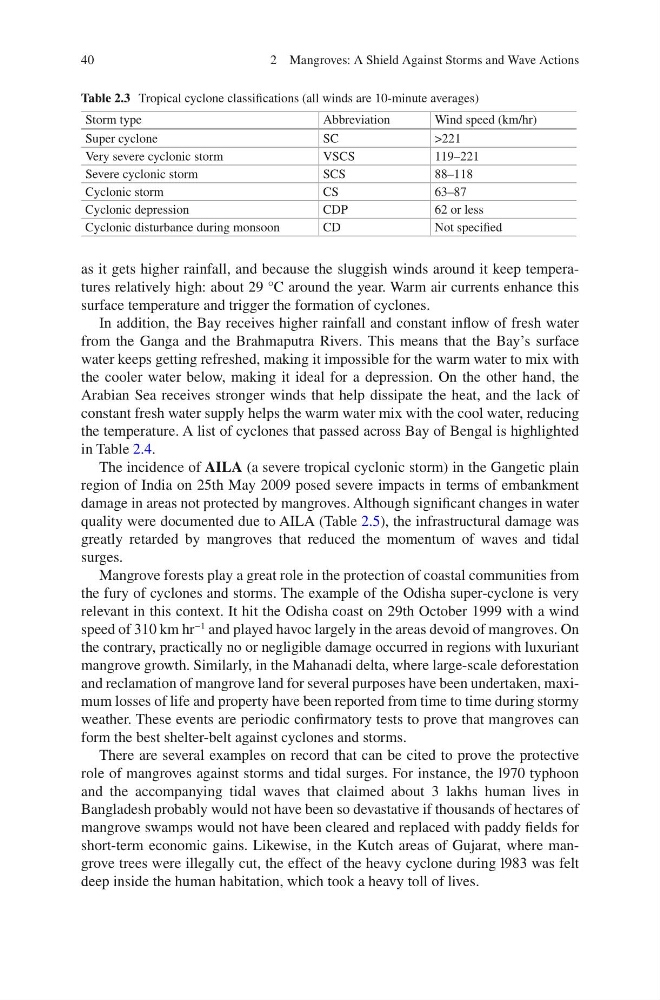
Table 2.3 Tropical cyclone classifications (all winds are 10-minute averages)
Storm type
Abbreviation
Wind speed (km/hr)
Super cyclone
SC
>221
Very severe cyclonic storm
VSCS
119–221
Severe cyclonic storm
SCS
88–118
Cyclonic storm
CS
63–87
Cyclonic depression
CDP
62 or less
Cyclonic disturbance during monsoon
CD
Not specified
2 Mangroves: A Shield Against Storms and Wave Actions
as it gets higher rainfall, and because the sluggish winds around it keep temperatures relatively high: about 29 °C around the year. Warm air currents enhance this
surface temperature and trigger the formation of cyclones.
In addition, the Bay receives higher rainfall and constant inflow of fresh water
from the Ganga and the Brahmaputra Rivers. This means that the Bay’s surface
water keeps getting refreshed, making it impossible for the warm water to mix with
the cooler water below, making it ideal for a depression. On the other hand, the
Arabian Sea receives stronger winds that help dissipate the heat, and the lack of
constant fresh water supply helps the warm water mix with the cool water, reducing
the temperature. A list of cyclones that passed across Bay of Bengal is highlighted
in Table 2.4.
The incidence of AILA (a severe tropical cyclonic storm) in the Gangetic plain
region of India on 25th May 2009 posed severe impacts in terms of embankment
damage in areas not protected by mangroves. Although significant changes in water
quality were documented due to AILA (Table 2.5), the infrastructural damage was
greatly retarded by mangroves that reduced the momentum of waves and tidal
surges.
Mangrove forests play a great role in the protection of coastal communities from
the fury of cyclones and storms. The example of the Odisha super-cyclone is very
relevant in this context. It hit the Odisha coast on 29th October 1999 with a wind
speed of 310 km hr
−1
and played havoc largely in the areas devoid of mangroves. On
the contrary, practically no or negligible damage occurred in regions with luxuriant
mangrove growth. Similarly, in the Mahanadi delta, where large-scale deforestation
and reclamation of mangrove land for several purposes have been undertaken, maximum losses of life and property have been reported from time to time during stormy
weather. These events are periodic confirmatory tests to prove that mangroves can
form the best shelter-belt against cyclones and storms.
There are several examples on record that can be cited to prove the protective
role of mangroves against storms and tidal surges. For instance, the l970 typhoon
and the accompanying tidal waves that claimed about 3 lakhs human lives in
Bangladesh probably would not have been so devastative if thousands of hectares of
mangrove swamps would not have been cleared and replaced with paddy fields for
short-term economic gains. Likewise, in the Kutch areas of Gujarat, where mangrove trees were illegally cut, the effect of the heavy cyclone during l983 was felt
deep inside the human habitation, which took a heavy toll of lives.
Table 2.3 Tropical cyclone classifications (all winds are 10-minute averages)
Storm type
Abbreviation
Wind speed (km/hr)
Super cyclone
SC
>221
Very severe cyclonic storm
VSCS
119–221
Severe cyclonic storm
SCS
88–118
Cyclonic storm
CS
63–87
Cyclonic depression
CDP
62 or less
Cyclonic disturbance during monsoon
CD
Not specified
2 Mangroves: A Shield Against Storms and Wave Actions