

24
(particularly in Thakuran island) mangrove has played a crucial role in controlling
erosion.
The stakeholders also put maximum weightage towards erosion control and
other regulatory services of mangroves like protections against storm and wave
actions, storage of carbon and nitrogen by mangroves, bioremediation, nutrient
retention etc. In this sector of Indian Sundarbans, stakeholders have little interest on
alternative livelihood, cultural and religious convergence (Table 1.12). This may be
due to presence of large number of tourism units at Jharkhali, Bali, Chotomollakhali,
Sajnekhali, Pakhiralaya, which are the islands of central Indian Sundarbans. The
mixing of the people of this area with tourists coming from different parts of India
and abroad has probably diluted the orthodox religious rituals among the people
living in this region.
It is clear from the results of ANOVA that there are no significant differences in
opinion between the stake holders of the central sector of Indian Sundarbans in
context to ecosystem services as F obs is less than F crit (Table 1.13). However, the type
of ecosystem services varied at 5% level of significance as F obs (230.8611) > F crit
(2.35926).
The eastern sector of Indian Sundarbans is adjacent to Bangladesh Sundarbans
and is highly protected as it encompasses the Reserve Forests (RF). People in this
sector are much inclined to cultural services of mangroves, which includes worshipping of Gods/Goddesses, whom they consider as the protector of the forests
(Table 1.14).
The eastern Sundarbans adjacent to Bangladesh is particularly a Reserve Forest
(RF), where the entry is restricted and needs the permission of Forest Department,
Government of West Bengal (India) for entering the zone. This region is basically a
hotspot of biodiversity and sustains a wide variety of flora and fauna within the
mangrove forest. This is reflected in the results of survey conducted amongst the
stakeholders during the survey period of 3 years (2016–2018). All the stakeholders
opined the region as a hotspot of biodiversity and emphasized on the supporting
services of mangroves, which encompasses services like ecosystem process
maintenance, life cycle maintenance, biodiversity maintenance and protection etc.
It is interesting to note that the survey result from this region generated a different
kind of picture with high inclination towards religious and cultural convergence
(Table 1.14). The weightage of the stake holders on this particular ecosystem service is related to acceptance of the people towards Bonobibi, whom they consider
as the protector of the forest. Bonobibi is worshiped by the people of all ranks of the
society irrespective of caste, creed, sex and religion. Hence maximum weightage
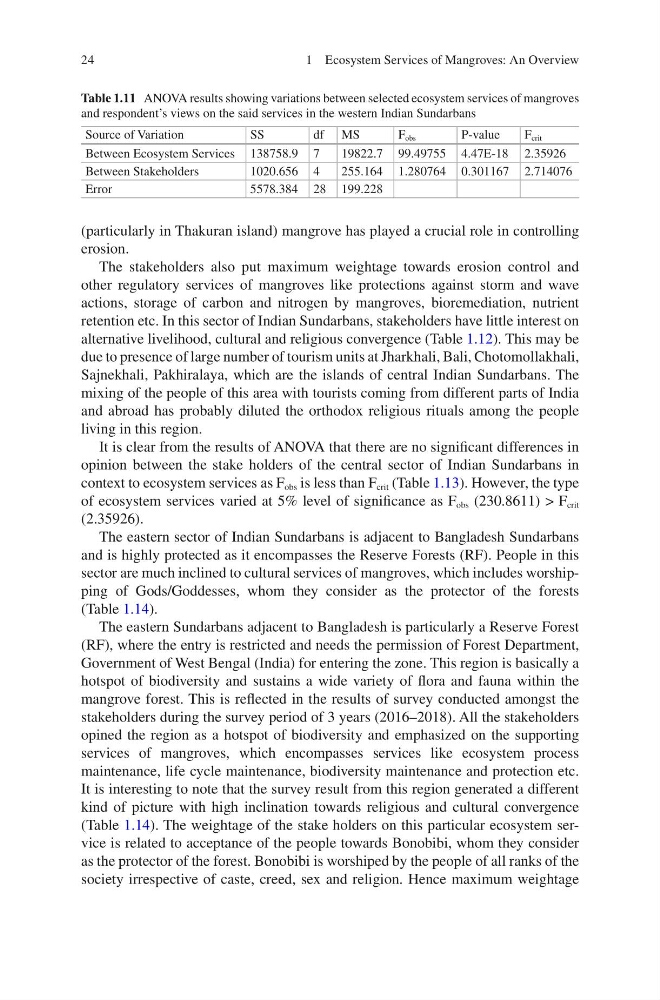
Table 1.11 ANOVA results showing variations between selected ecosystem services of mangroves
and respondent’s views on the said services in the western Indian Sundarbans
Source of Variation
SS
df MS
F obs
P-value
F crit
Between Ecosystem Services 138758.9 7
19822.7 99.49755 4.47E-18 2.35926
Between Stakeholders
1020.656 4
255.164 1.280764 0.301167 2.714076
Error
5578.384 28 199.228
1 Ecosystem Services of Mangroves: An Overview
(particularly in Thakuran island) mangrove has played a crucial role in controlling
erosion.
The stakeholders also put maximum weightage towards erosion control and
other regulatory services of mangroves like protections against storm and wave
actions, storage of carbon and nitrogen by mangroves, bioremediation, nutrient
retention etc. In this sector of Indian Sundarbans, stakeholders have little interest on
alternative livelihood, cultural and religious convergence (Table 1.12). This may be
due to presence of large number of tourism units at Jharkhali, Bali, Chotomollakhali,
Sajnekhali, Pakhiralaya, which are the islands of central Indian Sundarbans. The
mixing of the people of this area with tourists coming from different parts of India
and abroad has probably diluted the orthodox religious rituals among the people
living in this region.
It is clear from the results of ANOVA that there are no significant differences in
opinion between the stake holders of the central sector of Indian Sundarbans in
context to ecosystem services as F obs is less than F crit (Table 1.13). However, the type
of ecosystem services varied at 5% level of significance as F obs (230.8611) > F crit
(2.35926).
The eastern sector of Indian Sundarbans is adjacent to Bangladesh Sundarbans
and is highly protected as it encompasses the Reserve Forests (RF). People in this
sector are much inclined to cultural services of mangroves, which includes worshipping of Gods/Goddesses, whom they consider as the protector of the forests
(Table 1.14).
The eastern Sundarbans adjacent to Bangladesh is particularly a Reserve Forest
(RF), where the entry is restricted and needs the permission of Forest Department,
Government of West Bengal (India) for entering the zone. This region is basically a
hotspot of biodiversity and sustains a wide variety of flora and fauna within the
mangrove forest. This is reflected in the results of survey conducted amongst the
stakeholders during the survey period of 3 years (2016–2018). All the stakeholders
opined the region as a hotspot of biodiversity and emphasized on the supporting
services of mangroves, which encompasses services like ecosystem process
maintenance, life cycle maintenance, biodiversity maintenance and protection etc.
It is interesting to note that the survey result from this region generated a different
kind of picture with high inclination towards religious and cultural convergence
(Table 1.14). The weightage of the stake holders on this particular ecosystem service is related to acceptance of the people towards Bonobibi, whom they consider
as the protector of the forest. Bonobibi is worshiped by the people of all ranks of the
society irrespective of caste, creed, sex and religion. Hence maximum weightage
Table 1.11 ANOVA results showing variations between selected ecosystem services of mangroves
and respondent’s views on the said services in the western Indian Sundarbans
Source of Variation
SS
df MS
F obs
P-value
F crit
Between Ecosystem Services 138758.9 7
19822.7 99.49755 4.47E-18 2.35926
Between Stakeholders
1020.656 4
255.164 1.280764 0.301167 2.714076
Error
5578.384 28 199.228
1 Ecosystem Services of Mangroves: An Overview