

18
an area of 145 sq. km. Bhitarkanika is endowed with three major types of ecosystem
namely brackish water, marine and terrestrial – intricately mixed with each other.
The community structure of mangrove vegetation is greatly influenced by dilution
factor, tidal inflow, degree of inundation and salinity gradient. Several works have
been carried out on the distribution of mangroves in the Bhitarkanika region
(Banerjee and Das 1972; Mishra and Panigrahi 1987; Pattanaik and Choudhury
1989; Banerjee and Rao 1990; Dani et al. 1999; Mishra et al. 2005; Pattnaik et al.
2008; Upadhyay et al. 2008).
In Indian literatures most of the mangrove related studies focused on their taxonomic status. In course of time, the dimension of research shifted towards their
ecosystem services. Since the last decade, mangrove related researches took a bent/
turn towards climate change and carbon sequestration. In many countries, policy
makers attempted to link mangrove plantation with carbon sequestration as a road
map towards Clean Development Mechanism (CDM).
A survey was carried out at Bhitarkanika Wild Life Sanctuary (BWLS) by the
present author during August 2016 to estimate stored carbon in the stem region of
true mangrove and mangrove associate floral species. The stored carbon exhibited
direct proportionality with stem biomass irrespective of the species. The stored
carbon in the stem of the selected species varied from 0.03 t ha
−1
in Thespesia
populnea to 11.32 t ha
−1
in Avicennia officinalis as shown in Fig. 1.8. The total
stored carbon in the stems of the selected species is 61.97 t ha
−1
, which synchronizes well with values (extrapolated through thumb rule) obtained from different
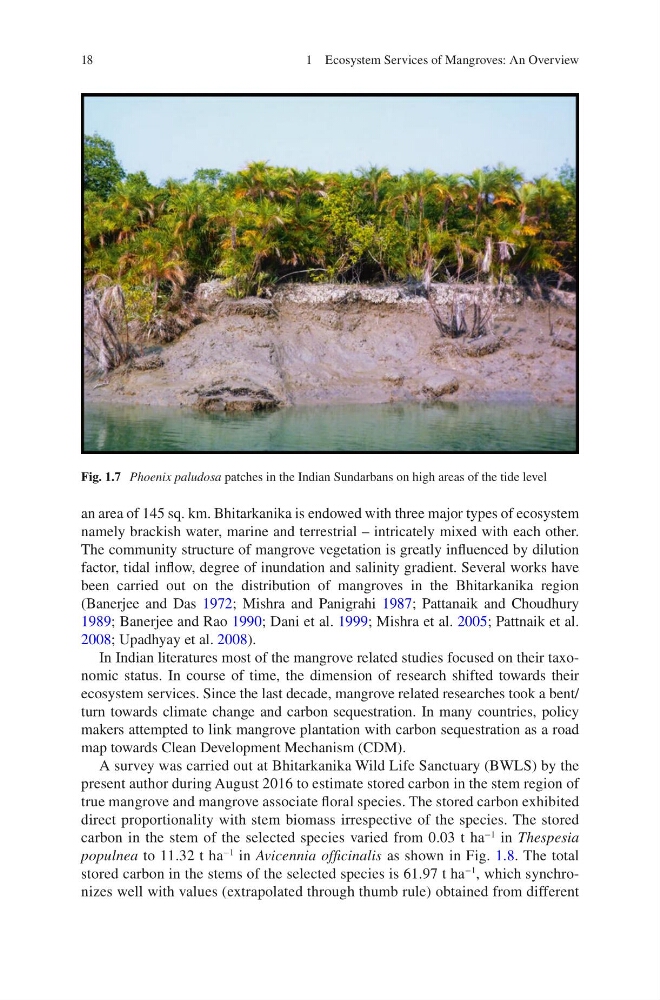
Fig. 1.7 Phoenix paludosa patches in the Indian Sundarbans on high areas of the tide level
1 Ecosystem Services of Mangroves: An Overview
an area of 145 sq. km. Bhitarkanika is endowed with three major types of ecosystem
namely brackish water, marine and terrestrial – intricately mixed with each other.
The community structure of mangrove vegetation is greatly influenced by dilution
factor, tidal inflow, degree of inundation and salinity gradient. Several works have
been carried out on the distribution of mangroves in the Bhitarkanika region
(Banerjee and Das 1972; Mishra and Panigrahi 1987; Pattanaik and Choudhury
1989; Banerjee and Rao 1990; Dani et al. 1999; Mishra et al. 2005; Pattnaik et al.
2008; Upadhyay et al. 2008).
In Indian literatures most of the mangrove related studies focused on their taxonomic status. In course of time, the dimension of research shifted towards their
ecosystem services. Since the last decade, mangrove related researches took a bent/
turn towards climate change and carbon sequestration. In many countries, policy
makers attempted to link mangrove plantation with carbon sequestration as a road
map towards Clean Development Mechanism (CDM).
A survey was carried out at Bhitarkanika Wild Life Sanctuary (BWLS) by the
present author during August 2016 to estimate stored carbon in the stem region of
true mangrove and mangrove associate floral species. The stored carbon exhibited
direct proportionality with stem biomass irrespective of the species. The stored
carbon in the stem of the selected species varied from 0.03 t ha
−1
in Thespesia
populnea to 11.32 t ha
−1
in Avicennia officinalis as shown in Fig. 1.8. The total
stored carbon in the stems of the selected species is 61.97 t ha
−1
, which synchronizes well with values (extrapolated through thumb rule) obtained from different
Fig. 1.7 Phoenix paludosa patches in the Indian Sundarbans on high areas of the tide level
1 Ecosystem Services of Mangroves: An Overview