

15
are found in the creeks, often in association with Nypa fruticans. Three common
species of Bruguiera are present, comprising B. cylindrica, B. gymnorrhiza and B.
sexangula. These genera have been over-exploited and regeneration is poor.
Kandelia candel, a fourth genus of the family Rhizophoraceae, is very rare.
Avicennia alba, Avicennia marina and Avicennia officinalis are members of the
family Avicenniaceae, which are abundantly found in the Indian Sundarbans. These
species represent a pioneer genus in mangrove plant succession and occur in association with the salt marsh grass Porteresia coarctata, in areas of accretion.
Avicennia spp. also occur in gregarious forms along the stretches of channels and
creeks. Sonneratia apetala occurs in fringe areas in discontinuous strips while S.
caseolaris occurs only in the western Sundarbans. These two species thrive luxuriantly in areas with high dilution factor. Xylocarpus granatum and X. mekongensis,
which were once common species in the Sundarbans, are found scattered and have
become scarce because of selective felling and poor regeneration. Stunted trees of
Heritiera fomes are found scattered all over the forest. In the central Indian
Sundarbans, which is extremely hypersaline in nature, the species is on the verge of
extinction (Mitra 2013; Mitra and Zaman 2014, 2015, 2016). Amoora cucullata is
also found in association with Heritiera, in freshwater conditions. Aegialites rotundifolia, representing a monoypic genus, is found in low-lying areas with Acanthus
ilicifolius. Both Amoora cucullata and Aegialites rotundifolia, together with
Aegiceras corniculatum, are present in very small numbers and are a cause for
concern. Aegiceras, found on the banks of narrow creeks, are exploited for timber
and fuel wood. Lumnitzera racemosa is sparsely distributed in areas of high salinity. Nypa fruticans is found in the creeks although this species has been overexploited and regeneration is poor. Brownlowia tersa and Cynometra ramiflora are
scarce. On high areas above tide level, thick patches of pure Phoenix paludosa
occur and are increasing in number (Fig. 1.7). The species can thrive luxuriantly in
high saline environment and offers a congenial shelter for Royal Bengal tiger.
The Bhitarkanika mangrove forest is the second largest mangrove forest in India.
In April, 1975 mangroves of Bramhani and Baitarani delta of Kendrapara district
have been declared as the Bhitarkanika Wild Life Sanctuary (BWLS), which covers
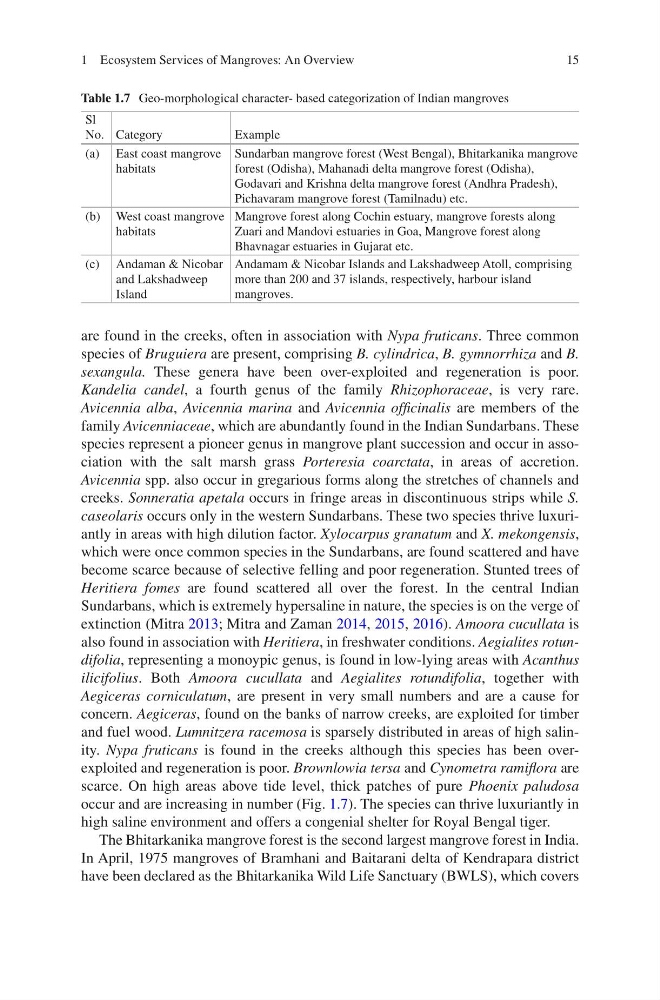
Table 1.7 Geo-morphological character- based categorization of Indian mangroves
Sl
No. Category
Example
(a) East coast mangrove
habitats
Sundarban mangrove forest (West Bengal), Bhitarkanika mangrove
forest (Odisha), Mahanadi delta mangrove forest (Odisha),
Godavari and Krishna delta mangrove forest (Andhra Pradesh),
Pichavaram mangrove forest (Tamilnadu) etc.
(b) West coast mangrove
habitats
Mangrove forest along Cochin estuary, mangrove forests along
Zuari and Mandovi estuaries in Goa, Mangrove forest along
Bhavnagar estuaries in Gujarat etc.
(c) Andaman & Nicobar
and Lakshadweep
Island
Andamam & Nicobar Islands and Lakshadweep Atoll, comprising
more than 200 and 37 islands, respectively, harbour island
mangroves.
1 Ecosystem Services of Mangroves: An Overview
are found in the creeks, often in association with Nypa fruticans. Three common
species of Bruguiera are present, comprising B. cylindrica, B. gymnorrhiza and B.
sexangula. These genera have been over-exploited and regeneration is poor.
Kandelia candel, a fourth genus of the family Rhizophoraceae, is very rare.
Avicennia alba, Avicennia marina and Avicennia officinalis are members of the
family Avicenniaceae, which are abundantly found in the Indian Sundarbans. These
species represent a pioneer genus in mangrove plant succession and occur in association with the salt marsh grass Porteresia coarctata, in areas of accretion.
Avicennia spp. also occur in gregarious forms along the stretches of channels and
creeks. Sonneratia apetala occurs in fringe areas in discontinuous strips while S.
caseolaris occurs only in the western Sundarbans. These two species thrive luxuriantly in areas with high dilution factor. Xylocarpus granatum and X. mekongensis,
which were once common species in the Sundarbans, are found scattered and have
become scarce because of selective felling and poor regeneration. Stunted trees of
Heritiera fomes are found scattered all over the forest. In the central Indian
Sundarbans, which is extremely hypersaline in nature, the species is on the verge of
extinction (Mitra 2013; Mitra and Zaman 2014, 2015, 2016). Amoora cucullata is
also found in association with Heritiera, in freshwater conditions. Aegialites rotundifolia, representing a monoypic genus, is found in low-lying areas with Acanthus
ilicifolius. Both Amoora cucullata and Aegialites rotundifolia, together with
Aegiceras corniculatum, are present in very small numbers and are a cause for
concern. Aegiceras, found on the banks of narrow creeks, are exploited for timber
and fuel wood. Lumnitzera racemosa is sparsely distributed in areas of high salinity. Nypa fruticans is found in the creeks although this species has been overexploited and regeneration is poor. Brownlowia tersa and Cynometra ramiflora are
scarce. On high areas above tide level, thick patches of pure Phoenix paludosa
occur and are increasing in number (Fig. 1.7). The species can thrive luxuriantly in
high saline environment and offers a congenial shelter for Royal Bengal tiger.
The Bhitarkanika mangrove forest is the second largest mangrove forest in India.
In April, 1975 mangroves of Bramhani and Baitarani delta of Kendrapara district
have been declared as the Bhitarkanika Wild Life Sanctuary (BWLS), which covers
Table 1.7 Geo-morphological character- based categorization of Indian mangroves
Sl
No. Category
Example
(a) East coast mangrove
habitats
Sundarban mangrove forest (West Bengal), Bhitarkanika mangrove
forest (Odisha), Mahanadi delta mangrove forest (Odisha),
Godavari and Krishna delta mangrove forest (Andhra Pradesh),
Pichavaram mangrove forest (Tamilnadu) etc.
(b) West coast mangrove
habitats
Mangrove forest along Cochin estuary, mangrove forests along
Zuari and Mandovi estuaries in Goa, Mangrove forest along
Bhavnagar estuaries in Gujarat etc.
(c) Andaman & Nicobar
and Lakshadweep
Island
Andamam & Nicobar Islands and Lakshadweep Atoll, comprising
more than 200 and 37 islands, respectively, harbour island
mangroves.
1 Ecosystem Services of Mangroves: An Overview