

259
cies of Aspergillus could be documented at this stage. Researchers have observed
that after 30 days of degradation, the genus Aspergillus contributed about three forth
of the total number of fungal population, the rest one fourth by the members belonging to the genus Helminthrosporium.
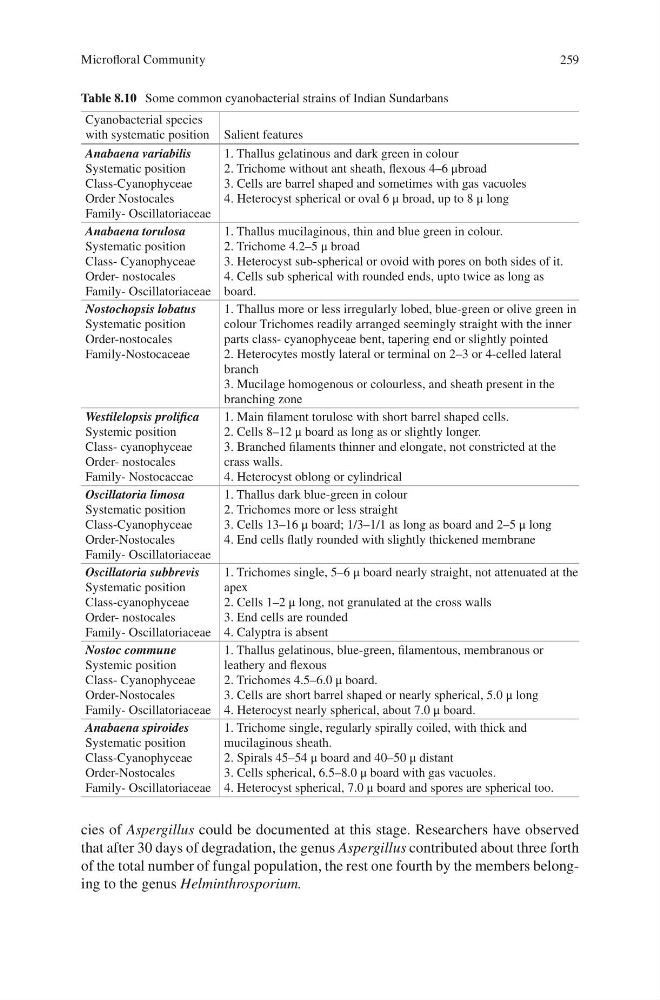
Table 8.10 Some common cyanobacterial strains of Indian Sundarbans
Cyanobacterial species
with systematic position Salient features
Anabaena variabilis
Systematic position
Class-Cyanophyceae
Order Nostocales
Family- Oscillatoriaceae
1. Thallus gelatinous and dark green in colour
2. Trichome without ant sheath, flexous 4–6 μbroad
3. Cells are barrel shaped and sometimes with gas vacuoles
4. Heterocyst spherical or oval 6 μ broad, up to 8 μ long
Anabaena torulosa
Systematic position
Class- Cyanophyceae
Order- nostocales
Family- Oscillatoriaceae
1. Thallus mucilaginous, thin and blue green in colour.
2. Trichome 4.2–5 μ broad
3. Heterocyst sub-spherical or ovoid with pores on both sides of it.
4. Cells sub spherical with rounded ends, upto twice as long as
board.
Nostochopsis lobatus
Systematic position
Order-nostocales
Family-Nostocaceae
1. Thallus more or less irregularly lobed, blue-green or olive green in
colour Trichomes readily arranged seemingly straight with the inner
parts class- cyanophyceae bent, tapering end or slightly pointed
2. Heterocytes mostly lateral or terminal on 2–3 or 4-celled lateral
branch
3. Mucilage homogenous or colourless, and sheath present in the
branching zone
Westilelopsis prolifica
Systemic position
Class- cyanophyceae
Order- nostocales
Family- Nostocaceae
1. Main filament torulose with short barrel shaped cells.
2. Cells 8–12 μ board as long as or slightly longer.
3. Branched filaments thinner and elongate, not constricted at the
crass walls.
4. Heterocyst oblong or cylindrical
Oscillatoria limosa
Systematic position
Class-Cyanophyceae
Order-Nostocales
Family- Oscillatoriaceae
1. Thallus dark blue-green in colour
2. Trichomes more or less straight
3. Cells 13–16 μ board; 1/3–1/1 as long as board and 2–5 μ long
4. End cells flatly rounded with slightly thickened membrane
Oscillatoria subbrevis
Systematic position
Class-cyanophyceae
Order- nostocales
Family- Oscillatoriaceae
1. Trichomes single, 5–6 μ board nearly straight, not attenuated at the
apex
2. Cells 1–2 μ long, not granulated at the cross walls
3. End cells are rounded
4. Calyptra is absent
Nostoc commune
Systemic position
Class- Cyanophyceae
Order-Nostocales
Family- Oscillatoriaceae
1. Thallus gelatinous, blue-green, filamentous, membranous or
leathery and flexous
2. Trichomes 4.5–6.0 μ board.
3. Cells are short barrel shaped or nearly spherical, 5.0 μ long
4. Heterocyst nearly spherical, about 7.0 μ board.
Anabaena spiroides
Systematic position
Class-Cyanophyceae
Order-Nostocales
Family- Oscillatoriaceae
1. Trichome single, regularly spirally coiled, with thick and
mucilaginous sheath.
2. Spirals 45–54 μ board and 40–50 μ distant
3. Cells spherical, 6.5–8.0 μ board with gas vacuoles.
4. Heterocyst spherical, 7.0 μ board and spores are spherical too.
Microfloral Community
cies of Aspergillus could be documented at this stage. Researchers have observed
that after 30 days of degradation, the genus Aspergillus contributed about three forth
of the total number of fungal population, the rest one fourth by the members belonging to the genus Helminthrosporium.
Table 8.10 Some common cyanobacterial strains of Indian Sundarbans
Cyanobacterial species
with systematic position Salient features
Anabaena variabilis
Systematic position
Class-Cyanophyceae
Order Nostocales
Family- Oscillatoriaceae
1. Thallus gelatinous and dark green in colour
2. Trichome without ant sheath, flexous 4–6 μbroad
3. Cells are barrel shaped and sometimes with gas vacuoles
4. Heterocyst spherical or oval 6 μ broad, up to 8 μ long
Anabaena torulosa
Systematic position
Class- Cyanophyceae
Order- nostocales
Family- Oscillatoriaceae
1. Thallus mucilaginous, thin and blue green in colour.
2. Trichome 4.2–5 μ broad
3. Heterocyst sub-spherical or ovoid with pores on both sides of it.
4. Cells sub spherical with rounded ends, upto twice as long as
board.
Nostochopsis lobatus
Systematic position
Order-nostocales
Family-Nostocaceae
1. Thallus more or less irregularly lobed, blue-green or olive green in
colour Trichomes readily arranged seemingly straight with the inner
parts class- cyanophyceae bent, tapering end or slightly pointed
2. Heterocytes mostly lateral or terminal on 2–3 or 4-celled lateral
branch
3. Mucilage homogenous or colourless, and sheath present in the
branching zone
Westilelopsis prolifica
Systemic position
Class- cyanophyceae
Order- nostocales
Family- Nostocaceae
1. Main filament torulose with short barrel shaped cells.
2. Cells 8–12 μ board as long as or slightly longer.
3. Branched filaments thinner and elongate, not constricted at the
crass walls.
4. Heterocyst oblong or cylindrical
Oscillatoria limosa
Systematic position
Class-Cyanophyceae
Order-Nostocales
Family- Oscillatoriaceae
1. Thallus dark blue-green in colour
2. Trichomes more or less straight
3. Cells 13–16 μ board; 1/3–1/1 as long as board and 2–5 μ long
4. End cells flatly rounded with slightly thickened membrane
Oscillatoria subbrevis
Systematic position
Class-cyanophyceae
Order- nostocales
Family- Oscillatoriaceae
1. Trichomes single, 5–6 μ board nearly straight, not attenuated at the
apex
2. Cells 1–2 μ long, not granulated at the cross walls
3. End cells are rounded
4. Calyptra is absent
Nostoc commune
Systemic position
Class- Cyanophyceae
Order-Nostocales
Family- Oscillatoriaceae
1. Thallus gelatinous, blue-green, filamentous, membranous or
leathery and flexous
2. Trichomes 4.5–6.0 μ board.
3. Cells are short barrel shaped or nearly spherical, 5.0 μ long
4. Heterocyst nearly spherical, about 7.0 μ board.
Anabaena spiroides
Systematic position
Class-Cyanophyceae
Order-Nostocales
Family- Oscillatoriaceae
1. Trichome single, regularly spirally coiled, with thick and
mucilaginous sheath.
2. Spirals 45–54 μ board and 40–50 μ distant
3. Cells spherical, 6.5–8.0 μ board with gas vacuoles.
4. Heterocyst spherical, 7.0 μ board and spores are spherical too.
Microfloral Community