

233
4. The carbon sequestration ranges from 1.724 tonnes ha
−1
yr
−1
(in Jhila) to 3.579
tonnes ha
−1
yr
−1
(in Dhulibasani) for A. officinalis.
5. The carbon sequestration ranges from 1.605 tonnes ha
−1
yr
−1
(in Jhila) to 3.349
tonnes ha
−1
yr
−1
(in Pirkhali) for E. agallocha.
6. The nitrogen sequestration ranges from 0.077 tonnes ha
−1
yr
−1
(in Thakuran) to
0.295 tonnes ha
−1
yr
−1
(in Chamta) for S. apetala.
7. The nitrogen sequestration ranges from 0.068 tonnes ha
−1
yr
−1
(in Muriganga) to
1.826 tonnes ha
−1
yr
−1
(in Chandkhali) for A. marina.
8. The nitrogen sequestration ranges from 0.058 tonnes ha
−1
yr
−1
(in Harinbhanga)
to 0.120 tonnes ha
−1
yr
−1
(in Pirkhali) for A. alba.
9. The nitrogen sequestration ranges from 0.046 tonnes ha
−1
yr
−1
(in Jhila) to 0.103
tonnes ha
−1
yr
−1
(in Dhulibasani) for A. officinalis.
10. The nitrogen sequestration ranges from 0.043 tonnes ha
−1
yr
−1
(in Jhila) to 0.87
tonnes ha
−1
yr
−1
(in Pirkhali) for E. agallocha
The carbon and nitrogen sequestration values of mangroves in Indian Sundarbans
are extremely sector – specific or more precisely salinity – specific. It is observed
from this exercise that S. apetala grows well in the eastern and western sectors of
Indian Sundarbans, but cannot be a potential species for central sector. For all the
three species of Avicennia, the central sector is more favourable for carbon and
nitrogen sequestration compared to the western and eastern sectors. E. agallocha,
with less biomass and subsequently with least carbon and nitrogen sequestration
potential, although thrives uniformly in all types of salinity cannot be considered
ideal in context to carbon and nitrogen sequestration (Fig. 7.49) because of inadequate/low biomass of the species.
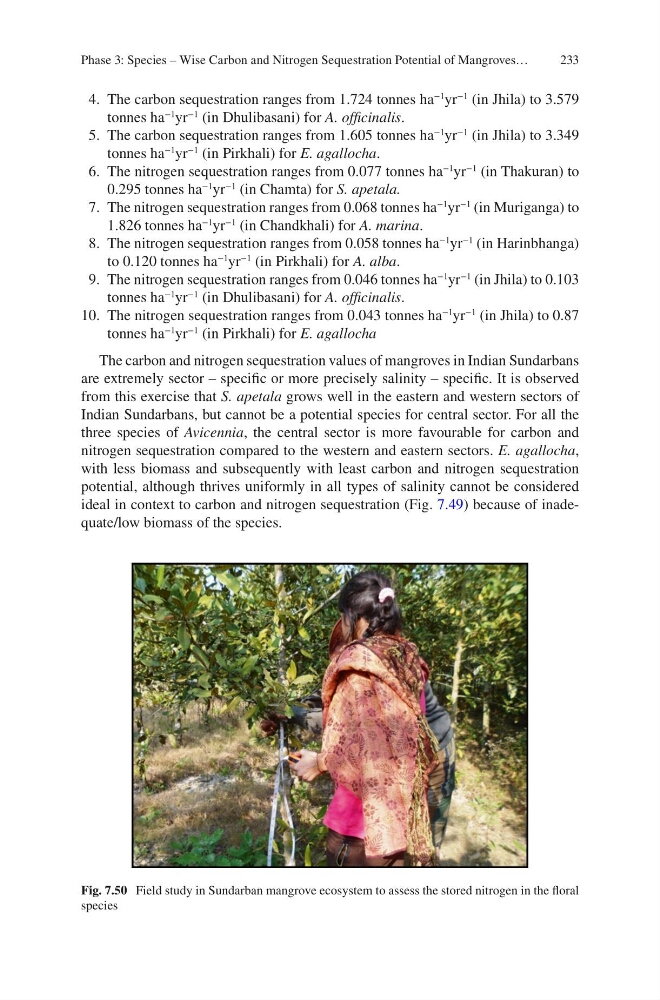
Fig. 7.50 Field study in Sundarban mangrove ecosystem to assess the stored nitrogen in the floral
species
Phase 3: Species – Wise Carbon and Nitrogen Sequestration Potential of Mangroves…
4. The carbon sequestration ranges from 1.724 tonnes ha
−1
yr
−1
(in Jhila) to 3.579
tonnes ha
−1
yr
−1
(in Dhulibasani) for A. officinalis.
5. The carbon sequestration ranges from 1.605 tonnes ha
−1
yr
−1
(in Jhila) to 3.349
tonnes ha
−1
yr
−1
(in Pirkhali) for E. agallocha.
6. The nitrogen sequestration ranges from 0.077 tonnes ha
−1
yr
−1
(in Thakuran) to
0.295 tonnes ha
−1
yr
−1
(in Chamta) for S. apetala.
7. The nitrogen sequestration ranges from 0.068 tonnes ha
−1
yr
−1
(in Muriganga) to
1.826 tonnes ha
−1
yr
−1
(in Chandkhali) for A. marina.
8. The nitrogen sequestration ranges from 0.058 tonnes ha
−1
yr
−1
(in Harinbhanga)
to 0.120 tonnes ha
−1
yr
−1
(in Pirkhali) for A. alba.
9. The nitrogen sequestration ranges from 0.046 tonnes ha
−1
yr
−1
(in Jhila) to 0.103
tonnes ha
−1
yr
−1
(in Dhulibasani) for A. officinalis.
10. The nitrogen sequestration ranges from 0.043 tonnes ha
−1
yr
−1
(in Jhila) to 0.87
tonnes ha
−1
yr
−1
(in Pirkhali) for E. agallocha
The carbon and nitrogen sequestration values of mangroves in Indian Sundarbans
are extremely sector – specific or more precisely salinity – specific. It is observed
from this exercise that S. apetala grows well in the eastern and western sectors of
Indian Sundarbans, but cannot be a potential species for central sector. For all the
three species of Avicennia, the central sector is more favourable for carbon and
nitrogen sequestration compared to the western and eastern sectors. E. agallocha,
with less biomass and subsequently with least carbon and nitrogen sequestration
potential, although thrives uniformly in all types of salinity cannot be considered
ideal in context to carbon and nitrogen sequestration (Fig. 7.49) because of inadequate/low biomass of the species.
Fig. 7.50 Field study in Sundarban mangrove ecosystem to assess the stored nitrogen in the floral
species
Phase 3: Species – Wise Carbon and Nitrogen Sequestration Potential of Mangroves…