

184
Sediment deposition occur through the physical trapping of sediments by salt
marsh plants, and by plants retarding flow velocities so that sediment particles can
settle out of the water column. For example, when there are more stems/biomass,
more sediment is trapped, and the marsh accretes more, but when there are less
stems/biomass, less sediment is trapped, and the marsh accretes less. Sediment
deposition also relies on the amount of sediment availability. When there is more
sediment in the water column, there is more sediment to be deposited on the marsh
surface, and aid in vertical accretion. However, when sediment supply is limited,
accretion is slowed or inhibited.
References
Alongi, D. M. (1998). Coastal Ecosystem Processes. New York, USA: CRC Press, 419 pp.
Antonov, J. I., Levitus, S., & Boyer, T. P. (2005). Steric variability of the world ocean, 1955–2003.
Geophysical Research Letters, 32(12), L12602. https://doi.org/10.1029/2005GL023112.
Banerjee, M. (1999). A report on the impact of Farakka barrage on the human fabric. Report
submitted to World Commission on Dams on behalf of South Asian Network on Dams, Rivers
and People (SANDRP), p. 29.
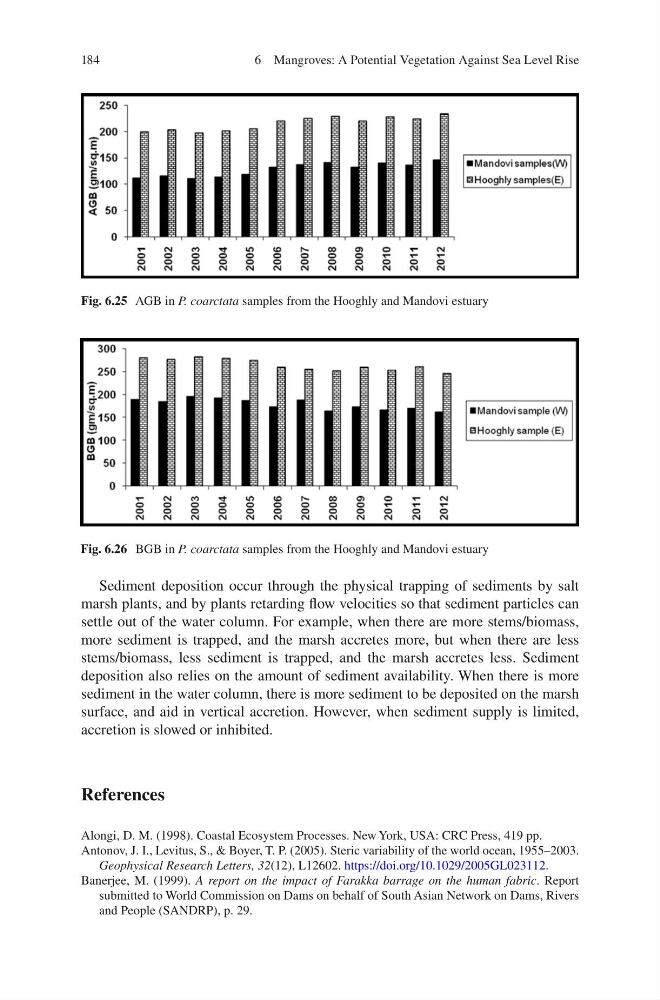
Fig. 6.25 AGB in P. coarctata samples from the Hooghly and Mandovi estuary
Fig. 6.26 BGB in P. coarctata samples from the Hooghly and Mandovi estuary
6 Mangroves: A Potential Vegetation Against Sea Level Rise
Sediment deposition occur through the physical trapping of sediments by salt
marsh plants, and by plants retarding flow velocities so that sediment particles can
settle out of the water column. For example, when there are more stems/biomass,
more sediment is trapped, and the marsh accretes more, but when there are less
stems/biomass, less sediment is trapped, and the marsh accretes less. Sediment
deposition also relies on the amount of sediment availability. When there is more
sediment in the water column, there is more sediment to be deposited on the marsh
surface, and aid in vertical accretion. However, when sediment supply is limited,
accretion is slowed or inhibited.
References
Alongi, D. M. (1998). Coastal Ecosystem Processes. New York, USA: CRC Press, 419 pp.
Antonov, J. I., Levitus, S., & Boyer, T. P. (2005). Steric variability of the world ocean, 1955–2003.
Geophysical Research Letters, 32(12), L12602. https://doi.org/10.1029/2005GL023112.
Banerjee, M. (1999). A report on the impact of Farakka barrage on the human fabric. Report
submitted to World Commission on Dams on behalf of South Asian Network on Dams, Rivers
and People (SANDRP), p. 29.
Fig. 6.25 AGB in P. coarctata samples from the Hooghly and Mandovi estuary
Fig. 6.26 BGB in P. coarctata samples from the Hooghly and Mandovi estuary
6 Mangroves: A Potential Vegetation Against Sea Level Rise