

167
(Manson et al. 2003). However, the majority of these losses were offset by the
establishment of 3590 ha of new mangroves which settled mostly on the landward edge of existing mangroves and by the improved management of coastal
wetlands in the Greater Brisbane Area (Dutton 1992). If inland migration or
growth cannot occur fast enough to account for the rise in sea level, then mangroves will become progressively smaller with each successive generation and
may perish (UNEP 1994). In the lower Gangetic plain several hectares of land
has been reclaimed through continuous afforestation programmes of the
Department of Forest, Government of West Bengal and large number of NGOs
have also been involved in such ecorestoration programmes.
In order to analyse the impact of sea level rise on mangrove ecosystems one must
take into account the major players that affect the ecological balance of that ecosystem. These regulatory actors include substrate type of the mangrove ecosystem,
coastal processes, local tectonics, availability of freshwater and sediment, salinity
of soil and groundwater (Belperio 1993; Semeniuk 1994; Blasco et al. 1996).
Climatic variability (e.g., changes in rainfall and the frequency and intensity of
cyclonic storms) can exacerbate the factors affecting mangrove response to sea level
because it can alter the freshwater inflow to mangroves, the sediment and nutrient
inputs, and the salinity regime. In an analysis of the impacts of sea level rise on
estuaries, Kennish (2002) highlighted the importance of local conditions such as the
size and shape of the estuary, its orientation to fetch and local currents, the aerial
distribution of wetlands, the geology of the neighboring watersheds, and land use in
upland areas. These factors often increase the magnitude of tidal surges and intrusion of seawater in the adjacent villages resulting in salinization of agricultural
lands and even ground water. Thus, vulnerability assessments will be important for
determining which areas are more likely to survive despite climatic changes.
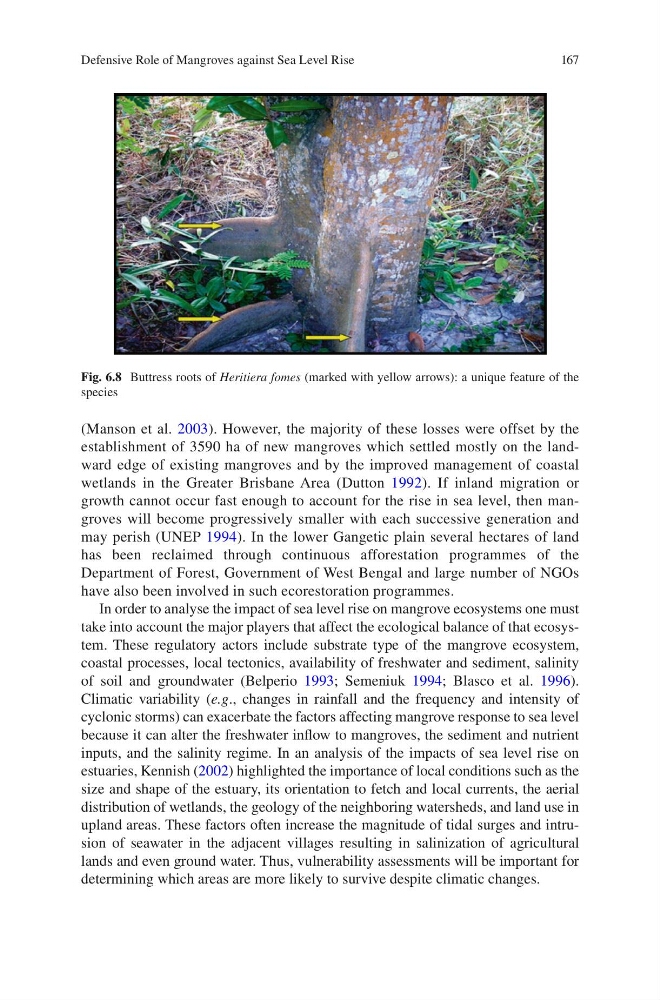
Fig. 6.8 Buttress roots of Heritiera fomes (marked with yellow arrows): a unique feature of the
species
Defensive Role of Mangroves against Sea Level Rise
(Manson et al. 2003). However, the majority of these losses were offset by the
establishment of 3590 ha of new mangroves which settled mostly on the landward edge of existing mangroves and by the improved management of coastal
wetlands in the Greater Brisbane Area (Dutton 1992). If inland migration or
growth cannot occur fast enough to account for the rise in sea level, then mangroves will become progressively smaller with each successive generation and
may perish (UNEP 1994). In the lower Gangetic plain several hectares of land
has been reclaimed through continuous afforestation programmes of the
Department of Forest, Government of West Bengal and large number of NGOs
have also been involved in such ecorestoration programmes.
In order to analyse the impact of sea level rise on mangrove ecosystems one must
take into account the major players that affect the ecological balance of that ecosystem. These regulatory actors include substrate type of the mangrove ecosystem,
coastal processes, local tectonics, availability of freshwater and sediment, salinity
of soil and groundwater (Belperio 1993; Semeniuk 1994; Blasco et al. 1996).
Climatic variability (e.g., changes in rainfall and the frequency and intensity of
cyclonic storms) can exacerbate the factors affecting mangrove response to sea level
because it can alter the freshwater inflow to mangroves, the sediment and nutrient
inputs, and the salinity regime. In an analysis of the impacts of sea level rise on
estuaries, Kennish (2002) highlighted the importance of local conditions such as the
size and shape of the estuary, its orientation to fetch and local currents, the aerial
distribution of wetlands, the geology of the neighboring watersheds, and land use in
upland areas. These factors often increase the magnitude of tidal surges and intrusion of seawater in the adjacent villages resulting in salinization of agricultural
lands and even ground water. Thus, vulnerability assessments will be important for
determining which areas are more likely to survive despite climatic changes.
Fig. 6.8 Buttress roots of Heritiera fomes (marked with yellow arrows): a unique feature of the
species
Defensive Role of Mangroves against Sea Level Rise