

160
Based on an analysis of roughly 30,000 datasets, the IPCC (2007) concluded that
85% of the physical and biological changes in natural systems observed globally
since 1970 were consistent with the responses that would be expected to accompany
atmospheric warming. However, my understanding on the impact of warming of
ocean and estuarine water on biodiversity are in its infancy, and quantification of the
impacts through proper scaling is even in an embryo stage. The present findings
cover the decadal variations of surface water temperature in three sectors of lower
Gangetic delta and conclude that these local level slight variations of water temperature may be attributed largely to anthropogenic factors, like more dilution in the
western sector (on account of Farakka discharge) compared to central and eastern
sectors, where the fresh water availability is practically negligible due to siltation of
the Bidyadhari River since the late fifteenth century. I can also hypothesize the
migration of nektonic species from the high thermal (central and eastern sectors) to
the low thermal region (western sector), but unable not confirm the hypothesis due
to absence of baseline data on nekton community.
As global sea levels rise, millions of people around the world are affected by
increased episodes of coastal flooding, coastal erosion, and higher storm surges that
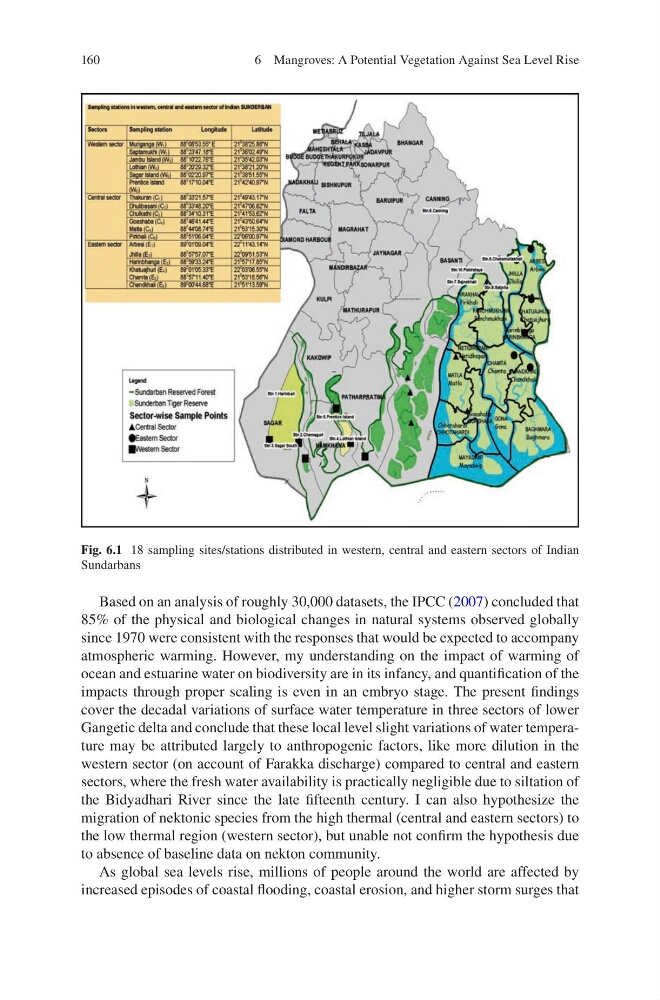
Fig. 6.1 18 sampling sites/stations distributed in western, central and eastern sectors of Indian
Sundarbans
6 Mangroves: A Potential Vegetation Against Sea Level Rise
Based on an analysis of roughly 30,000 datasets, the IPCC (2007) concluded that
85% of the physical and biological changes in natural systems observed globally
since 1970 were consistent with the responses that would be expected to accompany
atmospheric warming. However, my understanding on the impact of warming of
ocean and estuarine water on biodiversity are in its infancy, and quantification of the
impacts through proper scaling is even in an embryo stage. The present findings
cover the decadal variations of surface water temperature in three sectors of lower
Gangetic delta and conclude that these local level slight variations of water temperature may be attributed largely to anthropogenic factors, like more dilution in the
western sector (on account of Farakka discharge) compared to central and eastern
sectors, where the fresh water availability is practically negligible due to siltation of
the Bidyadhari River since the late fifteenth century. I can also hypothesize the
migration of nektonic species from the high thermal (central and eastern sectors) to
the low thermal region (western sector), but unable not confirm the hypothesis due
to absence of baseline data on nekton community.
As global sea levels rise, millions of people around the world are affected by
increased episodes of coastal flooding, coastal erosion, and higher storm surges that
Fig. 6.1 18 sampling sites/stations distributed in western, central and eastern sectors of Indian
Sundarbans
6 Mangroves: A Potential Vegetation Against Sea Level Rise