

111
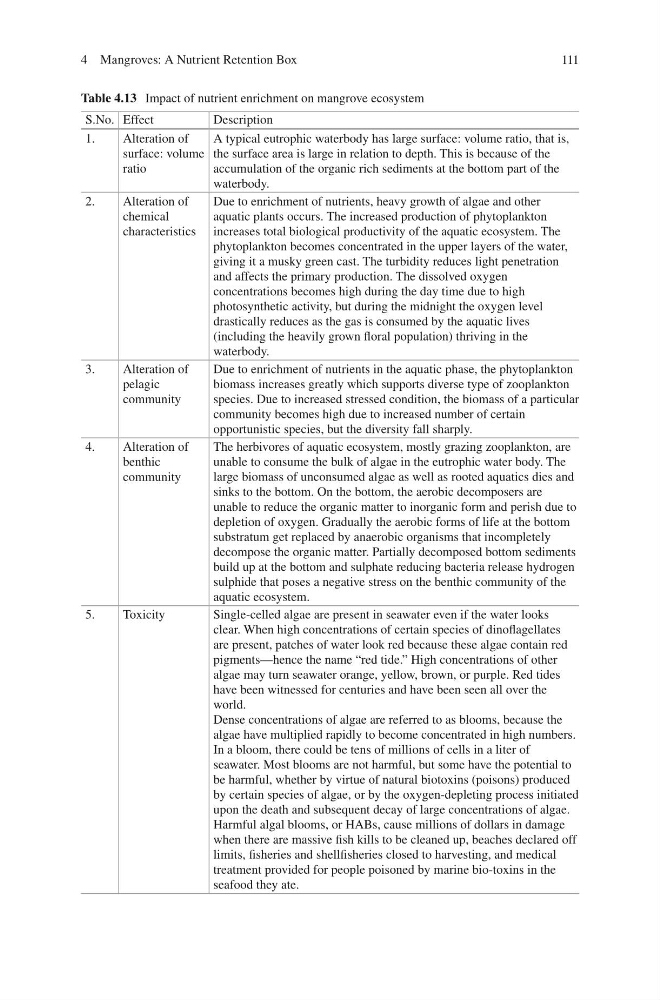
Table 4.13 Impact of nutrient enrichment on mangrove ecosystem
S.No. Effect
Description
1.
Alteration of
surface: volume
ratio
A typical eutrophic waterbody has large surface: volume ratio, that is,
the surface area is large in relation to depth. This is because of the
accumulation of the organic rich sediments at the bottom part of the
waterbody.
2.
Alteration of
chemical
characteristics
Due to enrichment of nutrients, heavy growth of algae and other
aquatic plants occurs. The increased production of phytoplankton
increases total biological productivity of the aquatic ecosystem. The
phytoplankton becomes concentrated in the upper layers of the water,
giving it a musky green cast. The turbidity reduces light penetration
and affects the primary production. The dissolved oxygen
concentrations becomes high during the day time due to high
photosynthetic activity, but during the midnight the oxygen level
drastically reduces as the gas is consumed by the aquatic lives
(including the heavily grown floral population) thriving in the
waterbody.
3.
Alteration of
pelagic
community
Due to enrichment of nutrients in the aquatic phase, the phytoplankton
biomass increases greatly which supports diverse type of zooplankton
species. Due to increased stressed condition, the biomass of a particular
community becomes high due to increased number of certain
opportunistic species, but the diversity fall sharply.
4.
Alteration of
benthic
community
The herbivores of aquatic ecosystem, mostly grazing zooplankton, are
unable to consume the bulk of algae in the eutrophic water body. The
large biomass of unconsumed algae as well as rooted aquatics dies and
sinks to the bottom. On the bottom, the aerobic decomposers are
unable to reduce the organic matter to inorganic form and perish due to
depletion of oxygen. Gradually the aerobic forms of life at the bottom
substratum get replaced by anaerobic organisms that incompletely
decompose the organic matter. Partially decomposed bottom sediments
build up at the bottom and sulphate reducing bacteria release hydrogen
sulphide that poses a negative stress on the benthic community of the
aquatic ecosystem.
5.
Toxicity
Single-celled algae are present in seawater even if the water looks
clear. When high concentrations of certain species of dinoflagellates
are present, patches of water look red because these algae contain red
pigments—hence the name “red tide.” High concentrations of other
algae may turn seawater orange, yellow, brown, or purple. Red tides
have been witnessed for centuries and have been seen all over the
world.
Dense concentrations of algae are referred to as blooms, because the
algae have multiplied rapidly to become concentrated in high numbers.
In a bloom, there could be tens of millions of cells in a liter of
seawater. Most blooms are not harmful, but some have the potential to
be harmful, whether by virtue of natural biotoxins (poisons) produced
by certain species of algae, or by the oxygen-depleting process initiated
upon the death and subsequent decay of large concentrations of algae.
Harmful algal blooms, or HABs, cause millions of dollars in damage
when there are massive fish kills to be cleaned up, beaches declared off
limits, fisheries and shellfisheries closed to harvesting, and medical
treatment provided for people poisoned by marine bio-toxins in the
seafood they ate.
4 Mangroves: A Nutrient Retention Box
Table 4.13 Impact of nutrient enrichment on mangrove ecosystem
S.No. Effect
Description
1.
Alteration of
surface: volume
ratio
A typical eutrophic waterbody has large surface: volume ratio, that is,
the surface area is large in relation to depth. This is because of the
accumulation of the organic rich sediments at the bottom part of the
waterbody.
2.
Alteration of
chemical
characteristics
Due to enrichment of nutrients, heavy growth of algae and other
aquatic plants occurs. The increased production of phytoplankton
increases total biological productivity of the aquatic ecosystem. The
phytoplankton becomes concentrated in the upper layers of the water,
giving it a musky green cast. The turbidity reduces light penetration
and affects the primary production. The dissolved oxygen
concentrations becomes high during the day time due to high
photosynthetic activity, but during the midnight the oxygen level
drastically reduces as the gas is consumed by the aquatic lives
(including the heavily grown floral population) thriving in the
waterbody.
3.
Alteration of
pelagic
community
Due to enrichment of nutrients in the aquatic phase, the phytoplankton
biomass increases greatly which supports diverse type of zooplankton
species. Due to increased stressed condition, the biomass of a particular
community becomes high due to increased number of certain
opportunistic species, but the diversity fall sharply.
4.
Alteration of
benthic
community
The herbivores of aquatic ecosystem, mostly grazing zooplankton, are
unable to consume the bulk of algae in the eutrophic water body. The
large biomass of unconsumed algae as well as rooted aquatics dies and
sinks to the bottom. On the bottom, the aerobic decomposers are
unable to reduce the organic matter to inorganic form and perish due to
depletion of oxygen. Gradually the aerobic forms of life at the bottom
substratum get replaced by anaerobic organisms that incompletely
decompose the organic matter. Partially decomposed bottom sediments
build up at the bottom and sulphate reducing bacteria release hydrogen
sulphide that poses a negative stress on the benthic community of the
aquatic ecosystem.
5.
Toxicity
Single-celled algae are present in seawater even if the water looks
clear. When high concentrations of certain species of dinoflagellates
are present, patches of water look red because these algae contain red
pigments—hence the name “red tide.” High concentrations of other
algae may turn seawater orange, yellow, brown, or purple. Red tides
have been witnessed for centuries and have been seen all over the
world.
Dense concentrations of algae are referred to as blooms, because the
algae have multiplied rapidly to become concentrated in high numbers.
In a bloom, there could be tens of millions of cells in a liter of
seawater. Most blooms are not harmful, but some have the potential to
be harmful, whether by virtue of natural biotoxins (poisons) produced
by certain species of algae, or by the oxygen-depleting process initiated
upon the death and subsequent decay of large concentrations of algae.
Harmful algal blooms, or HABs, cause millions of dollars in damage
when there are massive fish kills to be cleaned up, beaches declared off
limits, fisheries and shellfisheries closed to harvesting, and medical
treatment provided for people poisoned by marine bio-toxins in the
seafood they ate.
4 Mangroves: A Nutrient Retention Box