

91
At Namkhana, dissolved nitrate concentration ranged from 18.90 ppm (during premonsoon in 1984) to 43.44 ppm (during premonsoon in 2009) (Fig. 4.12). In case
of Ajmalmari, the values ranged between 9.44 ppm (during premonsoon in 1984) to
24.89 ppm (during premonsoon in 2009) (Fig. 4.13).
In both Diamond Harbour and Namkhana of the Hooghly estuarine system,
nitrate has increased 9.49 μg at l
−1
/decade and 10.57 μg at l
−1
/decade respectively.
In Ajmalmari, located in the Matla estuarine complex, the increase is relatively low
(5.98 μg at l
−1
/decade).
The main sources of nutrients in Diamond Harbour and Namkhana are the tourism units and fish landing stations, whereas in Ajmalmari, shrimp farms and mangrove litter generate nutrients in the system.
Mangrove litter fall
Leaching of nutrients
Crab consumption
Decomposition
Faeces / Death
Land run-off
Dissolved
Nutrient regeneration
Microbial biomass/ Particulate matter and sediment
L and run-off
Phytoplankton Sea grass Epiphytes Benthic algae
S mall invertebrates
Detritus
Larvae and juveniles of fin and shell fishes
Immigration of larvae Emigration of sub-adult
Phytoplankton based material
Adult fishes in offshore
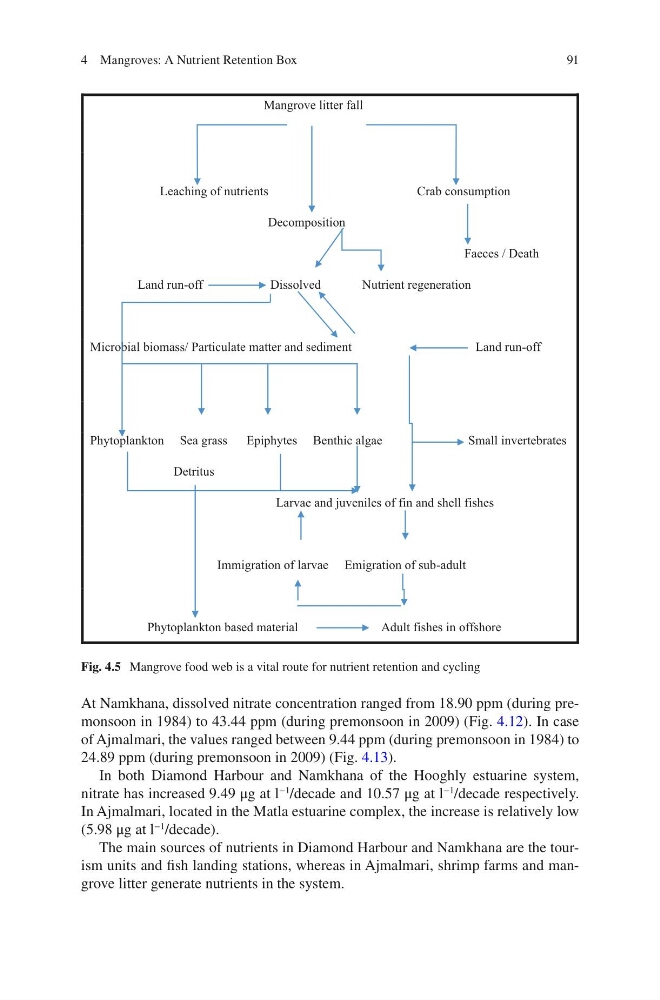
Fig. 4.5 Mangrove food web is a vital route for nutrient retention and cycling
4 Mangroves: A Nutrient Retention Box
At Namkhana, dissolved nitrate concentration ranged from 18.90 ppm (during premonsoon in 1984) to 43.44 ppm (during premonsoon in 2009) (Fig. 4.12). In case
of Ajmalmari, the values ranged between 9.44 ppm (during premonsoon in 1984) to
24.89 ppm (during premonsoon in 2009) (Fig. 4.13).
In both Diamond Harbour and Namkhana of the Hooghly estuarine system,
nitrate has increased 9.49 μg at l
−1
/decade and 10.57 μg at l
−1
/decade respectively.
In Ajmalmari, located in the Matla estuarine complex, the increase is relatively low
(5.98 μg at l
−1
/decade).
The main sources of nutrients in Diamond Harbour and Namkhana are the tourism units and fish landing stations, whereas in Ajmalmari, shrimp farms and mangrove litter generate nutrients in the system.
Mangrove litter fall
Leaching of nutrients
Crab consumption
Decomposition
Faeces / Death
Land run-off
Dissolved
Nutrient regeneration
Microbial biomass/ Particulate matter and sediment
L and run-off
Phytoplankton Sea grass Epiphytes Benthic algae
S mall invertebrates
Detritus
Larvae and juveniles of fin and shell fishes
Immigration of larvae Emigration of sub-adult
Phytoplankton based material
Adult fishes in offshore
Fig. 4.5 Mangrove food web is a vital route for nutrient retention and cycling
4 Mangroves: A Nutrient Retention Box