

References bibliographiques
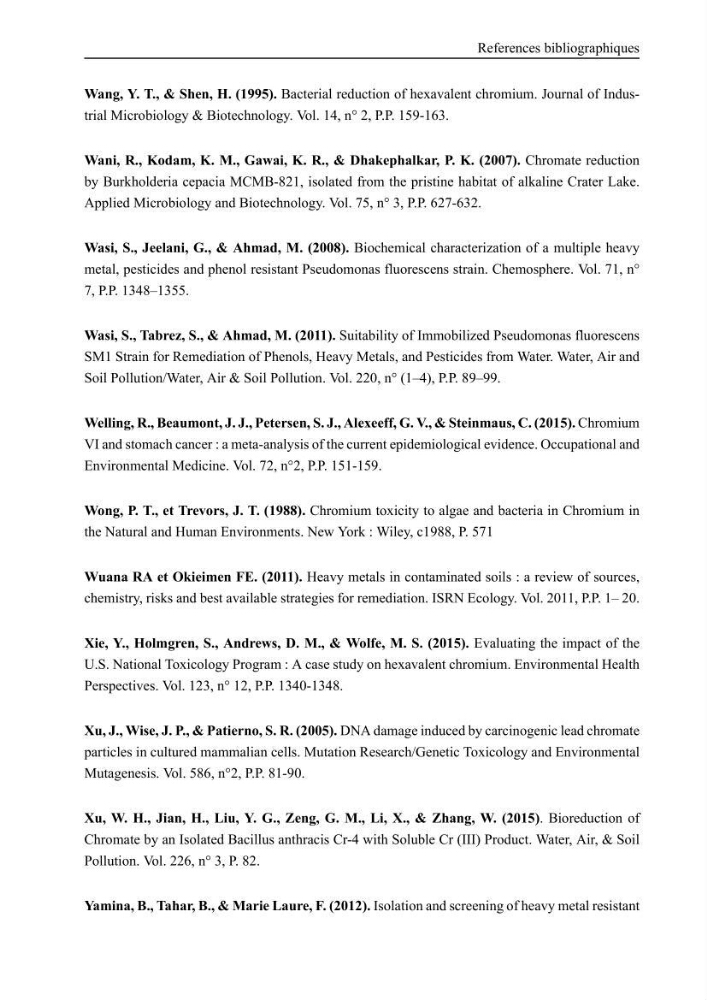
Wang, Y. T., & Shen, H. (1995). Bacterial reduction of hexavalent chromium. Journal of Industrial Microbiology & Biotechnology. Vol. 14, n° 2, P.P. 159-163.
Wani, R., Kodam, K. M., Gawai, K. R., & Dhakephalkar, P. K. (2007). Chromate reduction
by Burkholderia cepacia MCMB-821, isolated from the pristine habitat of alkaline Crater Lake.
Applied Microbiology and Biotechnology. Vol. 75, n° 3, P.P. 627-632.
Wasi, S., Jeelani, G., & Ahmad, M. (2008). Biochemical characterization of a multiple heavy
metal, pesticides and phenol resistant Pseudomonas fluorescens strain. Chemosphere. Vol. 71, n°
7, P.P. 1348–1355.
Wasi, S., Tabrez, S., & Ahmad, M. (2011). Suitability of Immobilized Pseudomonas fluorescens
SM1 Strain for Remediation of Phenols, Heavy Metals, and Pesticides from Water. Water, Air and
Soil Pollution/Water, Air & Soil Pollution. Vol. 220, n° (1–4), P.P. 89–99.
Welling, R., Beaumont, J. J., Petersen, S. J., Alexeeff, G. V., & Steinmaus, C. (2015). Chromium
VI and stomach cancer : a meta-analysis of the current epidemiological evidence. Occupational and
Environmental Medicine. Vol. 72, n°2, P.P. 151-159.
Wong, P. T., et Trevors, J. T. (1988). Chromium toxicity to algae and bacteria in Chromium in
the Natural and Human Environments. New York : Wiley, c1988, P. 571
Wuana RA et Okieimen FE. (2011). Heavy metals in contaminated soils : a review of sources,
chemistry, risks and best available strategies for remediation. ISRN Ecology. Vol. 2011, P.P. 1– 20.
Xie, Y., Holmgren, S., Andrews, D. M., & Wolfe, M. S. (2015). Evaluating the impact of the
U.S. National Toxicology Program : A case study on hexavalent chromium. Environmental Health
Perspectives. Vol. 123, n° 12, P.P. 1340-1348.
Xu, J., Wise, J. P., & Patierno, S. R. (2005). DNA damage induced by carcinogenic lead chromate
particles in cultured mammalian cells. Mutation Research/Genetic Toxicology and Environmental
Mutagenesis. Vol. 586, n°2, P.P. 81-90.
Xu, W. H., Jian, H., Liu, Y. G., Zeng, G. M., Li, X., & Zhang, W. (2015). Bioreduction of
Chromate by an Isolated Bacillus anthracis Cr-4 with Soluble Cr (III) Product. Water, Air, & Soil
Pollution. Vol. 226, n° 3, P. 82.
Yamina, B., Tahar, B., & Marie Laure, F. (2012). Isolation and screening of heavy metal resistant
Wang, Y. T., & Shen, H. (1995). Bacterial reduction of hexavalent chromium. Journal of Industrial Microbiology & Biotechnology. Vol. 14, n° 2, P.P. 159-163.
Wani, R., Kodam, K. M., Gawai, K. R., & Dhakephalkar, P. K. (2007). Chromate reduction
by Burkholderia cepacia MCMB-821, isolated from the pristine habitat of alkaline Crater Lake.
Applied Microbiology and Biotechnology. Vol. 75, n° 3, P.P. 627-632.
Wasi, S., Jeelani, G., & Ahmad, M. (2008). Biochemical characterization of a multiple heavy
metal, pesticides and phenol resistant Pseudomonas fluorescens strain. Chemosphere. Vol. 71, n°
7, P.P. 1348–1355.
Wasi, S., Tabrez, S., & Ahmad, M. (2011). Suitability of Immobilized Pseudomonas fluorescens
SM1 Strain for Remediation of Phenols, Heavy Metals, and Pesticides from Water. Water, Air and
Soil Pollution/Water, Air & Soil Pollution. Vol. 220, n° (1–4), P.P. 89–99.
Welling, R., Beaumont, J. J., Petersen, S. J., Alexeeff, G. V., & Steinmaus, C. (2015). Chromium
VI and stomach cancer : a meta-analysis of the current epidemiological evidence. Occupational and
Environmental Medicine. Vol. 72, n°2, P.P. 151-159.
Wong, P. T., et Trevors, J. T. (1988). Chromium toxicity to algae and bacteria in Chromium in
the Natural and Human Environments. New York : Wiley, c1988, P. 571
Wuana RA et Okieimen FE. (2011). Heavy metals in contaminated soils : a review of sources,
chemistry, risks and best available strategies for remediation. ISRN Ecology. Vol. 2011, P.P. 1– 20.
Xie, Y., Holmgren, S., Andrews, D. M., & Wolfe, M. S. (2015). Evaluating the impact of the
U.S. National Toxicology Program : A case study on hexavalent chromium. Environmental Health
Perspectives. Vol. 123, n° 12, P.P. 1340-1348.
Xu, J., Wise, J. P., & Patierno, S. R. (2005). DNA damage induced by carcinogenic lead chromate
particles in cultured mammalian cells. Mutation Research/Genetic Toxicology and Environmental
Mutagenesis. Vol. 586, n°2, P.P. 81-90.
Xu, W. H., Jian, H., Liu, Y. G., Zeng, G. M., Li, X., & Zhang, W. (2015). Bioreduction of
Chromate by an Isolated Bacillus anthracis Cr-4 with Soluble Cr (III) Product. Water, Air, & Soil
Pollution. Vol. 226, n° 3, P. 82.
Yamina, B., Tahar, B., & Marie Laure, F. (2012). Isolation and screening of heavy metal resistant