

References bibliographiques
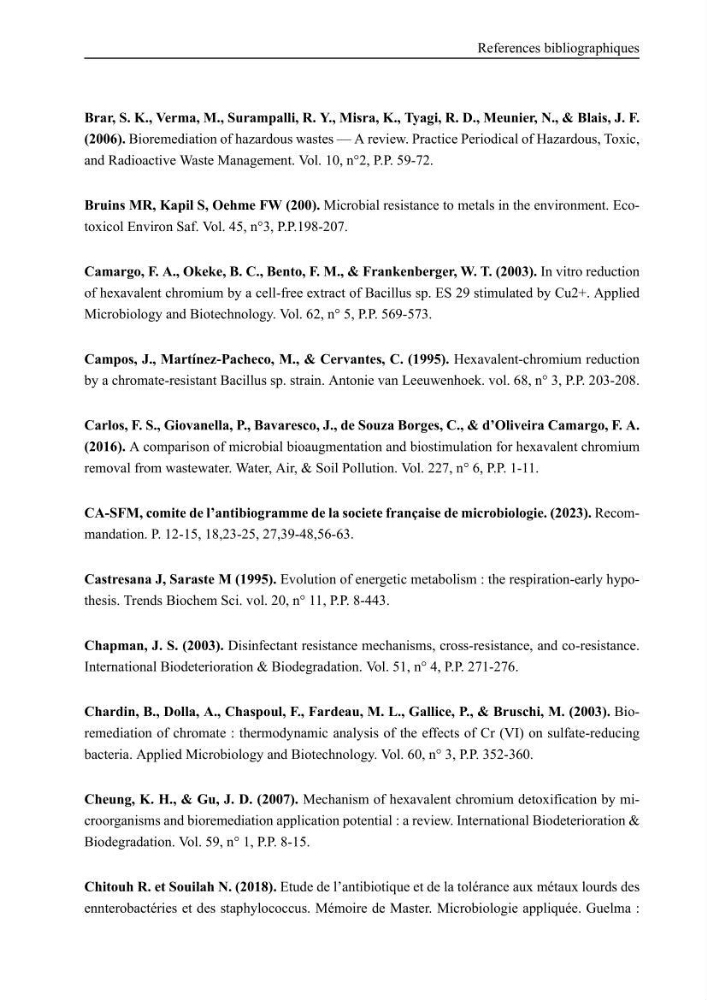
Brar, S. K., Verma, M., Surampalli, R. Y., Misra, K., Tyagi, R. D., Meunier, N., & Blais, J. F.
(2006). Bioremediation of hazardous wastes — A review. Practice Periodical of Hazardous, Toxic,
and Radioactive Waste Management. Vol. 10, n°2, P.P. 59-72.
Bruins MR, Kapil S, Oehme FW (200). Microbial resistance to metals in the environment. Ecotoxicol Environ Saf. Vol. 45, n°3, P.P.198-207.
Camargo, F. A., Okeke, B. C., Bento, F. M., & Frankenberger, W. T. (2003). In vitro reduction
of hexavalent chromium by a cell-free extract of Bacillus sp. ES 29 stimulated by Cu2+. Applied
Microbiology and Biotechnology. Vol. 62, n° 5, P.P. 569-573.
Campos, J., Martínez-Pacheco, M., & Cervantes, C. (1995). Hexavalent-chromium reduction
by a chromate-resistant Bacillus sp. strain. Antonie van Leeuwenhoek. vol. 68, n° 3, P.P. 203-208.
Carlos, F. S., Giovanella, P., Bavaresco, J., de Souza Borges, C., & d’Oliveira Camargo, F. A.
(2016). A comparison of microbial bioaugmentation and biostimulation for hexavalent chromium
removal from wastewater. Water, Air, & Soil Pollution. Vol. 227, n° 6, P.P. 1-11.
CA-SFM, comite de l’antibiogramme de la societe française de microbiologie. (2023). Recommandation. P. 12-15, 18,23-25, 27,39-48,56-63.
Castresana J, Saraste M (1995). Evolution of energetic metabolism : the respiration-early hypothesis. Trends Biochem Sci. vol. 20, n° 11, P.P. 8-443.
Chapman, J. S. (2003). Disinfectant resistance mechanisms, cross-resistance, and co-resistance.
International Biodeterioration & Biodegradation. Vol. 51, n° 4, P.P. 271-276.
Chardin, B., Dolla, A., Chaspoul, F., Fardeau, M. L., Gallice, P., & Bruschi, M. (2003). Bioremediation of chromate : thermodynamic analysis of the effects of Cr (VI) on sulfate-reducing
bacteria. Applied Microbiology and Biotechnology. Vol. 60, n° 3, P.P. 352-360.
Cheung, K. H., & Gu, J. D. (2007). Mechanism of hexavalent chromium detoxification by microorganisms and bioremediation application potential : a review. International Biodeterioration &
Biodegradation. Vol. 59, n° 1, P.P. 8-15.
Chitouh R. et Souilah N. (2018). Etude de l’antibiotique et de la tolérance aux métaux lourds des
ennterobactéries et des staphylococcus. Mémoire de Master. Microbiologie appliquée. Guelma :
Brar, S. K., Verma, M., Surampalli, R. Y., Misra, K., Tyagi, R. D., Meunier, N., & Blais, J. F.
(2006). Bioremediation of hazardous wastes — A review. Practice Periodical of Hazardous, Toxic,
and Radioactive Waste Management. Vol. 10, n°2, P.P. 59-72.
Bruins MR, Kapil S, Oehme FW (200). Microbial resistance to metals in the environment. Ecotoxicol Environ Saf. Vol. 45, n°3, P.P.198-207.
Camargo, F. A., Okeke, B. C., Bento, F. M., & Frankenberger, W. T. (2003). In vitro reduction
of hexavalent chromium by a cell-free extract of Bacillus sp. ES 29 stimulated by Cu2+. Applied
Microbiology and Biotechnology. Vol. 62, n° 5, P.P. 569-573.
Campos, J., Martínez-Pacheco, M., & Cervantes, C. (1995). Hexavalent-chromium reduction
by a chromate-resistant Bacillus sp. strain. Antonie van Leeuwenhoek. vol. 68, n° 3, P.P. 203-208.
Carlos, F. S., Giovanella, P., Bavaresco, J., de Souza Borges, C., & d’Oliveira Camargo, F. A.
(2016). A comparison of microbial bioaugmentation and biostimulation for hexavalent chromium
removal from wastewater. Water, Air, & Soil Pollution. Vol. 227, n° 6, P.P. 1-11.
CA-SFM, comite de l’antibiogramme de la societe française de microbiologie. (2023). Recommandation. P. 12-15, 18,23-25, 27,39-48,56-63.
Castresana J, Saraste M (1995). Evolution of energetic metabolism : the respiration-early hypothesis. Trends Biochem Sci. vol. 20, n° 11, P.P. 8-443.
Chapman, J. S. (2003). Disinfectant resistance mechanisms, cross-resistance, and co-resistance.
International Biodeterioration & Biodegradation. Vol. 51, n° 4, P.P. 271-276.
Chardin, B., Dolla, A., Chaspoul, F., Fardeau, M. L., Gallice, P., & Bruschi, M. (2003). Bioremediation of chromate : thermodynamic analysis of the effects of Cr (VI) on sulfate-reducing
bacteria. Applied Microbiology and Biotechnology. Vol. 60, n° 3, P.P. 352-360.
Cheung, K. H., & Gu, J. D. (2007). Mechanism of hexavalent chromium detoxification by microorganisms and bioremediation application potential : a review. International Biodeterioration &
Biodegradation. Vol. 59, n° 1, P.P. 8-15.
Chitouh R. et Souilah N. (2018). Etude de l’antibiotique et de la tolérance aux métaux lourds des
ennterobactéries et des staphylococcus. Mémoire de Master. Microbiologie appliquée. Guelma :