

Biotechnology: An Eco-friendly Tool of Nature for Textile …
87
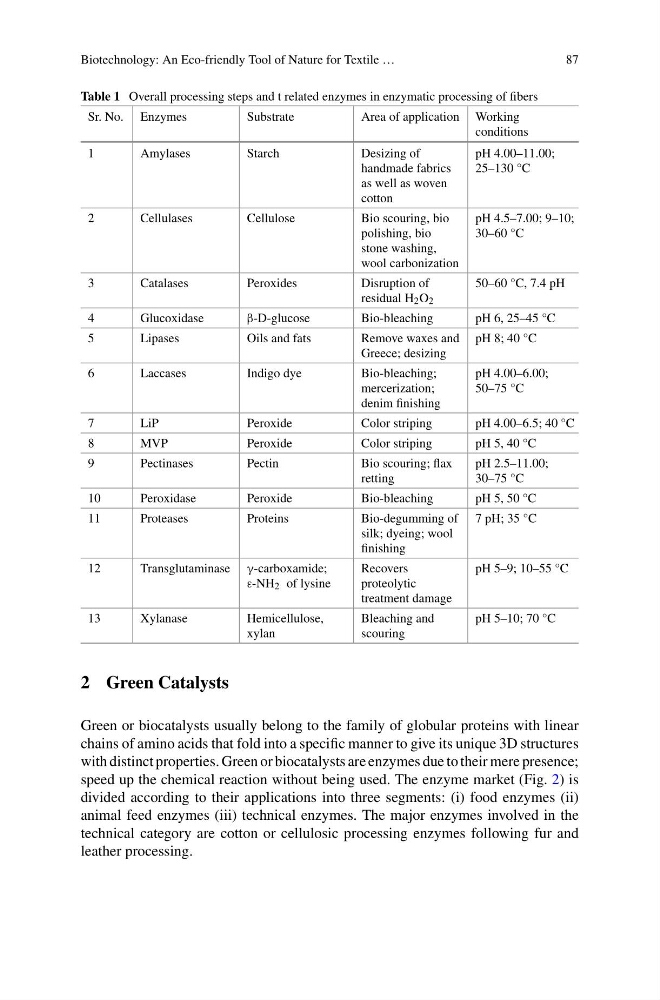
Table 1 Overall processing steps and t related enzymes in enzymatic processing of fibers
Sr. No. Enzymes
Substrate
Area of application Working
conditions
1
Amylases
Starch
Desizing of
handmade fabrics
as well as woven
cotton
pH 4.00–11.00;
25–130 °C
2
Cellulases
Cellulose
Bio scouring, bio
polishing, bio
stone washing,
wool carbonization
pH 4.5–7.00; 9–10;
30–60 °C
3
Catalases
Peroxides
Disruption of
residual H 2 O 2
50–60 °C, 7.4 pH
4
Glucoxidase
β-D-glucose
Bio-bleaching
pH 6, 25–45 °C
5
Lipases
Oils and fats
Remove waxes and
Greece; desizing
pH 8; 40 °C
6
Laccases
Indigo dye
Bio-bleaching;
mercerization;
denim finishing
pH 4.00–6.00;
50–75 °C
7
LiP
Peroxide
Color striping
pH 4.00–6.5; 40 °C
8
MVP
Peroxide
Color striping
pH 5, 40 °C
9
Pectinases
Pectin
Bio scouring; flax
retting
pH 2.5–11.00;
30–75 °C
10
Peroxidase
Peroxide
Bio-bleaching
pH 5, 50 °C
11
Proteases
Proteins
Bio-degumming of
silk; dyeing; wool
finishing
7 pH; 35 °C
12
Transglutaminase γ-carboxamide;
ε-NH 2 of lysine
Recovers
proteolytic
treatment damage
pH 5–9; 10–55 °C
13
Xylanase
Hemicellulose,
xylan
Bleaching and
scouring
pH 5–10; 70 °C
2 Green Catalysts
Green or biocatalysts usually belong to the family of globular proteins with linear
chains of amino acids that fold into a specific manner to give its unique 3D structures
with distinct properties. Green or biocatalysts are enzymes due to their mere presence;
speed up the chemical reaction without being used. The enzyme market (Fig. 2) is
divided according to their applications into three segments: (i) food enzymes (ii)
animal feed enzymes (iii) technical enzymes. The major enzymes involved in the
technical category are cotton or cellulosic processing enzymes following fur and
leather processing.
87
Table 1 Overall processing steps and t related enzymes in enzymatic processing of fibers
Sr. No. Enzymes
Substrate
Area of application Working
conditions
1
Amylases
Starch
Desizing of
handmade fabrics
as well as woven
cotton
pH 4.00–11.00;
25–130 °C
2
Cellulases
Cellulose
Bio scouring, bio
polishing, bio
stone washing,
wool carbonization
pH 4.5–7.00; 9–10;
30–60 °C
3
Catalases
Peroxides
Disruption of
residual H 2 O 2
50–60 °C, 7.4 pH
4
Glucoxidase
β-D-glucose
Bio-bleaching
pH 6, 25–45 °C
5
Lipases
Oils and fats
Remove waxes and
Greece; desizing
pH 8; 40 °C
6
Laccases
Indigo dye
Bio-bleaching;
mercerization;
denim finishing
pH 4.00–6.00;
50–75 °C
7
LiP
Peroxide
Color striping
pH 4.00–6.5; 40 °C
8
MVP
Peroxide
Color striping
pH 5, 40 °C
9
Pectinases
Pectin
Bio scouring; flax
retting
pH 2.5–11.00;
30–75 °C
10
Peroxidase
Peroxide
Bio-bleaching
pH 5, 50 °C
11
Proteases
Proteins
Bio-degumming of
silk; dyeing; wool
finishing
7 pH; 35 °C
12
Transglutaminase γ-carboxamide;
ε-NH 2 of lysine
Recovers
proteolytic
treatment damage
pH 5–9; 10–55 °C
13
Xylanase
Hemicellulose,
xylan
Bleaching and
scouring
pH 5–10; 70 °C
2 Green Catalysts
Green or biocatalysts usually belong to the family of globular proteins with linear
chains of amino acids that fold into a specific manner to give its unique 3D structures
with distinct properties. Green or biocatalysts are enzymes due to their mere presence;
speed up the chemical reaction without being used. The enzyme market (Fig. 2) is
divided according to their applications into three segments: (i) food enzymes (ii)
animal feed enzymes (iii) technical enzymes. The major enzymes involved in the
technical category are cotton or cellulosic processing enzymes following fur and
leather processing.