

Surface Modification of Textiles with Nanomaterials …
29
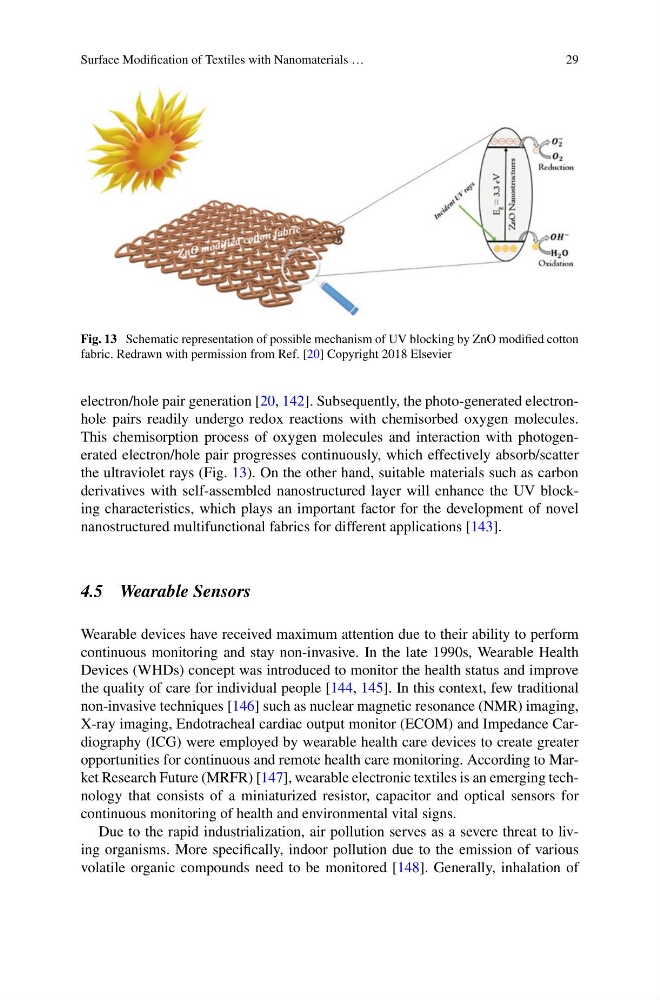
Fig. 13 Schematic representation of possible mechanism of UV blocking by ZnO modified cotton
fabric. Redrawn with permission from Ref. [20] Copyright 2018 Elsevier
electron/hole pair generation [20, 142]. Subsequently, the photo-generated electronhole pairs readily undergo redox reactions with chemisorbed oxygen molecules.
This chemisorption process of oxygen molecules and interaction with photogenerated electron/hole pair progresses continuously, which effectively absorb/scatter
the ultraviolet rays (Fig. 13). On the other hand, suitable materials such as carbon
derivatives with self-assembled nanostructured layer will enhance the UV blocking characteristics, which plays an important factor for the development of novel
nanostructured multifunctional fabrics for different applications [143].
4.5 Wearable Sensors
Wearable devices have received maximum attention due to their ability to perform
continuous monitoring and stay non-invasive. In the late 1990s, Wearable Health
Devices (WHDs) concept was introduced to monitor the health status and improve
the quality of care for individual people [144, 145]. In this context, few traditional
non-invasive techniques [146] such as nuclear magnetic resonance (NMR) imaging,
X-ray imaging, Endotracheal cardiac output monitor (ECOM) and Impedance Cardiography (ICG) were employed by wearable health care devices to create greater
opportunities for continuous and remote health care monitoring. According to Market Research Future (MRFR) [147], wearable electronic textiles is an emerging technology that consists of a miniaturized resistor, capacitor and optical sensors for
continuous monitoring of health and environmental vital signs.
Due to the rapid industrialization, air pollution serves as a severe threat to living organisms. More specifically, indoor pollution due to the emission of various
volatile organic compounds need to be monitored [148]. Generally, inhalation of
29
Fig. 13 Schematic representation of possible mechanism of UV blocking by ZnO modified cotton
fabric. Redrawn with permission from Ref. [20] Copyright 2018 Elsevier
electron/hole pair generation [20, 142]. Subsequently, the photo-generated electronhole pairs readily undergo redox reactions with chemisorbed oxygen molecules.
This chemisorption process of oxygen molecules and interaction with photogenerated electron/hole pair progresses continuously, which effectively absorb/scatter
the ultraviolet rays (Fig. 13). On the other hand, suitable materials such as carbon
derivatives with self-assembled nanostructured layer will enhance the UV blocking characteristics, which plays an important factor for the development of novel
nanostructured multifunctional fabrics for different applications [143].
4.5 Wearable Sensors
Wearable devices have received maximum attention due to their ability to perform
continuous monitoring and stay non-invasive. In the late 1990s, Wearable Health
Devices (WHDs) concept was introduced to monitor the health status and improve
the quality of care for individual people [144, 145]. In this context, few traditional
non-invasive techniques [146] such as nuclear magnetic resonance (NMR) imaging,
X-ray imaging, Endotracheal cardiac output monitor (ECOM) and Impedance Cardiography (ICG) were employed by wearable health care devices to create greater
opportunities for continuous and remote health care monitoring. According to Market Research Future (MRFR) [147], wearable electronic textiles is an emerging technology that consists of a miniaturized resistor, capacitor and optical sensors for
continuous monitoring of health and environmental vital signs.
Due to the rapid industrialization, air pollution serves as a severe threat to living organisms. More specifically, indoor pollution due to the emission of various
volatile organic compounds need to be monitored [148]. Generally, inhalation of