

Surface Modification of Textiles with Nanomaterials …
27
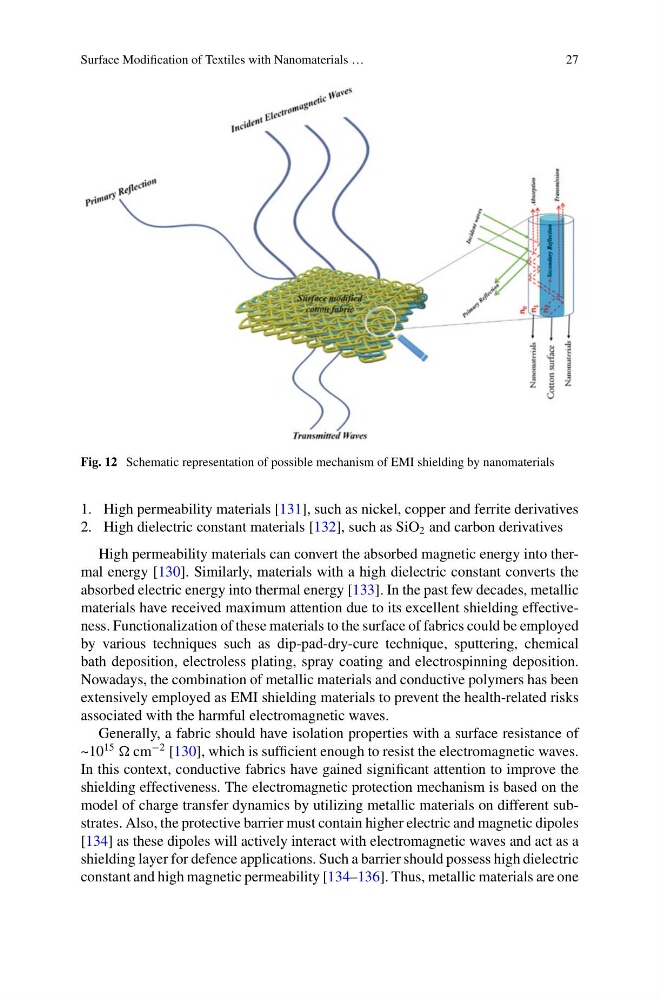
Fig. 12 Schematic representation of possible mechanism of EMI shielding by nanomaterials
1. High permeability materials [131], such as nickel, copper and ferrite derivatives
2. High dielectric constant materials [132], such as SiO 2 and carbon derivatives
High permeability materials can convert the absorbed magnetic energy into thermal energy [130]. Similarly, materials with a high dielectric constant converts the
absorbed electric energy into thermal energy [133]. In the past few decades, metallic
materials have received maximum attention due to its excellent shielding effectiveness. Functionalization of these materials to the surface of fabrics could be employed
by various techniques such as dip-pad-dry-cure technique, sputtering, chemical
bath deposition, electroless plating, spray coating and electrospinning deposition.
Nowadays, the combination of metallic materials and conductive polymers has been
extensively employed as EMI shielding materials to prevent the health-related risks
associated with the harmful electromagnetic waves.
Generally, a fabric should have isolation properties with a surface resistance of
~10
15
cm
−2 [130], which is sufficient enough to resist the electromagnetic waves.
In this context, conductive fabrics have gained significant attention to improve the
shielding effectiveness. The electromagnetic protection mechanism is based on the
model of charge transfer dynamics by utilizing metallic materials on different substrates. Also, the protective barrier must contain higher electric and magnetic dipoles
[134] as these dipoles will actively interact with electromagnetic waves and act as a
shielding layer for defence applications. Such a barrier should possess high dielectric
constant and high magnetic permeability [134–136]. Thus, metallic materials are one
27
Fig. 12 Schematic representation of possible mechanism of EMI shielding by nanomaterials
1. High permeability materials [131], such as nickel, copper and ferrite derivatives
2. High dielectric constant materials [132], such as SiO 2 and carbon derivatives
High permeability materials can convert the absorbed magnetic energy into thermal energy [130]. Similarly, materials with a high dielectric constant converts the
absorbed electric energy into thermal energy [133]. In the past few decades, metallic
materials have received maximum attention due to its excellent shielding effectiveness. Functionalization of these materials to the surface of fabrics could be employed
by various techniques such as dip-pad-dry-cure technique, sputtering, chemical
bath deposition, electroless plating, spray coating and electrospinning deposition.
Nowadays, the combination of metallic materials and conductive polymers has been
extensively employed as EMI shielding materials to prevent the health-related risks
associated with the harmful electromagnetic waves.
Generally, a fabric should have isolation properties with a surface resistance of
~10
15
cm
−2 [130], which is sufficient enough to resist the electromagnetic waves.
In this context, conductive fabrics have gained significant attention to improve the
shielding effectiveness. The electromagnetic protection mechanism is based on the
model of charge transfer dynamics by utilizing metallic materials on different substrates. Also, the protective barrier must contain higher electric and magnetic dipoles
[134] as these dipoles will actively interact with electromagnetic waves and act as a
shielding layer for defence applications. Such a barrier should possess high dielectric
constant and high magnetic permeability [134–136]. Thus, metallic materials are one