

Surface Modification of Textiles with Nanomaterials …
25
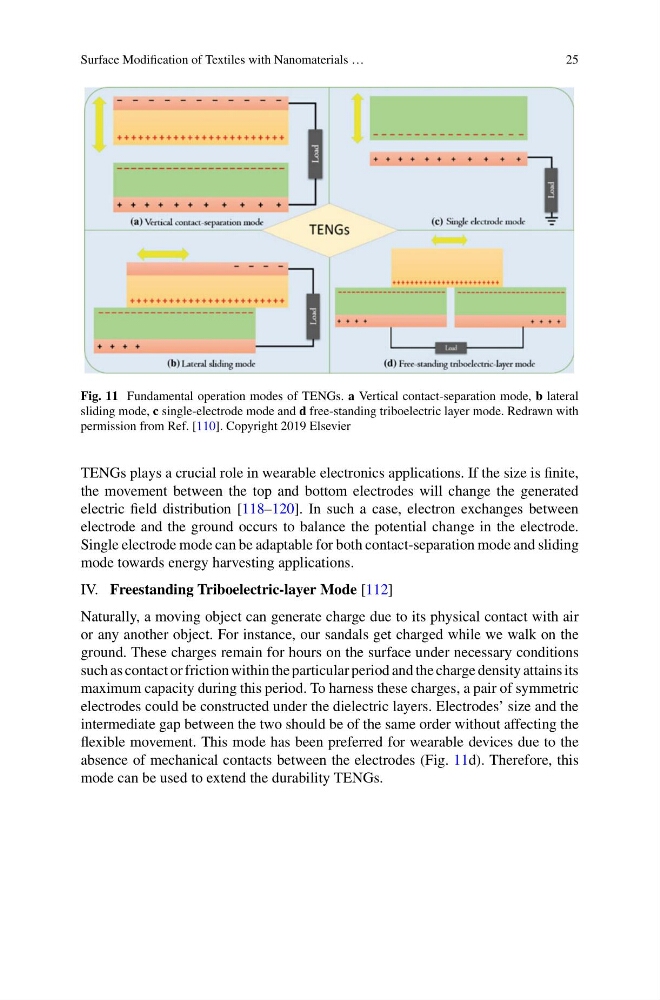
Fig. 11 Fundamental operation modes of TENGs. a Vertical contact-separation mode, b lateral
sliding mode, c single-electrode mode and d free-standing triboelectric layer mode. Redrawn with
permission from Ref. [110]. Copyright 2019 Elsevier
TENGs plays a crucial role in wearable electronics applications. If the size is finite,
the movement between the top and bottom electrodes will change the generated
electric field distribution [118–120]. In such a case, electron exchanges between
electrode and the ground occurs to balance the potential change in the electrode.
Single electrode mode can be adaptable for both contact-separation mode and sliding
mode towards energy harvesting applications.
IV. Freestanding Triboelectric-layer Mode [112]
Naturally, a moving object can generate charge due to its physical contact with air
or any another object. For instance, our sandals get charged while we walk on the
ground. These charges remain for hours on the surface under necessary conditions
such as contact or friction within the particular period and the charge density attains its
maximum capacity during this period. To harness these charges, a pair of symmetric
electrodes could be constructed under the dielectric layers. Electrodes’ size and the
intermediate gap between the two should be of the same order without affecting the
flexible movement. This mode has been preferred for wearable devices due to the
absence of mechanical contacts between the electrodes (Fig. 11d). Therefore, this
mode can be used to extend the durability TENGs.
25
Fig. 11 Fundamental operation modes of TENGs. a Vertical contact-separation mode, b lateral
sliding mode, c single-electrode mode and d free-standing triboelectric layer mode. Redrawn with
permission from Ref. [110]. Copyright 2019 Elsevier
TENGs plays a crucial role in wearable electronics applications. If the size is finite,
the movement between the top and bottom electrodes will change the generated
electric field distribution [118–120]. In such a case, electron exchanges between
electrode and the ground occurs to balance the potential change in the electrode.
Single electrode mode can be adaptable for both contact-separation mode and sliding
mode towards energy harvesting applications.
IV. Freestanding Triboelectric-layer Mode [112]
Naturally, a moving object can generate charge due to its physical contact with air
or any another object. For instance, our sandals get charged while we walk on the
ground. These charges remain for hours on the surface under necessary conditions
such as contact or friction within the particular period and the charge density attains its
maximum capacity during this period. To harness these charges, a pair of symmetric
electrodes could be constructed under the dielectric layers. Electrodes’ size and the
intermediate gap between the two should be of the same order without affecting the
flexible movement. This mode has been preferred for wearable devices due to the
absence of mechanical contacts between the electrodes (Fig. 11d). Therefore, this
mode can be used to extend the durability TENGs.