

210
M. Ashraf and S. Riaz
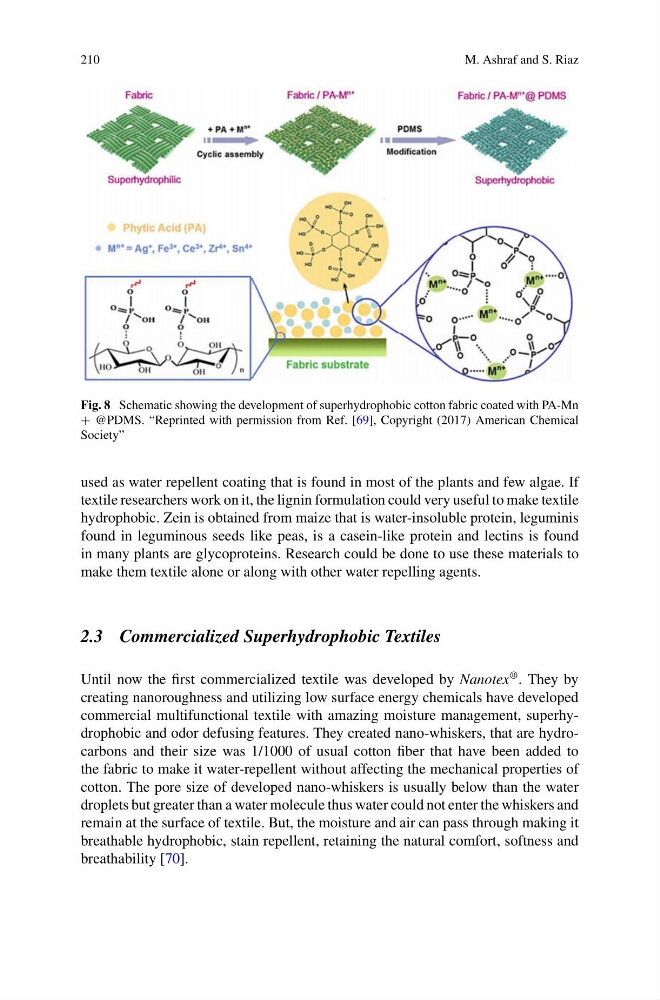
Fig. 8 Schematic showing the development of superhydrophobic cotton fabric coated with PA-Mn
+ @PDMS. “Reprinted with permission from Ref. [69], Copyright (2017) American Chemical
Society”
used as water repellent coating that is found in most of the plants and few algae. If
textile researchers work on it, the lignin formulation could very useful to make textile
hydrophobic. Zein is obtained from maize that is water-insoluble protein, leguminis
found in leguminous seeds like peas, is a casein-like protein and lectins is found
in many plants are glycoproteins. Research could be done to use these materials to
make them textile alone or along with other water repelling agents.
2.3 Commercialized Superhydrophobic Textiles
Until now the first commercialized textile was developed by Nanotex
® . They by
creating nanoroughness and utilizing low surface energy chemicals have developed
commercial multifunctional textile with amazing moisture management, superhydrophobic and odor defusing features. They created nano-whiskers, that are hydrocarbons and their size was 1/1000 of usual cotton fiber that have been added to
the fabric to make it water-repellent without affecting the mechanical properties of
cotton. The pore size of developed nano-whiskers is usually below than the water
droplets but greater than a water molecule thus water could not enter the whiskers and
remain at the surface of textile. But, the moisture and air can pass through making it
breathable hydrophobic, stain repellent, retaining the natural comfort, softness and
breathability [70].
M. Ashraf and S. Riaz
Fig. 8 Schematic showing the development of superhydrophobic cotton fabric coated with PA-Mn
+ @PDMS. “Reprinted with permission from Ref. [69], Copyright (2017) American Chemical
Society”
used as water repellent coating that is found in most of the plants and few algae. If
textile researchers work on it, the lignin formulation could very useful to make textile
hydrophobic. Zein is obtained from maize that is water-insoluble protein, leguminis
found in leguminous seeds like peas, is a casein-like protein and lectins is found
in many plants are glycoproteins. Research could be done to use these materials to
make them textile alone or along with other water repelling agents.
2.3 Commercialized Superhydrophobic Textiles
Until now the first commercialized textile was developed by Nanotex
® . They by
creating nanoroughness and utilizing low surface energy chemicals have developed
commercial multifunctional textile with amazing moisture management, superhydrophobic and odor defusing features. They created nano-whiskers, that are hydrocarbons and their size was 1/1000 of usual cotton fiber that have been added to
the fabric to make it water-repellent without affecting the mechanical properties of
cotton. The pore size of developed nano-whiskers is usually below than the water
droplets but greater than a water molecule thus water could not enter the whiskers and
remain at the surface of textile. But, the moisture and air can pass through making it
breathable hydrophobic, stain repellent, retaining the natural comfort, softness and
breathability [70].