

Surface Modification of Textiles with Nanomaterials …
9
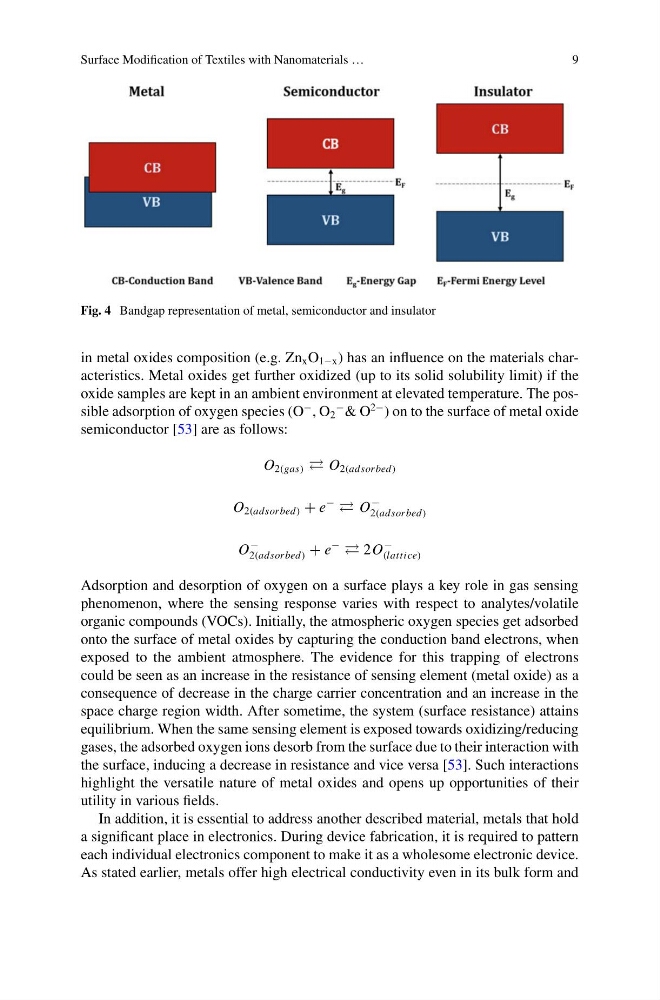
Fig. 4 Bandgap representation of metal, semiconductor and insulator
in metal oxides composition (e.g. Zn x O 1−x ) has an influence on the materials characteristics. Metal oxides get further oxidized (up to its solid solubility limit) if the
oxide samples are kept in an ambient environment at elevated temperature. The possible adsorption of oxygen species (O
− , O 2
− & O
2− ) on to the surface of metal oxide
semiconductor [53] are as follows:
O 2(gas) O 2(adsorbed)
O 2(adsorbed) + e
−
O
−
2(adsorbed)
O
−
2(adsorbed) + e
−
2O
−
(lattice)
Adsorption and desorption of oxygen on a surface plays a key role in gas sensing
phenomenon, where the sensing response varies with respect to analytes/volatile
organic compounds (VOCs). Initially, the atmospheric oxygen species get adsorbed
onto the surface of metal oxides by capturing the conduction band electrons, when
exposed to the ambient atmosphere. The evidence for this trapping of electrons
could be seen as an increase in the resistance of sensing element (metal oxide) as a
consequence of decrease in the charge carrier concentration and an increase in the
space charge region width. After sometime, the system (surface resistance) attains
equilibrium. When the same sensing element is exposed towards oxidizing/reducing
gases, the adsorbed oxygen ions desorb from the surface due to their interaction with
the surface, inducing a decrease in resistance and vice versa [53]. Such interactions
highlight the versatile nature of metal oxides and opens up opportunities of their
utility in various fields.
In addition, it is essential to address another described material, metals that hold
a significant place in electronics. During device fabrication, it is required to pattern
each individual electronics component to make it as a wholesome electronic device.
As stated earlier, metals offer high electrical conductivity even in its bulk form and
9
Fig. 4 Bandgap representation of metal, semiconductor and insulator
in metal oxides composition (e.g. Zn x O 1−x ) has an influence on the materials characteristics. Metal oxides get further oxidized (up to its solid solubility limit) if the
oxide samples are kept in an ambient environment at elevated temperature. The possible adsorption of oxygen species (O
− , O 2
− & O
2− ) on to the surface of metal oxide
semiconductor [53] are as follows:
O 2(gas) O 2(adsorbed)
O 2(adsorbed) + e
−
O
−
2(adsorbed)
O
−
2(adsorbed) + e
−
2O
−
(lattice)
Adsorption and desorption of oxygen on a surface plays a key role in gas sensing
phenomenon, where the sensing response varies with respect to analytes/volatile
organic compounds (VOCs). Initially, the atmospheric oxygen species get adsorbed
onto the surface of metal oxides by capturing the conduction band electrons, when
exposed to the ambient atmosphere. The evidence for this trapping of electrons
could be seen as an increase in the resistance of sensing element (metal oxide) as a
consequence of decrease in the charge carrier concentration and an increase in the
space charge region width. After sometime, the system (surface resistance) attains
equilibrium. When the same sensing element is exposed towards oxidizing/reducing
gases, the adsorbed oxygen ions desorb from the surface due to their interaction with
the surface, inducing a decrease in resistance and vice versa [53]. Such interactions
highlight the versatile nature of metal oxides and opens up opportunities of their
utility in various fields.
In addition, it is essential to address another described material, metals that hold
a significant place in electronics. During device fabrication, it is required to pattern
each individual electronics component to make it as a wholesome electronic device.
As stated earlier, metals offer high electrical conductivity even in its bulk form and