

Recent Advances in Development of Antimicrobial Textiles
131
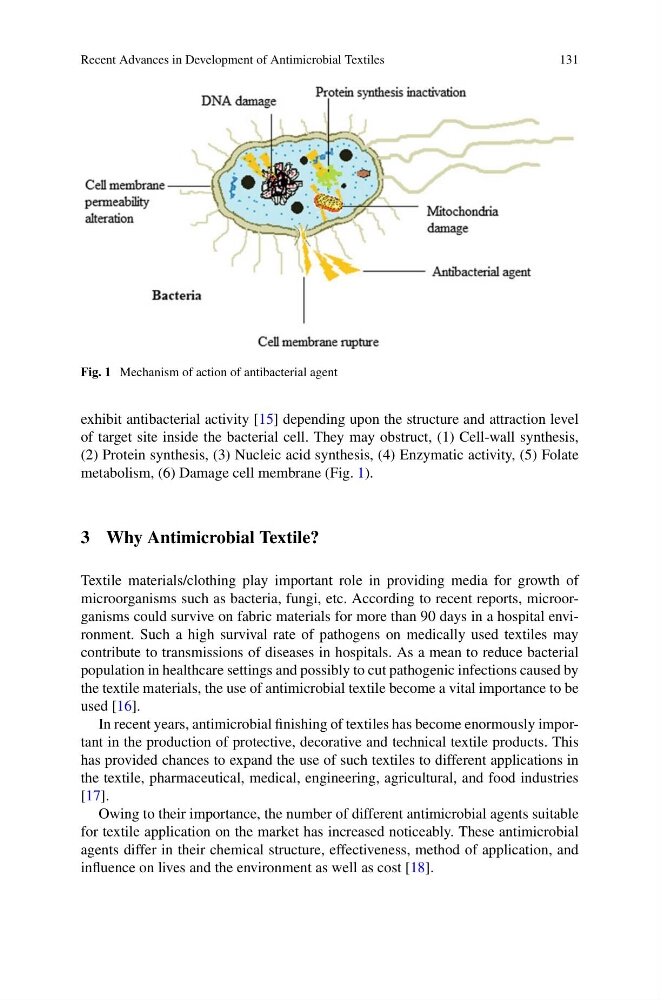
Fig. 1 Mechanism of action of antibacterial agent
exhibit antibacterial activity [15] depending upon the structure and attraction level
of target site inside the bacterial cell. They may obstruct, (1) Cell-wall synthesis,
(2) Protein synthesis, (3) Nucleic acid synthesis, (4) Enzymatic activity, (5) Folate
metabolism, (6) Damage cell membrane (Fig. 1).
3 Why Antimicrobial Textile?
Textile materials/clothing play important role in providing media for growth of
microorganisms such as bacteria, fungi, etc. According to recent reports, microorganisms could survive on fabric materials for more than 90 days in a hospital environment. Such a high survival rate of pathogens on medically used textiles may
contribute to transmissions of diseases in hospitals. As a mean to reduce bacterial
population in healthcare settings and possibly to cut pathogenic infections caused by
the textile materials, the use of antimicrobial textile become a vital importance to be
used [16].
In recent years, antimicrobial finishing of textiles has become enormously important in the production of protective, decorative and technical textile products. This
has provided chances to expand the use of such textiles to different applications in
the textile, pharmaceutical, medical, engineering, agricultural, and food industries
[17].
Owing to their importance, the number of different antimicrobial agents suitable
for textile application on the market has increased noticeably. These antimicrobial
agents differ in their chemical structure, effectiveness, method of application, and
influence on lives and the environment as well as cost [18].
131
Fig. 1 Mechanism of action of antibacterial agent
exhibit antibacterial activity [15] depending upon the structure and attraction level
of target site inside the bacterial cell. They may obstruct, (1) Cell-wall synthesis,
(2) Protein synthesis, (3) Nucleic acid synthesis, (4) Enzymatic activity, (5) Folate
metabolism, (6) Damage cell membrane (Fig. 1).
3 Why Antimicrobial Textile?
Textile materials/clothing play important role in providing media for growth of
microorganisms such as bacteria, fungi, etc. According to recent reports, microorganisms could survive on fabric materials for more than 90 days in a hospital environment. Such a high survival rate of pathogens on medically used textiles may
contribute to transmissions of diseases in hospitals. As a mean to reduce bacterial
population in healthcare settings and possibly to cut pathogenic infections caused by
the textile materials, the use of antimicrobial textile become a vital importance to be
used [16].
In recent years, antimicrobial finishing of textiles has become enormously important in the production of protective, decorative and technical textile products. This
has provided chances to expand the use of such textiles to different applications in
the textile, pharmaceutical, medical, engineering, agricultural, and food industries
[17].
Owing to their importance, the number of different antimicrobial agents suitable
for textile application on the market has increased noticeably. These antimicrobial
agents differ in their chemical structure, effectiveness, method of application, and
influence on lives and the environment as well as cost [18].