

124
7 Rubber Reinforcement with Lignin
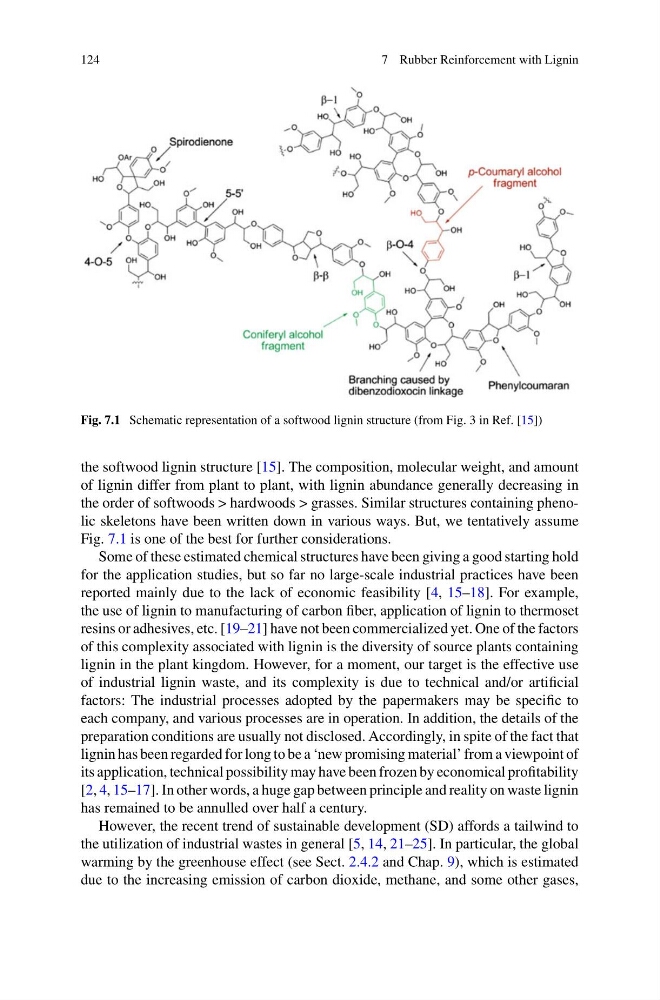
Fig. 7.1 Schematic representation of a softwood lignin structure (from Fig. 3 in Ref. [15])
the softwood lignin structure [15]. The composition, molecular weight, and amount
of lignin differ from plant to plant, with lignin abundance generally decreasing in
the order of softwoods > hardwoods > grasses. Similar structures containing phenolic skeletons have been written down in various ways. But, we tentatively assume
Fig. 7.1 is one of the best for further considerations.
Some of these estimated chemical structures have been giving a good starting hold
for the application studies, but so far no large-scale industrial practices have been
reported mainly due to the lack of economic feasibility [4, 15–18]. For example,
the use of lignin to manufacturing of carbon fiber, application of lignin to thermoset
resins or adhesives, etc. [19–21] have not been commercialized yet. One of the factors
of this complexity associated with lignin is the diversity of source plants containing
lignin in the plant kingdom. However, for a moment, our target is the effective use
of industrial lignin waste, and its complexity is due to technical and/or artificial
factors: The industrial processes adopted by the papermakers may be specific to
each company, and various processes are in operation. In addition, the details of the
preparation conditions are usually not disclosed. Accordingly, in spite of the fact that
lignin has been regarded for long to be a ‘new promising material’ from a viewpoint of
its application, technical possibility may have been frozen by economical profitability
[2, 4, 15–17]. In other words, a huge gap between principle and reality on waste lignin
has remained to be annulled over half a century.
However, the recent trend of sustainable development (SD) affords a tailwind to
the utilization of industrial wastes in general [5, 14, 21–25]. In particular, the global
warming by the greenhouse effect (see Sect. 2.4.2 and Chap. 9), which is estimated
due to the increasing emission of carbon dioxide, methane, and some other gases,
7 Rubber Reinforcement with Lignin
Fig. 7.1 Schematic representation of a softwood lignin structure (from Fig. 3 in Ref. [15])
the softwood lignin structure [15]. The composition, molecular weight, and amount
of lignin differ from plant to plant, with lignin abundance generally decreasing in
the order of softwoods > hardwoods > grasses. Similar structures containing phenolic skeletons have been written down in various ways. But, we tentatively assume
Fig. 7.1 is one of the best for further considerations.
Some of these estimated chemical structures have been giving a good starting hold
for the application studies, but so far no large-scale industrial practices have been
reported mainly due to the lack of economic feasibility [4, 15–18]. For example,
the use of lignin to manufacturing of carbon fiber, application of lignin to thermoset
resins or adhesives, etc. [19–21] have not been commercialized yet. One of the factors
of this complexity associated with lignin is the diversity of source plants containing
lignin in the plant kingdom. However, for a moment, our target is the effective use
of industrial lignin waste, and its complexity is due to technical and/or artificial
factors: The industrial processes adopted by the papermakers may be specific to
each company, and various processes are in operation. In addition, the details of the
preparation conditions are usually not disclosed. Accordingly, in spite of the fact that
lignin has been regarded for long to be a ‘new promising material’ from a viewpoint of
its application, technical possibility may have been frozen by economical profitability
[2, 4, 15–17]. In other words, a huge gap between principle and reality on waste lignin
has remained to be annulled over half a century.
However, the recent trend of sustainable development (SD) affords a tailwind to
the utilization of industrial wastes in general [5, 14, 21–25]. In particular, the global
warming by the greenhouse effect (see Sect. 2.4.2 and Chap. 9), which is estimated
due to the increasing emission of carbon dioxide, methane, and some other gases,