

Kirkland and Paul 2008), polyethylene naphthalate (PEN) (Hu et al. 2002b), poly
(ethylene oxide) (PEO) (Lin and Freeman 2004; Pethe et al. 2008; Metz et al. 2004),
poly(vinylidene fluoride) (PVDF) (El-Hibri and Paul 1986), liquid crystalline polyester
(Incarnato et al. 2000; Chiou and Paul 1987; Weinkauf and Paul 1991, 1992a, b;
Weinkauf et al. 1992; Park et al. 1996; Flodberg et al. 2003; De Candia et al. 1990,
1991), polyamide (Waack et al. 1955; Ash et al. 1970; Hu et al. 2005c; Kanekura et al.
2005), among others (crystalline (Tsujita et al. 1990; Kumazawa et al. 1994; Uriarte
et al. 1998; Wang and Easteal 1999; Kim and Lee 2001; Kim et al. 2001; Mensitieri
et al. 1996; Laguna et al. 2003; Buquet et al. 2009; Cowling and Park 1979) and liquid
crystalline polymers (Kajiyama et al. 1982, 1985, 1988; Chen et al. 1991, 1992; Chen
and Hsiue 1993; Kawakami et al. 1997; Hu et al. 2003, 2006a, b, 2007)). Other
studies have also found that a low-density PE (density: 0.910–0.925 g cm
À3 ) has a
crystallinity of approximately 60%, whereas high-density PE (density:
0.94–0.97 g cm
À3 ) has a crystallinity of approximately 90% (Mark 2007). This result
suggested that the density of crystalline polymers is directly related to the degree of
crystallinity. Furthermore, earlier studies showed that O 2 permeability decreases with
increasing density in PE (Alter 1962). This result can be attributed to the decrease in
both gas solubility and diffusivity.
However, we recently reported that gas transport properties were independent of
PLA crystallinity (Komatsuka et al. 2008; Komatsuka and Nagai 2009; Sawada
et al. 2010). This result suggests that gas transport properties are strongly affected
by the size and distribution of the crystalline phase rather than by the polymer
crystallinity (Komatsuka et al. 2008). Furthermore, unlike common crystalline
polymer membranes, the permeability of crystalline PLA membranes is higher
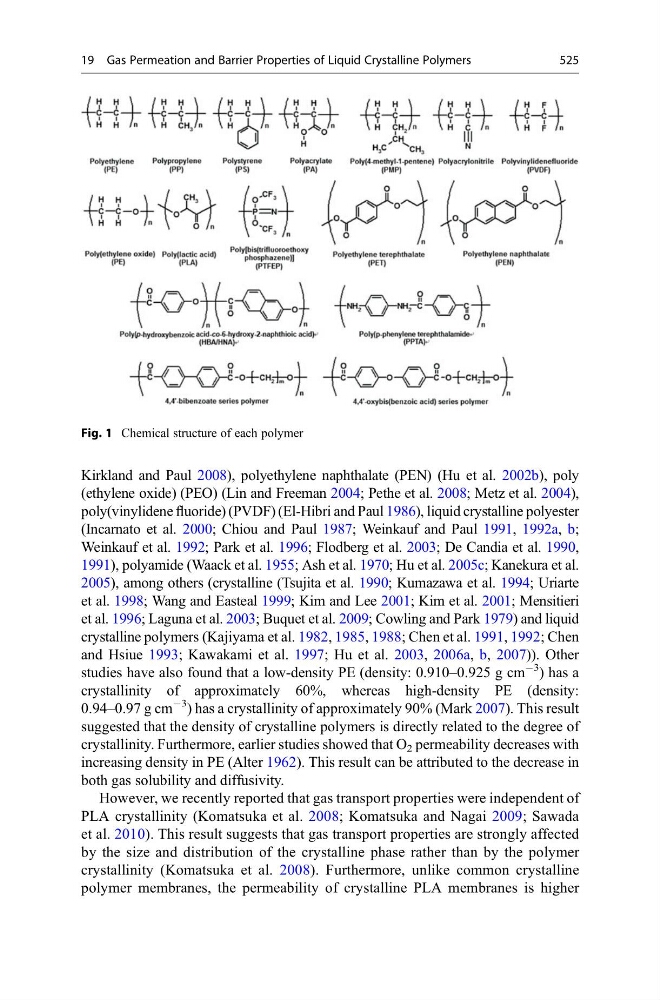
Fig. 1 Chemical structure of each polymer
19 Gas Permeation and Barrier Properties of Liquid Crystalline Polymers
525
(ethylene oxide) (PEO) (Lin and Freeman 2004; Pethe et al. 2008; Metz et al. 2004),
poly(vinylidene fluoride) (PVDF) (El-Hibri and Paul 1986), liquid crystalline polyester
(Incarnato et al. 2000; Chiou and Paul 1987; Weinkauf and Paul 1991, 1992a, b;
Weinkauf et al. 1992; Park et al. 1996; Flodberg et al. 2003; De Candia et al. 1990,
1991), polyamide (Waack et al. 1955; Ash et al. 1970; Hu et al. 2005c; Kanekura et al.
2005), among others (crystalline (Tsujita et al. 1990; Kumazawa et al. 1994; Uriarte
et al. 1998; Wang and Easteal 1999; Kim and Lee 2001; Kim et al. 2001; Mensitieri
et al. 1996; Laguna et al. 2003; Buquet et al. 2009; Cowling and Park 1979) and liquid
crystalline polymers (Kajiyama et al. 1982, 1985, 1988; Chen et al. 1991, 1992; Chen
and Hsiue 1993; Kawakami et al. 1997; Hu et al. 2003, 2006a, b, 2007)). Other
studies have also found that a low-density PE (density: 0.910–0.925 g cm
À3 ) has a
crystallinity of approximately 60%, whereas high-density PE (density:
0.94–0.97 g cm
À3 ) has a crystallinity of approximately 90% (Mark 2007). This result
suggested that the density of crystalline polymers is directly related to the degree of
crystallinity. Furthermore, earlier studies showed that O 2 permeability decreases with
increasing density in PE (Alter 1962). This result can be attributed to the decrease in
both gas solubility and diffusivity.
However, we recently reported that gas transport properties were independent of
PLA crystallinity (Komatsuka et al. 2008; Komatsuka and Nagai 2009; Sawada
et al. 2010). This result suggests that gas transport properties are strongly affected
by the size and distribution of the crystalline phase rather than by the polymer
crystallinity (Komatsuka et al. 2008). Furthermore, unlike common crystalline
polymer membranes, the permeability of crystalline PLA membranes is higher
Fig. 1 Chemical structure of each polymer
19 Gas Permeation and Barrier Properties of Liquid Crystalline Polymers
525