

photoresponsive molecule-containing film. The light absorption intensity within the
film is no longer constant, and the extent of isomerization varies throughout the
sample. Due to the different degrees of elongation or contraction, the internal stress
can lead to strong bending deformation (Fig. 3). Furthermore, the azobenzene
moieties are preferentially aligned along the rubbing direction of the alignment
layers, and thus the decrease in alignment order of azobenzene moieties is produced
along this direction, which contributes to the anisotropic bending behavior (Ikeda
et al. 2007).
Ikeda and coworkers were the first to report photoinduced bending behavior of
macroscopic CLCPs containing azobenzene (Ikeda et al. 2003). Compared to the
two-dimensional contraction or expansion, the bending mode, three-dimensional
movement, can be advantageous for a variety of real manipulation applications.
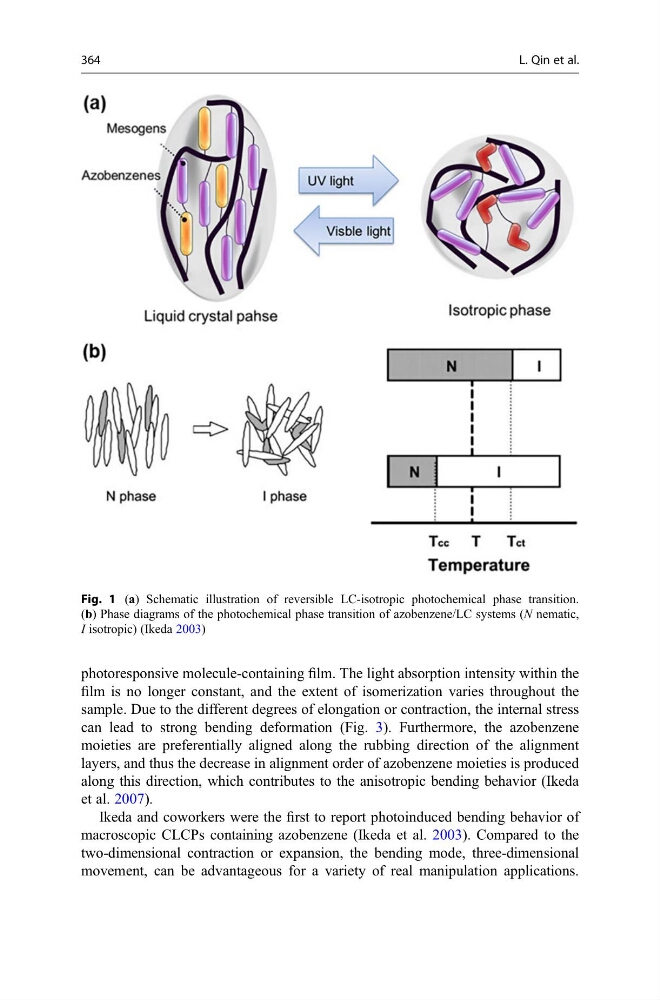
Fig. 1 (a) Schematic illustration of reversible LC-isotropic photochemical phase transition.
(b) Phase diagrams of the photochemical phase transition of azobenzene/LC systems (N nematic,
I isotropic) (Ikeda 2003)
364
L. Qin et al.
film is no longer constant, and the extent of isomerization varies throughout the
sample. Due to the different degrees of elongation or contraction, the internal stress
can lead to strong bending deformation (Fig. 3). Furthermore, the azobenzene
moieties are preferentially aligned along the rubbing direction of the alignment
layers, and thus the decrease in alignment order of azobenzene moieties is produced
along this direction, which contributes to the anisotropic bending behavior (Ikeda
et al. 2007).
Ikeda and coworkers were the first to report photoinduced bending behavior of
macroscopic CLCPs containing azobenzene (Ikeda et al. 2003). Compared to the
two-dimensional contraction or expansion, the bending mode, three-dimensional
movement, can be advantageous for a variety of real manipulation applications.
Fig. 1 (a) Schematic illustration of reversible LC-isotropic photochemical phase transition.
(b) Phase diagrams of the photochemical phase transition of azobenzene/LC systems (N nematic,
I isotropic) (Ikeda 2003)
364
L. Qin et al.