

fluorene containing di-PAs for applications in light-emitting diodes (LEDs) and
organic light-emitting diode (OLEDs) (Huang et al. 2006). Tang et al. reported diPAs with liquid crystallinity, highly efficient photoluminescence, and aggregationinduced emission (Liu et al. 2009). Furthermore, Chen et al. and Tang et al.
developed mesogen jacketed liquid crystalline polyacetylene (MJLCPAs), with
mesogen cores laterally linked to the side chain of polyacetylene through very short
spacers showing unique columnar LC phases (Peng et al. 2010; Yu et al. 2013).
Earlier reports of LPL in di-LCPAs have been reported by Kwak and Fujiki et al.
(Kwak et al. 2007, 2008). PA10, which has a stiff poly(diphenylacetylene) (PDPA)
main chain structure and an alkyl tail for lyotropic liquid crystallinity (Scheme 4), was
aligned using shear stress and electrospinning.
Recently, we developed di-LCPA with novel structures where the LC mesogens
are either substituted directly into the main chain or connected by flexible spacers
(San Jose et al. 2011). In this section, we describe the macroscopic alignment of the
di-LCPAs and the mechanism of their LPL behavior with respect to their main chain
and side chain structures.
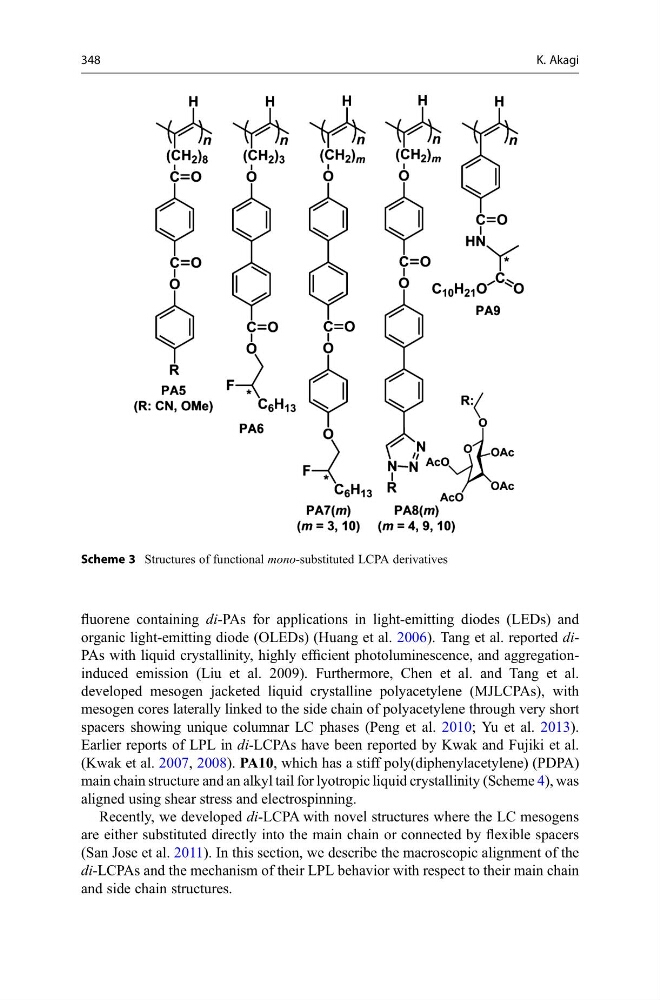
Scheme 3 Structures of functional mono-substituted LCPA derivatives
348
K. Akagi
organic light-emitting diode (OLEDs) (Huang et al. 2006). Tang et al. reported diPAs with liquid crystallinity, highly efficient photoluminescence, and aggregationinduced emission (Liu et al. 2009). Furthermore, Chen et al. and Tang et al.
developed mesogen jacketed liquid crystalline polyacetylene (MJLCPAs), with
mesogen cores laterally linked to the side chain of polyacetylene through very short
spacers showing unique columnar LC phases (Peng et al. 2010; Yu et al. 2013).
Earlier reports of LPL in di-LCPAs have been reported by Kwak and Fujiki et al.
(Kwak et al. 2007, 2008). PA10, which has a stiff poly(diphenylacetylene) (PDPA)
main chain structure and an alkyl tail for lyotropic liquid crystallinity (Scheme 4), was
aligned using shear stress and electrospinning.
Recently, we developed di-LCPA with novel structures where the LC mesogens
are either substituted directly into the main chain or connected by flexible spacers
(San Jose et al. 2011). In this section, we describe the macroscopic alignment of the
di-LCPAs and the mechanism of their LPL behavior with respect to their main chain
and side chain structures.
Scheme 3 Structures of functional mono-substituted LCPA derivatives
348
K. Akagi