

LC phase is predominantly SmC* at room temperature that transforms into a SmA*
phase with an increase in temperature, especially above the T g of PS. The LC Sm
layer normal is perpendicular to the L normal and the mesogens adopt homogeneous
orientation in the samples with 6-carbon spacers whereas in samples with 10-carbon
spacers, the Sm normal is parallel to the BCP L normal and mesogens adopt a
homeotropic orientation. An increase in the spacer length gives more flexibility to
the mesogens so that they can adopt a homeotropic orientation. In the samples with
coexisting L and PL structures, the mesogens adopt a homogeneous orientation with
the IMDS. The Sm layer normal is perpendicular to the L normal and the C axis. The
authors claim that the conformational asymmetry associated with such morphology
is the reason for the observation of defects in the samples. However, as the temperature increased, the loss of LC ordering resulted in the disappearance of the C
domains and only pure L structures remained. Although the mesogen orientation
was perpendicular to the L and C in the PL structure, at high f
LC (= 0.79), they
observed PS C in LC matrix with Sm layer normal parallel to the C axis.
A number of research groups have developed phase diagrams based on several
SC-LCBCP chemistries. In PS-b-PI SC-LCBCPs with 6-[(4-cyano-4
0 -biphenyl)oxy]
hexanoic acid mesogen, Lee et al. reported the phase structures as a function of w PS
(Lee and Han 2002). They observed L, C, and S morphologies in the samples. The S
phase transformed into a LDOT to DMT to I phase with increase in temperature,
similar to that observed in PS-b-PI coil-coil system. Fischer et al. studied the
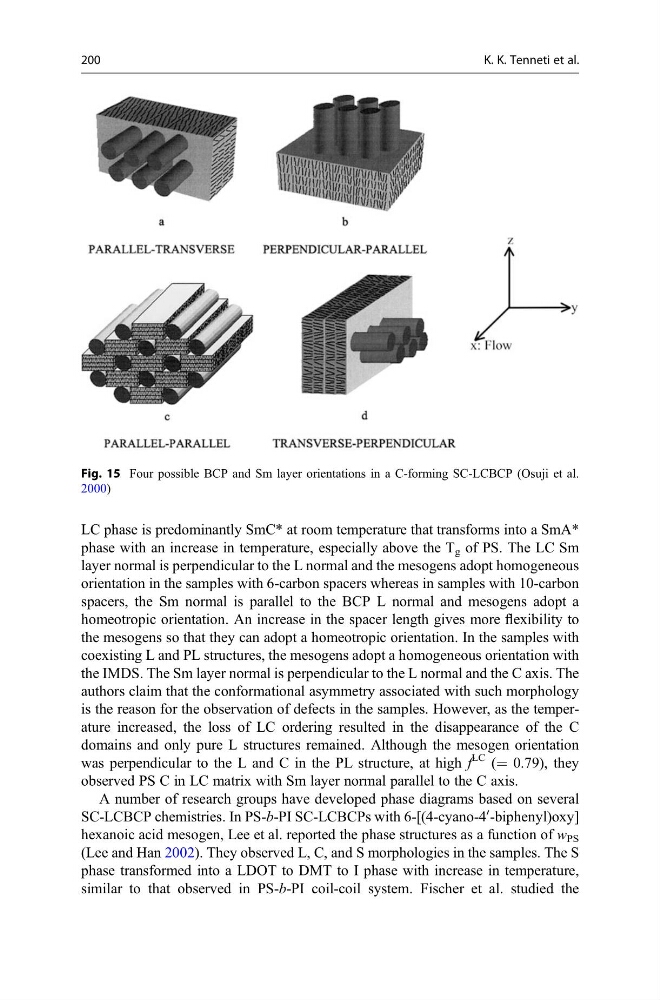
Fig. 15 Four possible BCP and Sm layer orientations in a C-forming SC-LCBCP (Osuji et al.
2000)
200
K. K. Tenneti et al.
phase with an increase in temperature, especially above the T g of PS. The LC Sm
layer normal is perpendicular to the L normal and the mesogens adopt homogeneous
orientation in the samples with 6-carbon spacers whereas in samples with 10-carbon
spacers, the Sm normal is parallel to the BCP L normal and mesogens adopt a
homeotropic orientation. An increase in the spacer length gives more flexibility to
the mesogens so that they can adopt a homeotropic orientation. In the samples with
coexisting L and PL structures, the mesogens adopt a homogeneous orientation with
the IMDS. The Sm layer normal is perpendicular to the L normal and the C axis. The
authors claim that the conformational asymmetry associated with such morphology
is the reason for the observation of defects in the samples. However, as the temperature increased, the loss of LC ordering resulted in the disappearance of the C
domains and only pure L structures remained. Although the mesogen orientation
was perpendicular to the L and C in the PL structure, at high f
LC (= 0.79), they
observed PS C in LC matrix with Sm layer normal parallel to the C axis.
A number of research groups have developed phase diagrams based on several
SC-LCBCP chemistries. In PS-b-PI SC-LCBCPs with 6-[(4-cyano-4
0 -biphenyl)oxy]
hexanoic acid mesogen, Lee et al. reported the phase structures as a function of w PS
(Lee and Han 2002). They observed L, C, and S morphologies in the samples. The S
phase transformed into a LDOT to DMT to I phase with increase in temperature,
similar to that observed in PS-b-PI coil-coil system. Fischer et al. studied the
Fig. 15 Four possible BCP and Sm layer orientations in a C-forming SC-LCBCP (Osuji et al.
2000)
200
K. K. Tenneti et al.