

1 3
Topics in Current Chemistry (2020) 378:7
finishing processes of the leather industry [185]. In particular, a Pr-doped ZnO photocatalyst was able to obtain a discoloration degree higher than 50% after 240 min
of UV irradiation, with a TOC removal rate of about 40% (TOC initial values in the
range 540–1200 mg/L) after 180 min of UV irradiation.
4.4 What are HPC Prospective Uses for Wastewater Treatment?
According to the results available in the scientific literature and discussed in the sections above, the application of HPC to wastewater treatment is basically at a “technological research” level, which is a technology readiness level (TRL) between 2
and 6 (Fig. 8). A number of disadvantages remain, including (1) technological limitations, (2) lack of regulations limiting the release of specific contaminants into the
environment (namely CECs from urban WWTPs), and (3) still low efficiency relative to other consolidated technologies in treating some refractory (industrial) wastewater (Table 2).
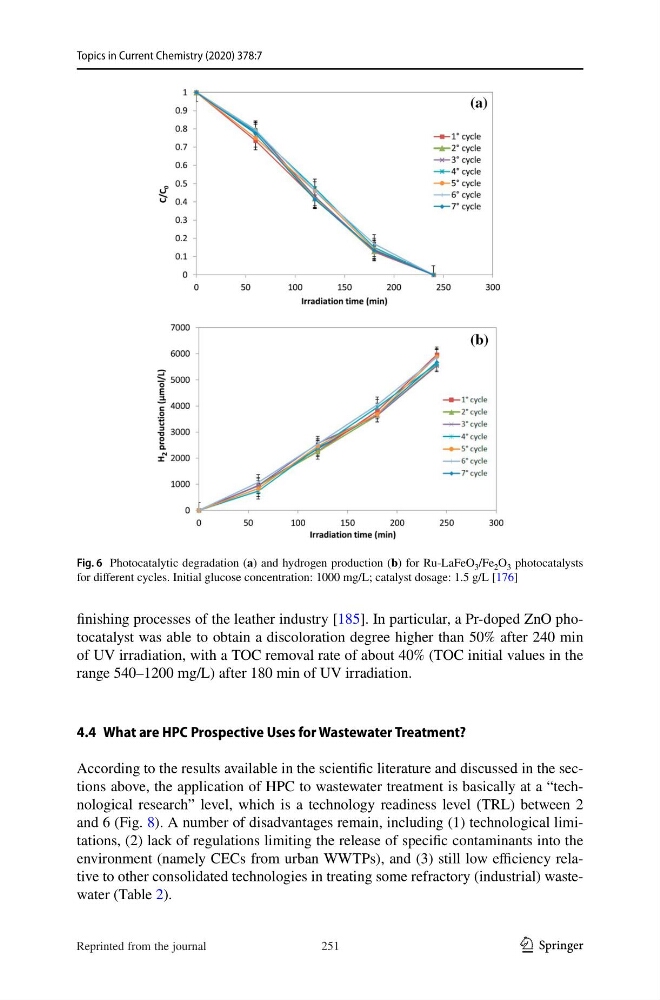
Fig. 6 Photocatalytic degradation (a) and hydrogen production (b) for Ru-LaFeO 3 /Fe 2 O 3 photocatalysts
for different cycles. Initial glucose concentration: 1000 mg/L; catalyst dosage: 1.5 g/L [176]
251
Reprinted from the journal
Topics in Current Chemistry (2020) 378:7
finishing processes of the leather industry [185]. In particular, a Pr-doped ZnO photocatalyst was able to obtain a discoloration degree higher than 50% after 240 min
of UV irradiation, with a TOC removal rate of about 40% (TOC initial values in the
range 540–1200 mg/L) after 180 min of UV irradiation.
4.4 What are HPC Prospective Uses for Wastewater Treatment?
According to the results available in the scientific literature and discussed in the sections above, the application of HPC to wastewater treatment is basically at a “technological research” level, which is a technology readiness level (TRL) between 2
and 6 (Fig. 8). A number of disadvantages remain, including (1) technological limitations, (2) lack of regulations limiting the release of specific contaminants into the
environment (namely CECs from urban WWTPs), and (3) still low efficiency relative to other consolidated technologies in treating some refractory (industrial) wastewater (Table 2).
Fig. 6 Photocatalytic degradation (a) and hydrogen production (b) for Ru-LaFeO 3 /Fe 2 O 3 photocatalysts
for different cycles. Initial glucose concentration: 1000 mg/L; catalyst dosage: 1.5 g/L [176]
251
Reprinted from the journal