

Topics in Current Chemistry (2019) 377:24
1 3
to misleading results coming from the characterization. Both operando and spectro-kinetic approaches are described as advanced tools for the settlement of structure–activity in photo-catalysis. Such tools are used to obtain information about
the catalytic active phases as well as for interpreting the mechanism and relevant
kinetic steps of the catalytic processes. In these cases, we reviewed more exciting
results coming from the application of characterization techniques such as infrared
and Raman, electron paramagnetic, X-ray photoelectron and absorption, and nuclear
magnetic resonance spectroscopies.
Acknowledgments We thank MINECO (Spain) for financial support through the ENE2016-77798-C41-R Grant. The support by Secretaria de Ciencia Tecnología e Innovación of CDMX (SECTEI, México.
U. Caudillo-Flores) is also acknowledged. I. Barba-Nieto thanks MINECO for a FPI doctoral fellowship
(BES-2017-080069).
References
1. Kubacka A, Fernández-García M, Colón G (2012) Chem Rev 112:1555–1614
2. Colmenares JC, Luque R (2014) Chem Soc Rev 43:765–778
3. Bai S, Jian J, Zhang Q, Xiong Y (2015) Chem Soc Rev 44:2893–2939
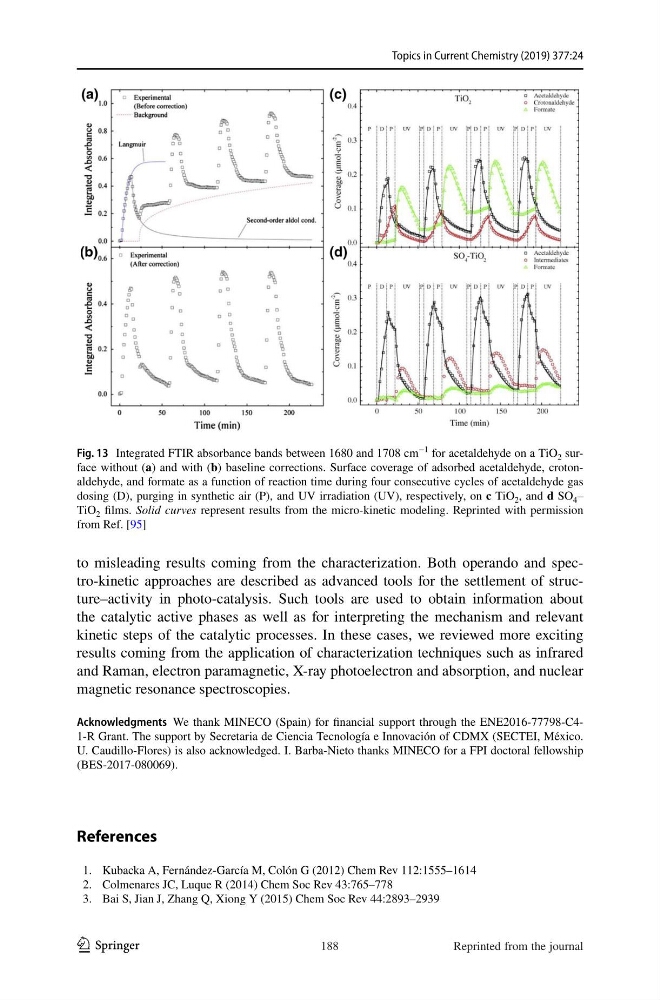
Fig. 13 Integrated FTIR absorbance bands between 1680 and 1708 cm
−1 for acetaldehyde on a TiO 2 surface without (a) and with (b) baseline corrections. Surface coverage of adsorbed acetaldehyde, crotonaldehyde, and formate as a function of reaction time during four consecutive cycles of acetaldehyde gas
dosing (D), purging in synthetic air (P), and UV irradiation (UV), respectively, on c TiO 2 , and d SO 4 –
TiO 2 films. Solid curves represent results from the micro-kinetic modeling. Reprinted with permission
from Ref. [95]
188
Reprinted from the journal
1 3
to misleading results coming from the characterization. Both operando and spectro-kinetic approaches are described as advanced tools for the settlement of structure–activity in photo-catalysis. Such tools are used to obtain information about
the catalytic active phases as well as for interpreting the mechanism and relevant
kinetic steps of the catalytic processes. In these cases, we reviewed more exciting
results coming from the application of characterization techniques such as infrared
and Raman, electron paramagnetic, X-ray photoelectron and absorption, and nuclear
magnetic resonance spectroscopies.
Acknowledgments We thank MINECO (Spain) for financial support through the ENE2016-77798-C41-R Grant. The support by Secretaria de Ciencia Tecnología e Innovación of CDMX (SECTEI, México.
U. Caudillo-Flores) is also acknowledged. I. Barba-Nieto thanks MINECO for a FPI doctoral fellowship
(BES-2017-080069).
References
1. Kubacka A, Fernández-García M, Colón G (2012) Chem Rev 112:1555–1614
2. Colmenares JC, Luque R (2014) Chem Soc Rev 43:765–778
3. Bai S, Jian J, Zhang Q, Xiong Y (2015) Chem Soc Rev 44:2893–2939
Fig. 13 Integrated FTIR absorbance bands between 1680 and 1708 cm
−1 for acetaldehyde on a TiO 2 surface without (a) and with (b) baseline corrections. Surface coverage of adsorbed acetaldehyde, crotonaldehyde, and formate as a function of reaction time during four consecutive cycles of acetaldehyde gas
dosing (D), purging in synthetic air (P), and UV irradiation (UV), respectively, on c TiO 2 , and d SO 4 –
TiO 2 films. Solid curves represent results from the micro-kinetic modeling. Reprinted with permission
from Ref. [95]
188
Reprinted from the journal