

Topics in Current Chemistry (2020) 378:3
1 3
properties, photobleaching resistance, low cost, low toxicity, and good possibilities
for functionalization [69].
The cost-effectiveness of CQDs is an additional factor promoting their study and
application. CQDs derived from biomass possess a particularly low-cost and outstanding eco-friendly character. Following a top-down strategy, biomass-derived
CQDs have been synthesized using several protocols including hydrothermal and
electrochemical oxidation, acidic hydrolysis, and microwave-assisted treatments
[70]. Several biomass sources have been employed for the preparation of CQDs,
including fruit peels, whey from dairy waste, spent coffee grounds, residues from
the pulp and paper industry, and cigarette filters, but citric acid is currently the
most common starting material used to obtain highly luminescent CDs, usually in
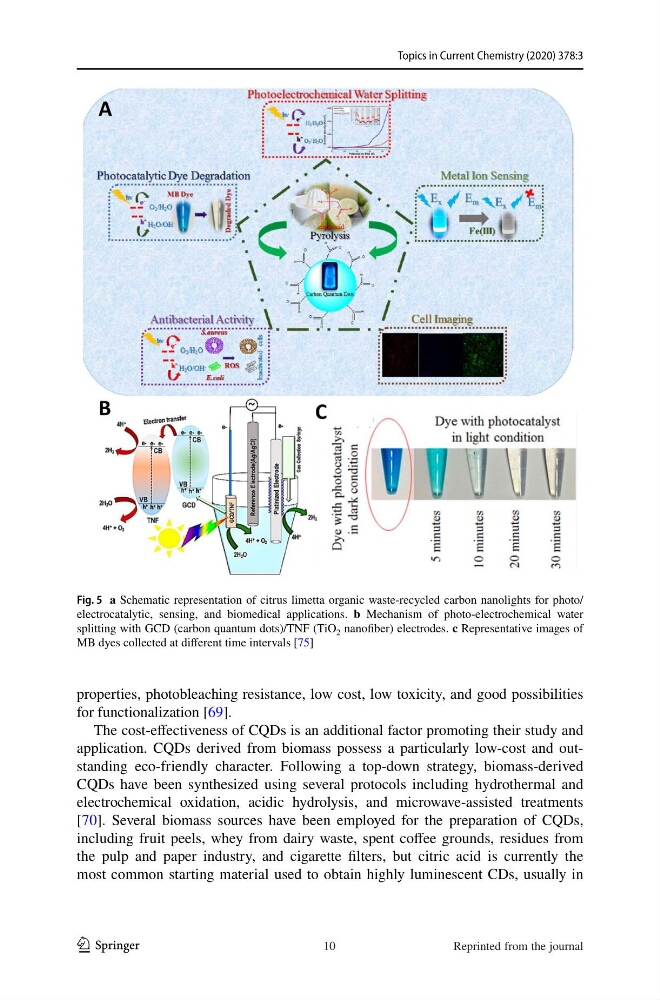
Fig. 5 a Schematic representation of citrus limetta organic waste-recycled carbon nanolights for photo/
electrocatalytic, sensing, and biomedical applications. b Mechanism of photo-electrochemical water
splitting with GCD (carbon quantum dots)/TNF (TiO 2 nanofiber) electrodes. c Representative images of
MB dyes collected at different time intervals [75]
10
Reprinted from the journal
1 3
properties, photobleaching resistance, low cost, low toxicity, and good possibilities
for functionalization [69].
The cost-effectiveness of CQDs is an additional factor promoting their study and
application. CQDs derived from biomass possess a particularly low-cost and outstanding eco-friendly character. Following a top-down strategy, biomass-derived
CQDs have been synthesized using several protocols including hydrothermal and
electrochemical oxidation, acidic hydrolysis, and microwave-assisted treatments
[70]. Several biomass sources have been employed for the preparation of CQDs,
including fruit peels, whey from dairy waste, spent coffee grounds, residues from
the pulp and paper industry, and cigarette filters, but citric acid is currently the
most common starting material used to obtain highly luminescent CDs, usually in
Fig. 5 a Schematic representation of citrus limetta organic waste-recycled carbon nanolights for photo/
electrocatalytic, sensing, and biomedical applications. b Mechanism of photo-electrochemical water
splitting with GCD (carbon quantum dots)/TNF (TiO 2 nanofiber) electrodes. c Representative images of
MB dyes collected at different time intervals [75]
10
Reprinted from the journal