

1 3
Topics in Current Chemistry (2018) 376:42
Earlier in 2016, mesoporous Ni–P nanomaterial was introduced as promising
electrocatalysts for urea electro-oxidation by Ding et al. [65], considering its high
electrical conductivity and metalloid properties. They proposed that non-metal
phosphorus was a prospective doping element for enhancing the catalytic activity
towards Ni-based hydroxide and oxide electro-catalysts, which could be primarily
ascribed to the superiorities: firstly, the electronic configuration of Ni compounds
can be effectually adjusted by adding the element of phosphorus for preventing their
poisoned characters. Secondly, more efficient electro-active sites are available from
changing the electronic density of Ni clusters [112]. In return, the peak current density of the Ni–P nanocatalysts reached 70 mA cm
−2
, while the OOP was merely
1.37 V (vs. RHE), which showed a more enhanced performance than Ni nanocatalysts (62 mA cm
−2
, 1.42 V). As followed, Ye et al. [113] designed a unique porous
Ni 2 P nanoflower by facile hydrothermal and phosphating methods. SEM and TEM
images showed that Ni 2 P performed an overall 3D flower-like morphology with
many nano-sized holes (diameters ranging from 30 to 90 nm) presented on each single Ni 2 P nanosheet surface (Fig. 16), which assured the reactants simply touch the
catalyst surface and thus accelerated the interfacial reaction of urea electro-oxidation. Remarkably, the EASA value of porous Ni 2 P nanosheet was ~ 7 times or higher
than Ni(OH) 2 , thus indicative of more Ni(OH) 2 /NiOOH active sites. Except for
achieving maximum current of 490 mA cm
−2
at 0.5 V, the OOP of Ni 2 P negatively
shifted 30 mV to 0.24 V (vs. Ag/AgCl). For further application in urea-based electrolytic hydrogen generation systems, Liu et al. [114] prepared the nickel phosphide
nanoflakes array on carbon cloth (Ni 2 P NFs/CC) (Fig. 17a) as bifunctional UOR
and HER electro-catalysts. As for UOR, it reached an outperforming current of
110 mA cm
−2
at 0.45 V (vs. Ag/AgCl) in the 1.0 M KOH solution containing 0.5 M
urea. As for both UOR and HER in the two-electrode alkaline electrolyzer system,
it demanded a cell voltage of 1.30 V to obtain 50 mA cm
−2
, 580 mV less than pure
water splitting for achieving the same current density (Fig. 17b). Remarkably, the
authors specially provided the XRD patterns and Raman spectra for Ni 2 P before and
after UOR electrolysis to demonstrate the unique formation of the NiOOH active
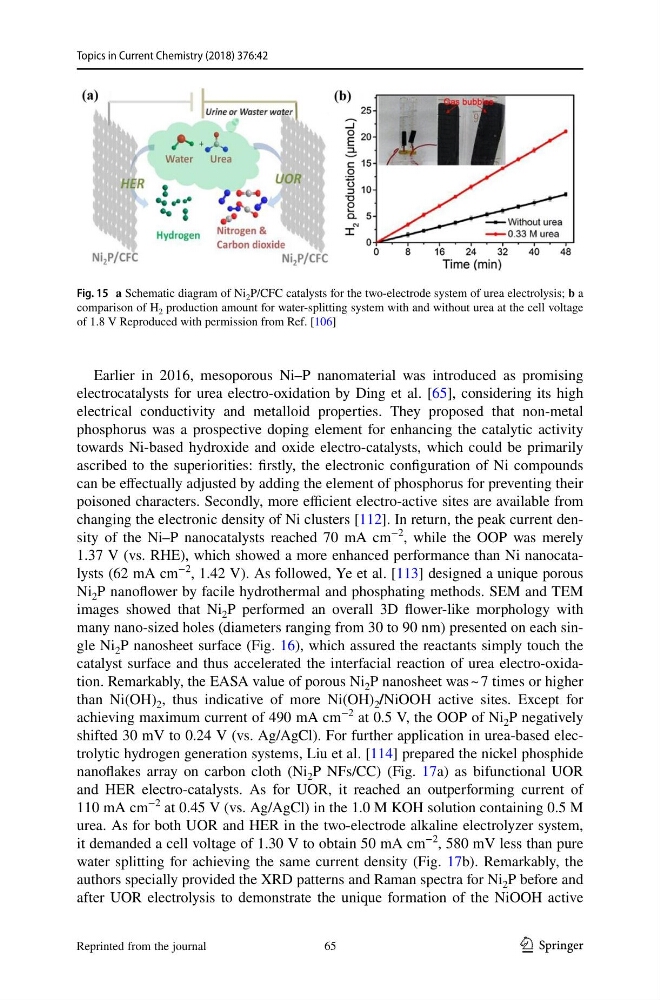
Fig. 15 a Schematic diagram of Ni 2 P/CFC catalysts for the two-electrode system of urea electrolysis; b a
comparison of H 2 production amount for water-splitting system with and without urea at the cell voltage
of 1.8 V Reproduced with permission from Ref. [106]
Reprinted from the journal
65
Topics in Current Chemistry (2018) 376:42
Earlier in 2016, mesoporous Ni–P nanomaterial was introduced as promising
electrocatalysts for urea electro-oxidation by Ding et al. [65], considering its high
electrical conductivity and metalloid properties. They proposed that non-metal
phosphorus was a prospective doping element for enhancing the catalytic activity
towards Ni-based hydroxide and oxide electro-catalysts, which could be primarily
ascribed to the superiorities: firstly, the electronic configuration of Ni compounds
can be effectually adjusted by adding the element of phosphorus for preventing their
poisoned characters. Secondly, more efficient electro-active sites are available from
changing the electronic density of Ni clusters [112]. In return, the peak current density of the Ni–P nanocatalysts reached 70 mA cm
−2
, while the OOP was merely
1.37 V (vs. RHE), which showed a more enhanced performance than Ni nanocatalysts (62 mA cm
−2
, 1.42 V). As followed, Ye et al. [113] designed a unique porous
Ni 2 P nanoflower by facile hydrothermal and phosphating methods. SEM and TEM
images showed that Ni 2 P performed an overall 3D flower-like morphology with
many nano-sized holes (diameters ranging from 30 to 90 nm) presented on each single Ni 2 P nanosheet surface (Fig. 16), which assured the reactants simply touch the
catalyst surface and thus accelerated the interfacial reaction of urea electro-oxidation. Remarkably, the EASA value of porous Ni 2 P nanosheet was ~ 7 times or higher
than Ni(OH) 2 , thus indicative of more Ni(OH) 2 /NiOOH active sites. Except for
achieving maximum current of 490 mA cm
−2
at 0.5 V, the OOP of Ni 2 P negatively
shifted 30 mV to 0.24 V (vs. Ag/AgCl). For further application in urea-based electrolytic hydrogen generation systems, Liu et al. [114] prepared the nickel phosphide
nanoflakes array on carbon cloth (Ni 2 P NFs/CC) (Fig. 17a) as bifunctional UOR
and HER electro-catalysts. As for UOR, it reached an outperforming current of
110 mA cm
−2
at 0.45 V (vs. Ag/AgCl) in the 1.0 M KOH solution containing 0.5 M
urea. As for both UOR and HER in the two-electrode alkaline electrolyzer system,
it demanded a cell voltage of 1.30 V to obtain 50 mA cm
−2
, 580 mV less than pure
water splitting for achieving the same current density (Fig. 17b). Remarkably, the
authors specially provided the XRD patterns and Raman spectra for Ni 2 P before and
after UOR electrolysis to demonstrate the unique formation of the NiOOH active
Fig. 15 a Schematic diagram of Ni 2 P/CFC catalysts for the two-electrode system of urea electrolysis; b a
comparison of H 2 production amount for water-splitting system with and without urea at the cell voltage
of 1.8 V Reproduced with permission from Ref. [106]
Reprinted from the journal
65