

Topics in Current Chemistry (2019) 377:11
1 3
routines for XANES analysis, as well as data reduction and extraction of the sinusoidal EXAFS wave. The Artemis program is used for fitting the EXAFS spectrum to a
predicted structure based on reasonable assumptions, or other information about the
sample. The package also includes an automated program for ab initio multiple-scattering calculations for clusters of atoms (FEFF) as well as several helpful programs
for data acquisition and processing [80].
3 In Situ FTIR Study of Ethanol Electrooxidation
3.1 In Situ IRRAS Study of Ternary Electrocatalysts for Oxidizing Ethanol to CO 2
Following the initial discovery of the multi-functional ternary Pt–Rh–SnO 2 electrocatalyst that is effective in splitting the C–C bond in ethanol at room temperature, a
number of studies have been conducted [23, 26–30, 81–83]. Electrochemical measurements have proved that the addition of Rh is necessary for the enhanced activity
and selectivity to CO 2 of the ternary system with respect to the optimized binary
Pt–SnO 2 catalyst [84–86]. The enhanced kinetics and superior selectivity to total
oxidation of the ternary catalyst is demonstrated by the electrochemical measurements and in situ FTIR studies. These and other techniques presented further and
in other works have generated extremely valuable knowledge on the intermediates, products, and mechanism of this reaction, and provided guidance in designing
highly active and efficient catalysts.
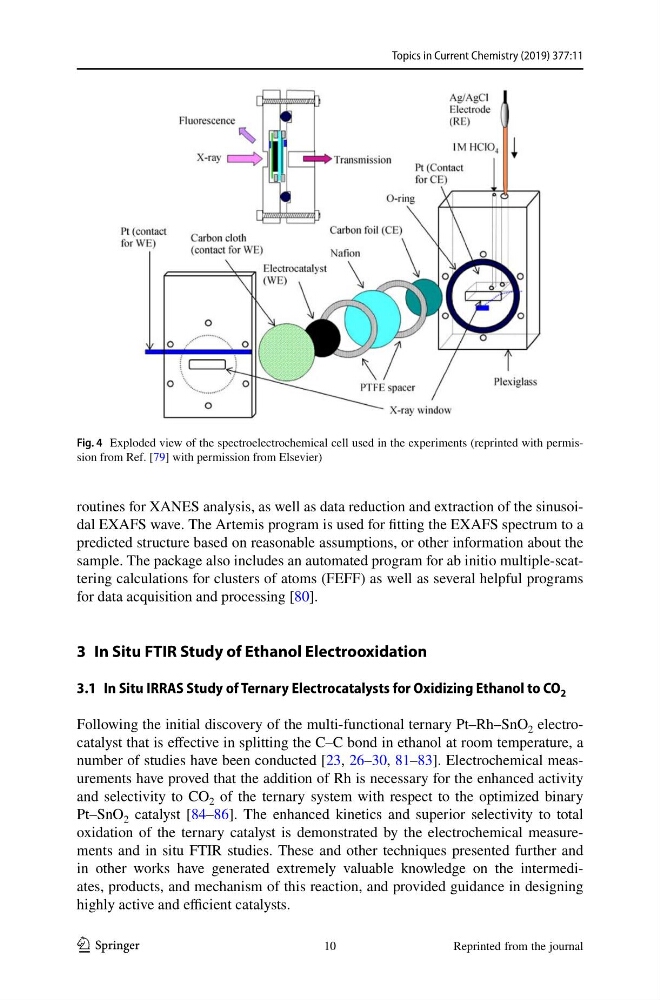
Fig. 4 Exploded view of the spectroelectrochemical cell used in the experiments (reprinted with permission from Ref. [79] with permission from Elsevier)
Reprinted from the journal
10
1 3
routines for XANES analysis, as well as data reduction and extraction of the sinusoidal EXAFS wave. The Artemis program is used for fitting the EXAFS spectrum to a
predicted structure based on reasonable assumptions, or other information about the
sample. The package also includes an automated program for ab initio multiple-scattering calculations for clusters of atoms (FEFF) as well as several helpful programs
for data acquisition and processing [80].
3 In Situ FTIR Study of Ethanol Electrooxidation
3.1 In Situ IRRAS Study of Ternary Electrocatalysts for Oxidizing Ethanol to CO 2
Following the initial discovery of the multi-functional ternary Pt–Rh–SnO 2 electrocatalyst that is effective in splitting the C–C bond in ethanol at room temperature, a
number of studies have been conducted [23, 26–30, 81–83]. Electrochemical measurements have proved that the addition of Rh is necessary for the enhanced activity
and selectivity to CO 2 of the ternary system with respect to the optimized binary
Pt–SnO 2 catalyst [84–86]. The enhanced kinetics and superior selectivity to total
oxidation of the ternary catalyst is demonstrated by the electrochemical measurements and in situ FTIR studies. These and other techniques presented further and
in other works have generated extremely valuable knowledge on the intermediates, products, and mechanism of this reaction, and provided guidance in designing
highly active and efficient catalysts.
Fig. 4 Exploded view of the spectroelectrochemical cell used in the experiments (reprinted with permission from Ref. [79] with permission from Elsevier)
Reprinted from the journal
10