

Topics in Current Chemistry (2018) 376:43
1 3
5 Emergence of Reductive Electrometabolic Pathways for N 2 and CO 2
Reduction
As a primary biproduct of agricultural waste and a promoter of algal blooms,
nitrate contamination in groundwater has led to rapidly growing environmental
concerns regarding agricultural waste runoff. Consequently, there is increasing
demand for techniques aimed at sustainable remediation of nitrate. To this end,
Vincent and coworkers have designed a hybrid electrochemical cascade to reduce
nitrate to ammonia [34]. Noble metal-catalyzed reduction of nitrate is slow under
neutral aqueous conditions, while electroenzymatic reduction of nitrate to nitrite
under the same conditions occurs rapidly, while the reverse is true for nitrite
reduction to ammonia. Therefore, Duca et al. combined these two catalytic motifs
to exploit the benefits of each to compensate for the drawbacks of the other.
Nitrate reductase from Escherichia (E.) coli was combined with Pt nanoparticles
on a carbon electrode to reduce nitrate to nitrite and nitrite to ammonia, respectively, in a sequential hybrid catalytic cascade [34]. This electrocatabolic nitrogen remediation pathway overcomes sluggish reduction rates exhibited by noble
metals at pH 7, thereby eliminating one of the limiting factors in electrocatalytic
denitrification. In addition to nitrate remediation, hybrid electrocatalytic cascades
have been employed in strategies to address other environmental problems, such
as CO 2 fixation.
The environmentally friendly reduction of CO 2 to into high-energy chemicals
remains perhaps the greatest challenge facing scientists. A recent report by Park and
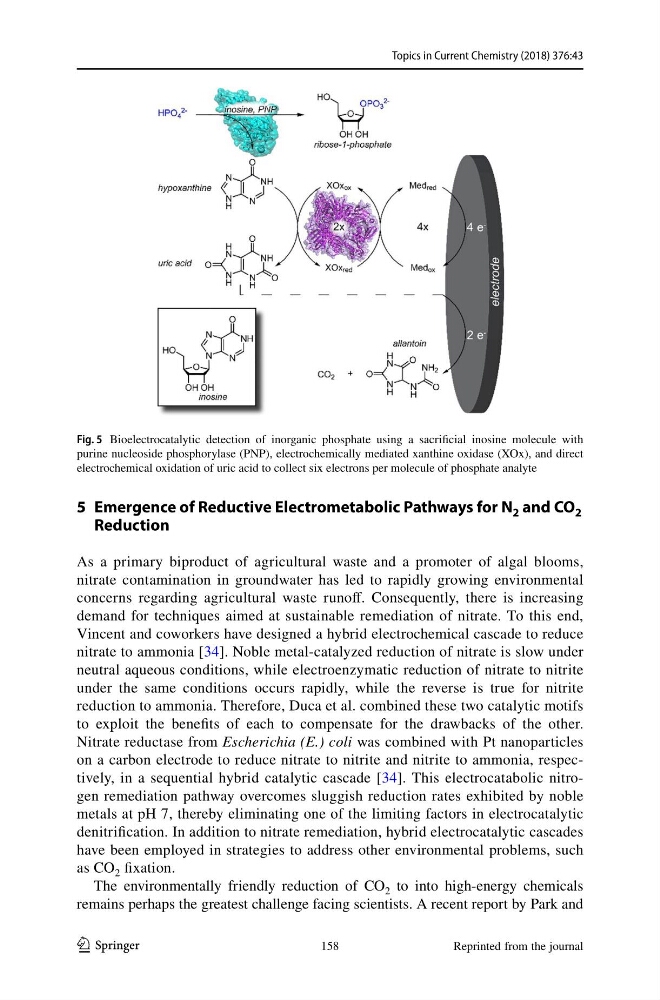
Fig. 5 Bioelectrocatalytic detection of inorganic phosphate using a sacrificial inosine molecule with
purine nucleoside phosphorylase (PNP), electrochemically mediated xanthine oxidase (XOx), and direct
electrochemical oxidation of uric acid to collect six electrons per molecule of phosphate analyte
Reprinted from the journal
158
1 3
5 Emergence of Reductive Electrometabolic Pathways for N 2 and CO 2
Reduction
As a primary biproduct of agricultural waste and a promoter of algal blooms,
nitrate contamination in groundwater has led to rapidly growing environmental
concerns regarding agricultural waste runoff. Consequently, there is increasing
demand for techniques aimed at sustainable remediation of nitrate. To this end,
Vincent and coworkers have designed a hybrid electrochemical cascade to reduce
nitrate to ammonia [34]. Noble metal-catalyzed reduction of nitrate is slow under
neutral aqueous conditions, while electroenzymatic reduction of nitrate to nitrite
under the same conditions occurs rapidly, while the reverse is true for nitrite
reduction to ammonia. Therefore, Duca et al. combined these two catalytic motifs
to exploit the benefits of each to compensate for the drawbacks of the other.
Nitrate reductase from Escherichia (E.) coli was combined with Pt nanoparticles
on a carbon electrode to reduce nitrate to nitrite and nitrite to ammonia, respectively, in a sequential hybrid catalytic cascade [34]. This electrocatabolic nitrogen remediation pathway overcomes sluggish reduction rates exhibited by noble
metals at pH 7, thereby eliminating one of the limiting factors in electrocatalytic
denitrification. In addition to nitrate remediation, hybrid electrocatalytic cascades
have been employed in strategies to address other environmental problems, such
as CO 2 fixation.
The environmentally friendly reduction of CO 2 to into high-energy chemicals
remains perhaps the greatest challenge facing scientists. A recent report by Park and
Fig. 5 Bioelectrocatalytic detection of inorganic phosphate using a sacrificial inosine molecule with
purine nucleoside phosphorylase (PNP), electrochemically mediated xanthine oxidase (XOx), and direct
electrochemical oxidation of uric acid to collect six electrons per molecule of phosphate analyte
Reprinted from the journal
158