

4.2 Propylene and Propane
The effective 8-ring pore diameters of many small-pore zeolites are not much
different from the size of propylene (C 3
¼ ) or propane (C 3 ). So small-pore zeolites
have received much attention for C 3
¼ /C 3 separation since the fine control of their
pore size can result in excellent separation performance. Indeed, many studies have
shown that C 3
¼ /C 3 separation is very sensitive to even small changes in the 8-ring
window size that are caused by variations in framework flexibility and composition
and in type of extraframework cations introduced. For example, the Rodrigues group
systematically investigated C 3
¼
/C 3 separation on Na-A, Ca-A, and Na-X and found
that at 303 K and 1.0 bar, only Na-A can preferentially adsorb C 3
¼ (1.9 mmol g
À1 )
and mostly exclude C 3 (<0.2 mmol g
À1 ), giving a high C 3
¼ /C 3 selectivity (>20)
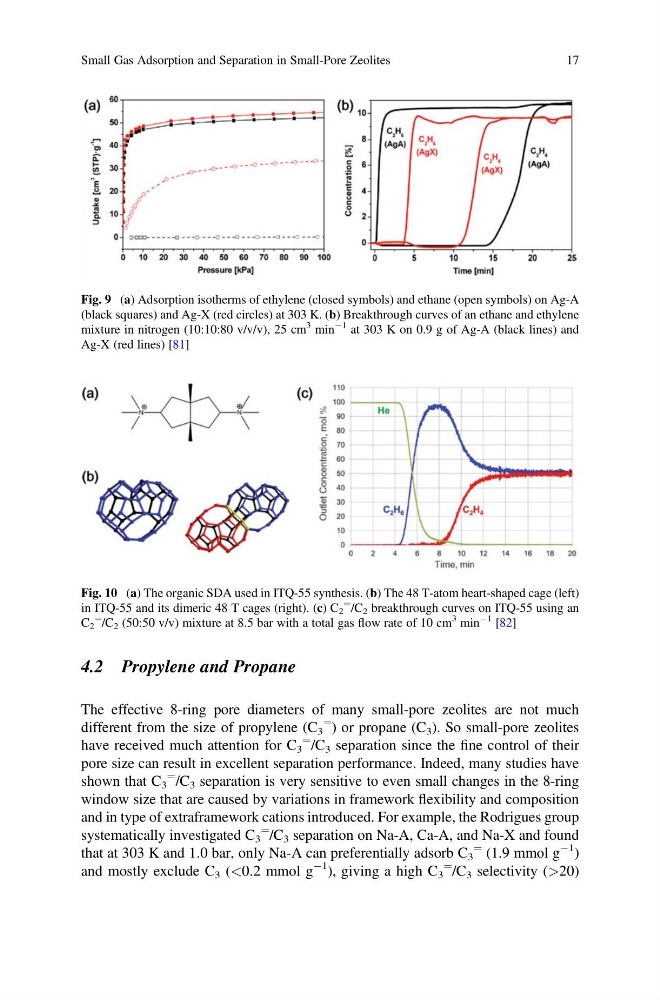
Fig. 10 (a) The organic SDA used in ITQ-55 synthesis. (b) The 48 T-atom heart-shaped cage (left)
in ITQ-55 and its dimeric 48 T cages (right). (c) C 2
¼ /C 2 breakthrough curves on ITQ-55 using an
C 2
¼
/C 2 (50:50 v/v) mixture at 8.5 bar with a total gas flow rate of 10 cm
3 min
À1 [82]
Fig. 9 (a) Adsorption isotherms of ethylene (closed symbols) and ethane (open symbols) on Ag-A
(black squares) and Ag-X (red circles) at 303 K. (b) Breakthrough curves of an ethane and ethylene
mixture in nitrogen (10:10:80 v/v/v), 25 cm
3 min
À1 at 303 K on 0.9 g of Ag-A (black lines) and
Ag-X (red lines) [81]
Small Gas Adsorption and Separation in Small-Pore Zeolites
17
The effective 8-ring pore diameters of many small-pore zeolites are not much
different from the size of propylene (C 3
¼ ) or propane (C 3 ). So small-pore zeolites
have received much attention for C 3
¼ /C 3 separation since the fine control of their
pore size can result in excellent separation performance. Indeed, many studies have
shown that C 3
¼ /C 3 separation is very sensitive to even small changes in the 8-ring
window size that are caused by variations in framework flexibility and composition
and in type of extraframework cations introduced. For example, the Rodrigues group
systematically investigated C 3
¼
/C 3 separation on Na-A, Ca-A, and Na-X and found
that at 303 K and 1.0 bar, only Na-A can preferentially adsorb C 3
¼ (1.9 mmol g
À1 )
and mostly exclude C 3 (<0.2 mmol g
À1 ), giving a high C 3
¼ /C 3 selectivity (>20)
Fig. 10 (a) The organic SDA used in ITQ-55 synthesis. (b) The 48 T-atom heart-shaped cage (left)
in ITQ-55 and its dimeric 48 T cages (right). (c) C 2
¼ /C 2 breakthrough curves on ITQ-55 using an
C 2
¼
/C 2 (50:50 v/v) mixture at 8.5 bar with a total gas flow rate of 10 cm
3 min
À1 [82]
Fig. 9 (a) Adsorption isotherms of ethylene (closed symbols) and ethane (open symbols) on Ag-A
(black squares) and Ag-X (red circles) at 303 K. (b) Breakthrough curves of an ethane and ethylene
mixture in nitrogen (10:10:80 v/v/v), 25 cm
3 min
À1 at 303 K on 0.9 g of Ag-A (black lines) and
Ag-X (red lines) [81]
Small Gas Adsorption and Separation in Small-Pore Zeolites
17