

pore window sizes resulting in a better agreement with experimental results. This
work highlights the use of appropriate pore blocking by taking into account the sizes
of the guest molecules and including the role of the framework flexibility. The
development of refined methods to account for the blocking of molecules with
noncircular cross-sections was also required [110]. The importance of blocking is
especially crucial for hydrogen [22] wherein the quantum nature of this molecule is
relevant when studying systems at very low temperature (25 K). It has been
demonstrated that merely combining Lennard-Jones and coulomb potentials is
insufficient to describe the interactions between such a small molecule and the
porous material that requires specific interactions [49, 111, 112]. At cryogenic
temperature, the quantum behavior of hydrogen is non-negligible in the nanoscale
confinement of zeolite pores, and the use of blockings affects the heat of adsorption
calculated using molecular simulation.
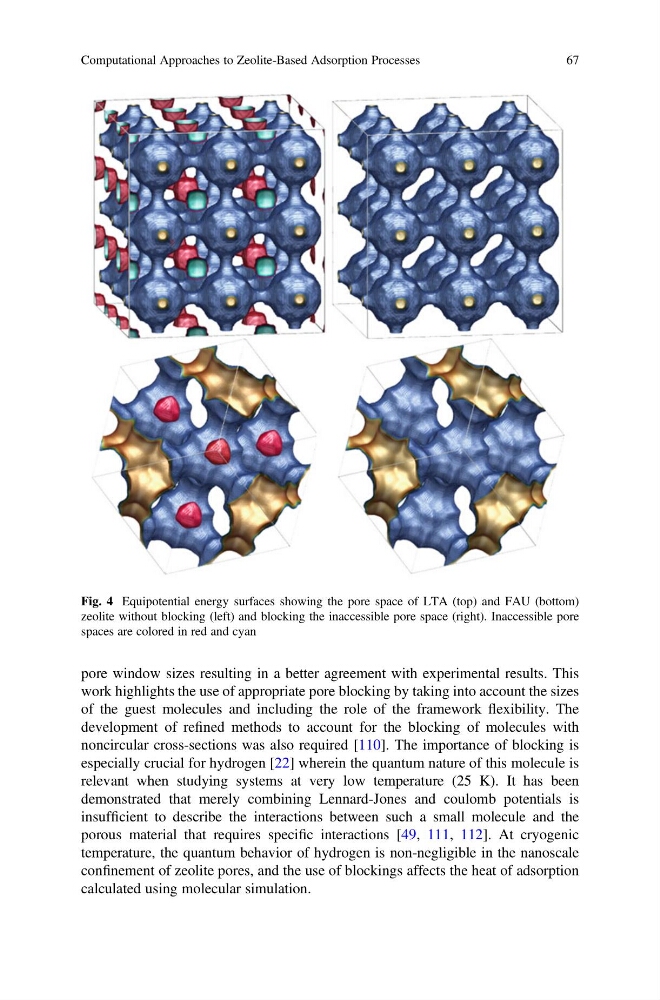
Fig. 4 Equipotential energy surfaces showing the pore space of LTA (top) and FAU (bottom)
zeolite without blocking (left) and blocking the inaccessible pore space (right). Inaccessible pore
spaces are colored in red and cyan
Computational Approaches to Zeolite-Based Adsorption Processes
67
work highlights the use of appropriate pore blocking by taking into account the sizes
of the guest molecules and including the role of the framework flexibility. The
development of refined methods to account for the blocking of molecules with
noncircular cross-sections was also required [110]. The importance of blocking is
especially crucial for hydrogen [22] wherein the quantum nature of this molecule is
relevant when studying systems at very low temperature (25 K). It has been
demonstrated that merely combining Lennard-Jones and coulomb potentials is
insufficient to describe the interactions between such a small molecule and the
porous material that requires specific interactions [49, 111, 112]. At cryogenic
temperature, the quantum behavior of hydrogen is non-negligible in the nanoscale
confinement of zeolite pores, and the use of blockings affects the heat of adsorption
calculated using molecular simulation.
Fig. 4 Equipotential energy surfaces showing the pore space of LTA (top) and FAU (bottom)
zeolite without blocking (left) and blocking the inaccessible pore space (right). Inaccessible pore
spaces are colored in red and cyan
Computational Approaches to Zeolite-Based Adsorption Processes
67