

of the gas mixture. Using zeolites (A or X) throughout the adsorbent bed would, of
course, allow adsorbing very selectively all the impurities, but the strong interaction
of zeolites with H 2 O and CO 2 would render regeneration via depressurization
difficult. A very strong and selective adsorption is only needed for the components
that would break through first at the column exit and pollute the H 2 raffinate, i.e.,
CH 4 and CO. Therefore, zeolites are only employed in the last adsorbent layer. This
is again a good example of how the adsorbent properties have to be adapted to the
requirements of the process.
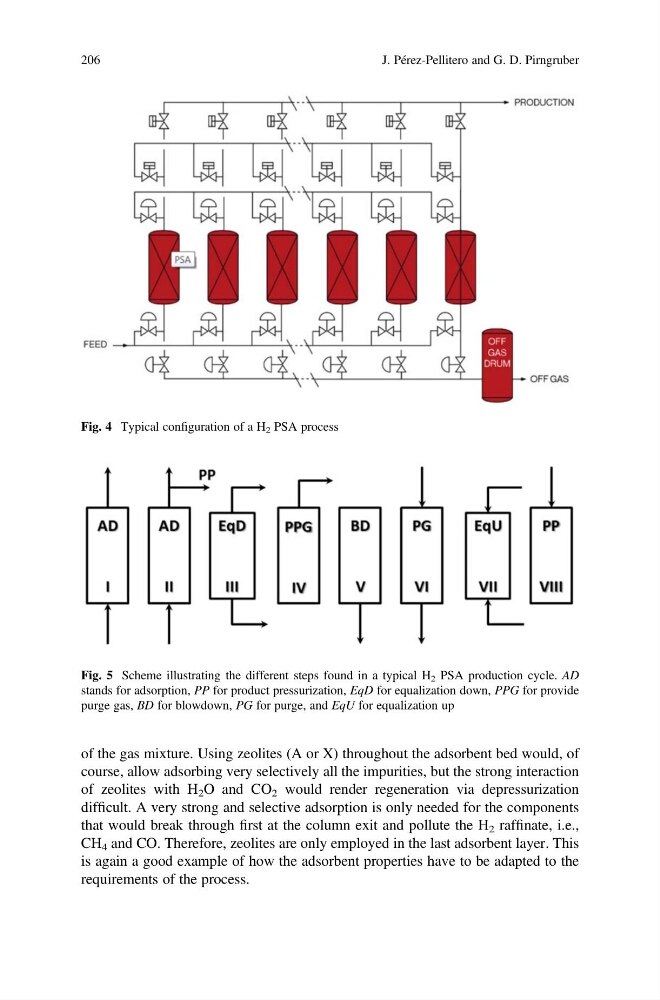
Fig. 5 Scheme illustrating the different steps found in a typical H 2 PSA production cycle. AD
stands for adsorption, PP for product pressurization, EqD for equalization down, PPG for provide
purge gas, BD for blowdown, PG for purge, and EqU for equalization up
Fig. 4 Typical configuration of a H 2 PSA process
206
J. Pérez-Pellitero and G. D. Pirngruber
course, allow adsorbing very selectively all the impurities, but the strong interaction
of zeolites with H 2 O and CO 2 would render regeneration via depressurization
difficult. A very strong and selective adsorption is only needed for the components
that would break through first at the column exit and pollute the H 2 raffinate, i.e.,
CH 4 and CO. Therefore, zeolites are only employed in the last adsorbent layer. This
is again a good example of how the adsorbent properties have to be adapted to the
requirements of the process.
Fig. 5 Scheme illustrating the different steps found in a typical H 2 PSA production cycle. AD
stands for adsorption, PP for product pressurization, EqD for equalization down, PPG for provide
purge gas, BD for blowdown, PG for purge, and EqU for equalization up
Fig. 4 Typical configuration of a H 2 PSA process
206
J. Pérez-Pellitero and G. D. Pirngruber