

4 Conclusions and Future Perspectives
Being one of the first synthetic all-silica zeolites, silicalite-1 is one of the most
studied materials for bioethanol and biobutanol recovery. Silicalite-1 and its analogue ZSM-5 show a high selectivity for these alcohols over many different other
fermentation components, such as organic acids and sugars and, most importantly,
water. The study of the adsorption mechanism of alcohols and water on this class of
materials has shown that for longer chain alcohols, the interaction with the aliphatic
chain and the framework is dominant, while the polar alcohol group plays a more
important role for smaller chain alcohols. Although it is a promising material for the
recovery of linear alcohols, steric effects lead to a lower affinity for branched chain
molecules, such as the platform chemical isobutanol. Experimental and molecular
modeling studies of the adsorption of alcohols and water inside the hydrophobic
pores of MFI zeolites have increased the insight in the effect of cations, defects, and
cluster formation on both equilibrium and diffusion.
While MFI zeolites have a channel-like pore topology, significant research efforts
have gone to cage-and-window-type materials, such as CHA and LTA zeolites.
CHA zeolites, with their smaller cage size, show a clear molecular cut-off in both
equilibrium and diffusion: alcohols up to ethanol can be adsorbed fast and in
substantial amounts, while higher chain alcohols diffuse slower or are unable to
nestle efficiently inside the cages. In contrast, the larger cage size of the all-silica
LTA zeolite ITQ-29 allows for the adsorption of the larger n-butanol. Experimental
and molecular modeling studies show the importance of hydrogen-bonding and
cluster formation in the adsorption mechanism as well as diffusion in this class of
zeolites. The experimental investigation of the diffusion of different alcohols on
SAPO-34 crystals has shown the importance of crystal diversity, which can lead to
misleading conclusions concerning the diffusion mechanism when using macroscopic techniques.
Looking at dynamic separation processes, some work has been published
containing dynamic breakthrough experiments with MFI zeolite materials. Two
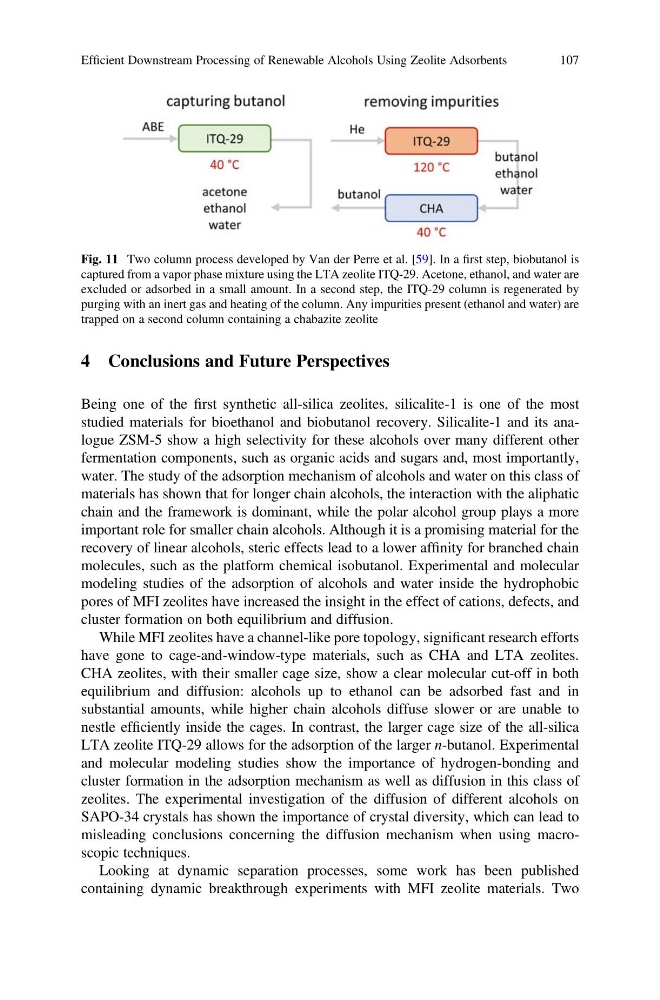
Fig. 11 Two column process developed by Van der Perre et al. [59]. In a first step, biobutanol is
captured from a vapor phase mixture using the LTA zeolite ITQ-29. Acetone, ethanol, and water are
excluded or adsorbed in a small amount. In a second step, the ITQ-29 column is regenerated by
purging with an inert gas and heating of the column. Any impurities present (ethanol and water) are
trapped on a second column containing a chabazite zeolite
Efficient Downstream Processing of Renewable Alcohols Using Zeolite Adsorbents
107
Being one of the first synthetic all-silica zeolites, silicalite-1 is one of the most
studied materials for bioethanol and biobutanol recovery. Silicalite-1 and its analogue ZSM-5 show a high selectivity for these alcohols over many different other
fermentation components, such as organic acids and sugars and, most importantly,
water. The study of the adsorption mechanism of alcohols and water on this class of
materials has shown that for longer chain alcohols, the interaction with the aliphatic
chain and the framework is dominant, while the polar alcohol group plays a more
important role for smaller chain alcohols. Although it is a promising material for the
recovery of linear alcohols, steric effects lead to a lower affinity for branched chain
molecules, such as the platform chemical isobutanol. Experimental and molecular
modeling studies of the adsorption of alcohols and water inside the hydrophobic
pores of MFI zeolites have increased the insight in the effect of cations, defects, and
cluster formation on both equilibrium and diffusion.
While MFI zeolites have a channel-like pore topology, significant research efforts
have gone to cage-and-window-type materials, such as CHA and LTA zeolites.
CHA zeolites, with their smaller cage size, show a clear molecular cut-off in both
equilibrium and diffusion: alcohols up to ethanol can be adsorbed fast and in
substantial amounts, while higher chain alcohols diffuse slower or are unable to
nestle efficiently inside the cages. In contrast, the larger cage size of the all-silica
LTA zeolite ITQ-29 allows for the adsorption of the larger n-butanol. Experimental
and molecular modeling studies show the importance of hydrogen-bonding and
cluster formation in the adsorption mechanism as well as diffusion in this class of
zeolites. The experimental investigation of the diffusion of different alcohols on
SAPO-34 crystals has shown the importance of crystal diversity, which can lead to
misleading conclusions concerning the diffusion mechanism when using macroscopic techniques.
Looking at dynamic separation processes, some work has been published
containing dynamic breakthrough experiments with MFI zeolite materials. Two
Fig. 11 Two column process developed by Van der Perre et al. [59]. In a first step, biobutanol is
captured from a vapor phase mixture using the LTA zeolite ITQ-29. Acetone, ethanol, and water are
excluded or adsorbed in a small amount. In a second step, the ITQ-29 column is regenerated by
purging with an inert gas and heating of the column. Any impurities present (ethanol and water) are
trapped on a second column containing a chabazite zeolite
Efficient Downstream Processing of Renewable Alcohols Using Zeolite Adsorbents
107