

82
N. D. Hairuddin et al.
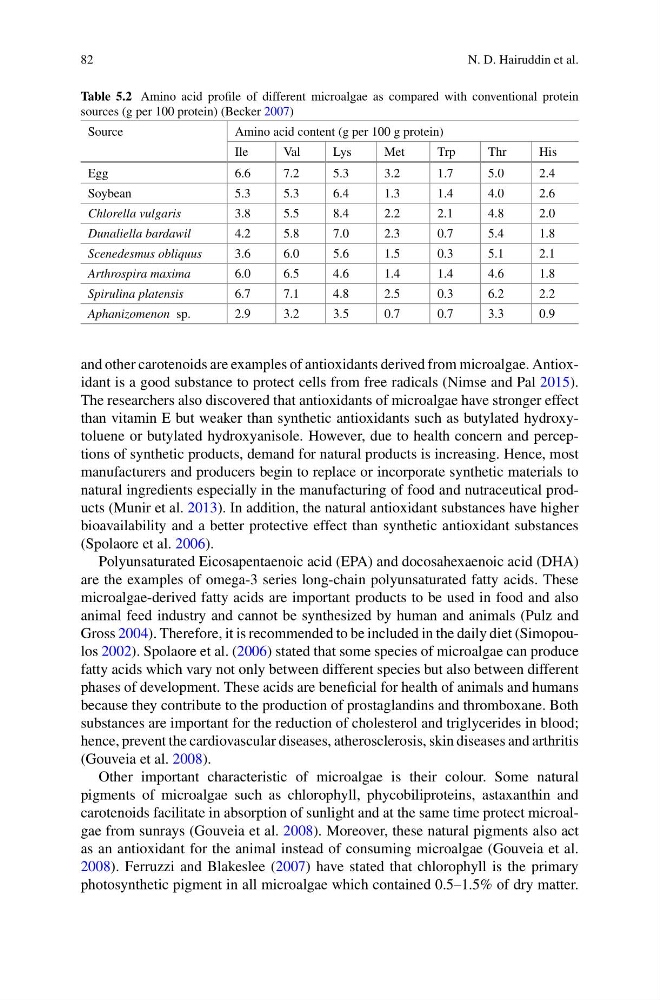
Table 5.2 Amino acid profile of different microalgae as compared with conventional protein
sources (g per 100 protein) (Becker 2007)
Source
Amino acid content (g per 100 g protein)
Ile
Val
Lys
Met
Trp
Thr
His
Egg
6.6
7.2
5.3
3.2
1.7
5.0
2.4
Soybean
5.3
5.3
6.4
1.3
1.4
4.0
2.6
Chlorella vulgaris
3.8
5.5
8.4
2.2
2.1
4.8
2.0
Dunaliella bardawil
4.2
5.8
7.0
2.3
0.7
5.4
1.8
Scenedesmus obliquus
3.6
6.0
5.6
1.5
0.3
5.1
2.1
Arthrospira maxima
6.0
6.5
4.6
1.4
1.4
4.6
1.8
Spirulina platensis
6.7
7.1
4.8
2.5
0.3
6.2
2.2
Aphanizomenon sp.
2.9
3.2
3.5
0.7
0.7
3.3
0.9
and other carotenoids are examples of antioxidants derived from microalgae. Antioxidant is a good substance to protect cells from free radicals (Nimse and Pal 2015).
The researchers also discovered that antioxidants of microalgae have stronger effect
than vitamin E but weaker than synthetic antioxidants such as butylated hydroxytoluene or butylated hydroxyanisole. However, due to health concern and perceptions of synthetic products, demand for natural products is increasing. Hence, most
manufacturers and producers begin to replace or incorporate synthetic materials to
natural ingredients especially in the manufacturing of food and nutraceutical products (Munir et al. 2013). In addition, the natural antioxidant substances have higher
bioavailability and a better protective effect than synthetic antioxidant substances
(Spolaore et al. 2006).
Polyunsaturated Eicosapentaenoic acid (EPA) and docosahexaenoic acid (DHA)
are the examples of omega-3 series long-chain polyunsaturated fatty acids. These
microalgae-derived fatty acids are important products to be used in food and also
animal feed industry and cannot be synthesized by human and animals (Pulz and
Gross 2004). Therefore, it is recommended to be included in the daily diet (Simopoulos 2002). Spolaore et al. (2006) stated that some species of microalgae can produce
fatty acids which vary not only between different species but also between different
phases of development. These acids are beneficial for health of animals and humans
because they contribute to the production of prostaglandins and thromboxane. Both
substances are important for the reduction of cholesterol and triglycerides in blood;
hence, prevent the cardiovascular diseases, atherosclerosis, skin diseases and arthritis
(Gouveia et al. 2008).
Other important characteristic of microalgae is their colour. Some natural
pigments of microalgae such as chlorophyll, phycobiliproteins, astaxanthin and
carotenoids facilitate in absorption of sunlight and at the same time protect microalgae from sunrays (Gouveia et al. 2008). Moreover, these natural pigments also act
as an antioxidant for the animal instead of consuming microalgae (Gouveia et al.
2008). Ferruzzi and Blakeslee (2007) have stated that chlorophyll is the primary
photosynthetic pigment in all microalgae which contained 0.5–1.5% of dry matter.
N. D. Hairuddin et al.
Table 5.2 Amino acid profile of different microalgae as compared with conventional protein
sources (g per 100 protein) (Becker 2007)
Source
Amino acid content (g per 100 g protein)
Ile
Val
Lys
Met
Trp
Thr
His
Egg
6.6
7.2
5.3
3.2
1.7
5.0
2.4
Soybean
5.3
5.3
6.4
1.3
1.4
4.0
2.6
Chlorella vulgaris
3.8
5.5
8.4
2.2
2.1
4.8
2.0
Dunaliella bardawil
4.2
5.8
7.0
2.3
0.7
5.4
1.8
Scenedesmus obliquus
3.6
6.0
5.6
1.5
0.3
5.1
2.1
Arthrospira maxima
6.0
6.5
4.6
1.4
1.4
4.6
1.8
Spirulina platensis
6.7
7.1
4.8
2.5
0.3
6.2
2.2
Aphanizomenon sp.
2.9
3.2
3.5
0.7
0.7
3.3
0.9
and other carotenoids are examples of antioxidants derived from microalgae. Antioxidant is a good substance to protect cells from free radicals (Nimse and Pal 2015).
The researchers also discovered that antioxidants of microalgae have stronger effect
than vitamin E but weaker than synthetic antioxidants such as butylated hydroxytoluene or butylated hydroxyanisole. However, due to health concern and perceptions of synthetic products, demand for natural products is increasing. Hence, most
manufacturers and producers begin to replace or incorporate synthetic materials to
natural ingredients especially in the manufacturing of food and nutraceutical products (Munir et al. 2013). In addition, the natural antioxidant substances have higher
bioavailability and a better protective effect than synthetic antioxidant substances
(Spolaore et al. 2006).
Polyunsaturated Eicosapentaenoic acid (EPA) and docosahexaenoic acid (DHA)
are the examples of omega-3 series long-chain polyunsaturated fatty acids. These
microalgae-derived fatty acids are important products to be used in food and also
animal feed industry and cannot be synthesized by human and animals (Pulz and
Gross 2004). Therefore, it is recommended to be included in the daily diet (Simopoulos 2002). Spolaore et al. (2006) stated that some species of microalgae can produce
fatty acids which vary not only between different species but also between different
phases of development. These acids are beneficial for health of animals and humans
because they contribute to the production of prostaglandins and thromboxane. Both
substances are important for the reduction of cholesterol and triglycerides in blood;
hence, prevent the cardiovascular diseases, atherosclerosis, skin diseases and arthritis
(Gouveia et al. 2008).
Other important characteristic of microalgae is their colour. Some natural
pigments of microalgae such as chlorophyll, phycobiliproteins, astaxanthin and
carotenoids facilitate in absorption of sunlight and at the same time protect microalgae from sunrays (Gouveia et al. 2008). Moreover, these natural pigments also act
as an antioxidant for the animal instead of consuming microalgae (Gouveia et al.
2008). Ferruzzi and Blakeslee (2007) have stated that chlorophyll is the primary
photosynthetic pigment in all microalgae which contained 0.5–1.5% of dry matter.