

4 Treatment Technologies of Fresh Market Wastewater
63
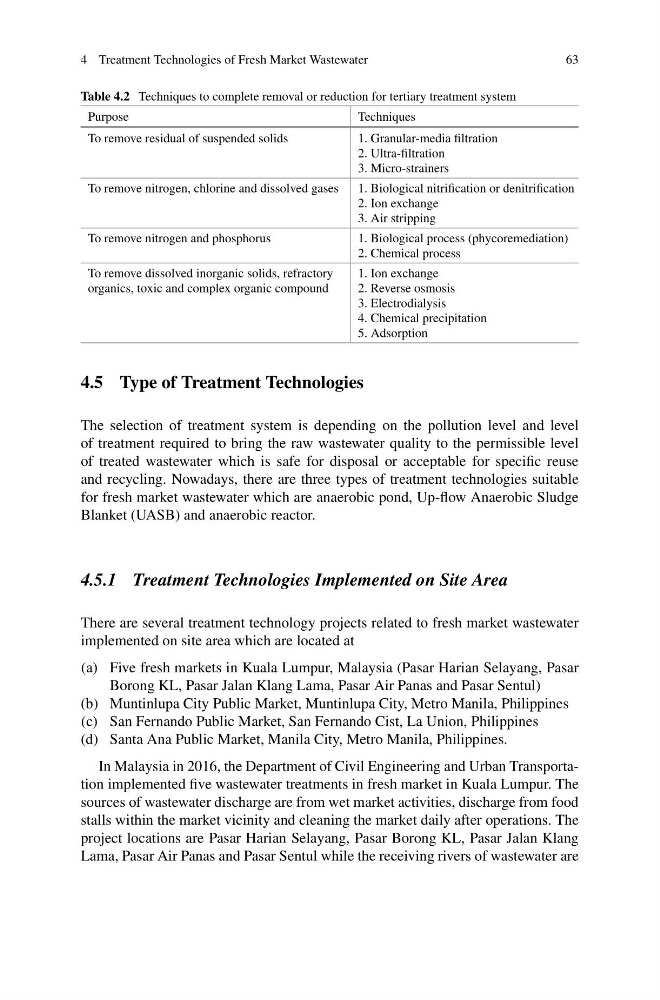
Table 4.2 Techniques to complete removal or reduction for tertiary treatment system
Purpose
Techniques
To remove residual of suspended solids
1. Granular-media filtration
2. Ultra-filtration
3. Micro-strainers
To remove nitrogen, chlorine and dissolved gases
1. Biological nitrification or denitrification
2. Ion exchange
3. Air stripping
To remove nitrogen and phosphorus
1. Biological process (phycoremediation)
2. Chemical process
To remove dissolved inorganic solids, refractory
organics, toxic and complex organic compound
1. Ion exchange
2. Reverse osmosis
3. Electrodialysis
4. Chemical precipitation
5. Adsorption
4.5 Type of Treatment Technologies
The selection of treatment system is depending on the pollution level and level
of treatment required to bring the raw wastewater quality to the permissible level
of treated wastewater which is safe for disposal or acceptable for specific reuse
and recycling. Nowadays, there are three types of treatment technologies suitable
for fresh market wastewater which are anaerobic pond, Up-flow Anaerobic Sludge
Blanket (UASB) and anaerobic reactor.
4.5.1 Treatment Technologies Implemented on Site Area
There are several treatment technology projects related to fresh market wastewater
implemented on site area which are located at
(a) Five fresh markets in Kuala Lumpur, Malaysia (Pasar Harian Selayang, Pasar
Borong KL, Pasar Jalan Klang Lama, Pasar Air Panas and Pasar Sentul)
(b) Muntinlupa City Public Market, Muntinlupa City, Metro Manila, Philippines
(c) San Fernando Public Market, San Fernando Cist, La Union, Philippines
(d) Santa Ana Public Market, Manila City, Metro Manila, Philippines.
In Malaysia in 2016, the Department of Civil Engineering and Urban Transportation implemented five wastewater treatments in fresh market in Kuala Lumpur. The
sources of wastewater discharge are from wet market activities, discharge from food
stalls within the market vicinity and cleaning the market daily after operations. The
project locations are Pasar Harian Selayang, Pasar Borong KL, Pasar Jalan Klang
Lama, Pasar Air Panas and Pasar Sentul while the receiving rivers of wastewater are
63
Table 4.2 Techniques to complete removal or reduction for tertiary treatment system
Purpose
Techniques
To remove residual of suspended solids
1. Granular-media filtration
2. Ultra-filtration
3. Micro-strainers
To remove nitrogen, chlorine and dissolved gases
1. Biological nitrification or denitrification
2. Ion exchange
3. Air stripping
To remove nitrogen and phosphorus
1. Biological process (phycoremediation)
2. Chemical process
To remove dissolved inorganic solids, refractory
organics, toxic and complex organic compound
1. Ion exchange
2. Reverse osmosis
3. Electrodialysis
4. Chemical precipitation
5. Adsorption
4.5 Type of Treatment Technologies
The selection of treatment system is depending on the pollution level and level
of treatment required to bring the raw wastewater quality to the permissible level
of treated wastewater which is safe for disposal or acceptable for specific reuse
and recycling. Nowadays, there are three types of treatment technologies suitable
for fresh market wastewater which are anaerobic pond, Up-flow Anaerobic Sludge
Blanket (UASB) and anaerobic reactor.
4.5.1 Treatment Technologies Implemented on Site Area
There are several treatment technology projects related to fresh market wastewater
implemented on site area which are located at
(a) Five fresh markets in Kuala Lumpur, Malaysia (Pasar Harian Selayang, Pasar
Borong KL, Pasar Jalan Klang Lama, Pasar Air Panas and Pasar Sentul)
(b) Muntinlupa City Public Market, Muntinlupa City, Metro Manila, Philippines
(c) San Fernando Public Market, San Fernando Cist, La Union, Philippines
(d) Santa Ana Public Market, Manila City, Metro Manila, Philippines.
In Malaysia in 2016, the Department of Civil Engineering and Urban Transportation implemented five wastewater treatments in fresh market in Kuala Lumpur. The
sources of wastewater discharge are from wet market activities, discharge from food
stalls within the market vicinity and cleaning the market daily after operations. The
project locations are Pasar Harian Selayang, Pasar Borong KL, Pasar Jalan Klang
Lama, Pasar Air Panas and Pasar Sentul while the receiving rivers of wastewater are