

24
M. Al-Sahari et al.
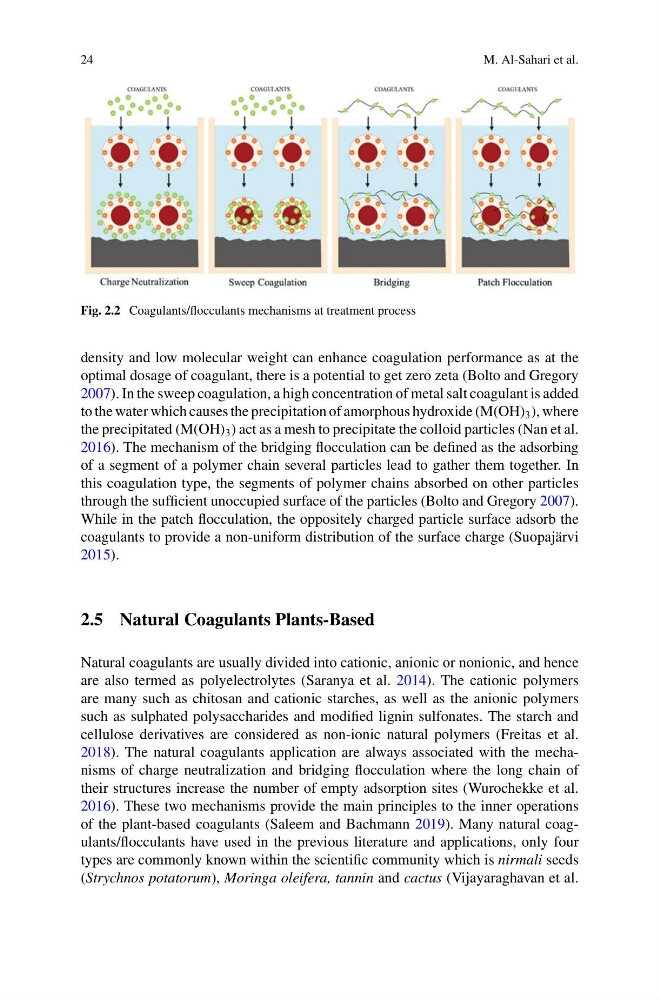
Fig. 2.2 Coagulants/flocculants mechanisms at treatment process
density and low molecular weight can enhance coagulation performance as at the
optimal dosage of coagulant, there is a potential to get zero zeta (Bolto and Gregory
2007). In the sweep coagulation, a high concentration of metal salt coagulant is added
to the water which causes the precipitation of amorphous hydroxide (M(OH) 3 ), where
the precipitated (M(OH) 3 ) act as a mesh to precipitate the colloid particles (Nan et al.
2016). The mechanism of the bridging flocculation can be defined as the adsorbing
of a segment of a polymer chain several particles lead to gather them together. In
this coagulation type, the segments of polymer chains absorbed on other particles
through the sufficient unoccupied surface of the particles (Bolto and Gregory 2007).
While in the patch flocculation, the oppositely charged particle surface adsorb the
coagulants to provide a non-uniform distribution of the surface charge (Suopajärvi
2015).
2.5 Natural Coagulants Plants-Based
Natural coagulants are usually divided into cationic, anionic or nonionic, and hence
are also termed as polyelectrolytes (Saranya et al. 2014). The cationic polymers
are many such as chitosan and cationic starches, as well as the anionic polymers
such as sulphated polysaccharides and modified lignin sulfonates. The starch and
cellulose derivatives are considered as non-ionic natural polymers (Freitas et al.
2018). The natural coagulants application are always associated with the mechanisms of charge neutralization and bridging flocculation where the long chain of
their structures increase the number of empty adsorption sites (Wurochekke et al.
2016). These two mechanisms provide the main principles to the inner operations
of the plant-based coagulants (Saleem and Bachmann 2019). Many natural coagulants/flocculants have used in the previous literature and applications, only four
types are commonly known within the scientific community which is nirmali seeds
(Strychnos potatorum), Moringa oleifera, tannin and cactus (Vijayaraghavan et al.
M. Al-Sahari et al.
Fig. 2.2 Coagulants/flocculants mechanisms at treatment process
density and low molecular weight can enhance coagulation performance as at the
optimal dosage of coagulant, there is a potential to get zero zeta (Bolto and Gregory
2007). In the sweep coagulation, a high concentration of metal salt coagulant is added
to the water which causes the precipitation of amorphous hydroxide (M(OH) 3 ), where
the precipitated (M(OH) 3 ) act as a mesh to precipitate the colloid particles (Nan et al.
2016). The mechanism of the bridging flocculation can be defined as the adsorbing
of a segment of a polymer chain several particles lead to gather them together. In
this coagulation type, the segments of polymer chains absorbed on other particles
through the sufficient unoccupied surface of the particles (Bolto and Gregory 2007).
While in the patch flocculation, the oppositely charged particle surface adsorb the
coagulants to provide a non-uniform distribution of the surface charge (Suopajärvi
2015).
2.5 Natural Coagulants Plants-Based
Natural coagulants are usually divided into cationic, anionic or nonionic, and hence
are also termed as polyelectrolytes (Saranya et al. 2014). The cationic polymers
are many such as chitosan and cationic starches, as well as the anionic polymers
such as sulphated polysaccharides and modified lignin sulfonates. The starch and
cellulose derivatives are considered as non-ionic natural polymers (Freitas et al.
2018). The natural coagulants application are always associated with the mechanisms of charge neutralization and bridging flocculation where the long chain of
their structures increase the number of empty adsorption sites (Wurochekke et al.
2016). These two mechanisms provide the main principles to the inner operations
of the plant-based coagulants (Saleem and Bachmann 2019). Many natural coagulants/flocculants have used in the previous literature and applications, only four
types are commonly known within the scientific community which is nirmali seeds
(Strychnos potatorum), Moringa oleifera, tannin and cactus (Vijayaraghavan et al.