

78
3 The Reactivity of Nitrile Imines
h
PhH
rt, 3 h
A = 27 %
B = 6 %
C = 4 %
N
N
N
N
Me
Ph
N
N
N
Me
Ph
Ph
N
N
N
N
Ph
Ph
Me
Me
N
N
N
Me
Ph
Ph
+
+
A
B
C
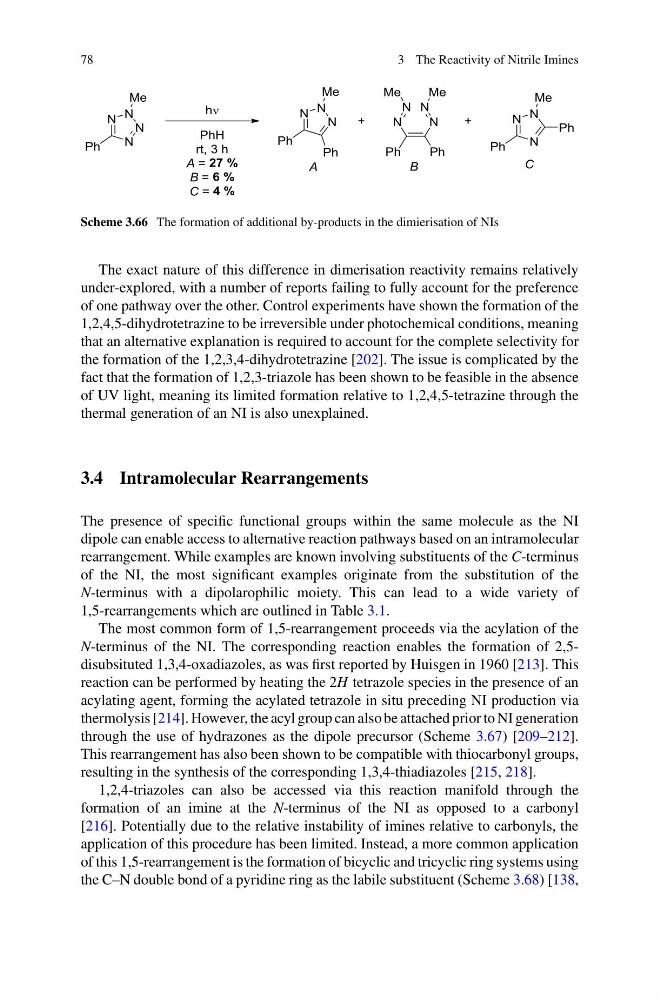
Scheme 3.66 The formation of additional by-products in the dimierisation of NIs
The exact nature of this difference in dimerisation reactivity remains relatively
under-explored, with a number of reports failing to fully account for the preference
of one pathway over the other. Control experiments have shown the formation of the
1,2,4,5-dihydrotetrazine to be irreversible under photochemical conditions, meaning
that an alternative explanation is required to account for the complete selectivity for
the formation of the 1,2,3,4-dihydrotetrazine [202]. The issue is complicated by the
fact that the formation of 1,2,3-triazole has been shown to be feasible in the absence
of UV light, meaning its limited formation relative to 1,2,4,5-tetrazine through the
thermal generation of an NI is also unexplained.
3.4 Intramolecular Rearrangements
The presence of specific functional groups within the same molecule as the NI
dipole can enable access to alternative reaction pathways based on an intramolecular
rearrangement. While examples are known involving substituents of the C-terminus
of the NI, the most significant examples originate from the substitution of the
N-terminus with a dipolarophilic moiety. This can lead to a wide variety of
1,5-rearrangements which are outlined in Table 3.1.
The most common form of 1,5-rearrangement proceeds via the acylation of the
N-terminus of the NI. The corresponding reaction enables the formation of 2,5disubsituted 1,3,4-oxadiazoles, as was first reported by Huisgen in 1960 [213]. This
reaction can be performed by heating the 2H tetrazole species in the presence of an
acylating agent, forming the acylated tetrazole in situ preceding NI production via
thermolysis [214]. However, the acyl group can also be attached prior to NI generation
through the use of hydrazones as the dipole precursor (Scheme 3.67) [209–212].
This rearrangement has also been shown to be compatible with thiocarbonyl groups,
resulting in the synthesis of the corresponding 1,3,4-thiadiazoles [215, 218].
1,2,4-triazoles can also be accessed via this reaction manifold through the
formation of an imine at the N-terminus of the NI as opposed to a carbonyl
[216]. Potentially due to the relative instability of imines relative to carbonyls, the
application of this procedure has been limited. Instead, a more common application
of this 1,5-rearrangement is the formation of bicyclic and tricyclic ring systems using
the C–N double bond of a pyridine ring as the labile substituent (Scheme 3.68) [138,
3 The Reactivity of Nitrile Imines
h
PhH
rt, 3 h
A = 27 %
B = 6 %
C = 4 %
N
N
N
N
Me
Ph
N
N
N
Me
Ph
Ph
N
N
N
N
Ph
Ph
Me
Me
N
N
N
Me
Ph
Ph
+
+
A
B
C
Scheme 3.66 The formation of additional by-products in the dimierisation of NIs
The exact nature of this difference in dimerisation reactivity remains relatively
under-explored, with a number of reports failing to fully account for the preference
of one pathway over the other. Control experiments have shown the formation of the
1,2,4,5-dihydrotetrazine to be irreversible under photochemical conditions, meaning
that an alternative explanation is required to account for the complete selectivity for
the formation of the 1,2,3,4-dihydrotetrazine [202]. The issue is complicated by the
fact that the formation of 1,2,3-triazole has been shown to be feasible in the absence
of UV light, meaning its limited formation relative to 1,2,4,5-tetrazine through the
thermal generation of an NI is also unexplained.
3.4 Intramolecular Rearrangements
The presence of specific functional groups within the same molecule as the NI
dipole can enable access to alternative reaction pathways based on an intramolecular
rearrangement. While examples are known involving substituents of the C-terminus
of the NI, the most significant examples originate from the substitution of the
N-terminus with a dipolarophilic moiety. This can lead to a wide variety of
1,5-rearrangements which are outlined in Table 3.1.
The most common form of 1,5-rearrangement proceeds via the acylation of the
N-terminus of the NI. The corresponding reaction enables the formation of 2,5disubsituted 1,3,4-oxadiazoles, as was first reported by Huisgen in 1960 [213]. This
reaction can be performed by heating the 2H tetrazole species in the presence of an
acylating agent, forming the acylated tetrazole in situ preceding NI production via
thermolysis [214]. However, the acyl group can also be attached prior to NI generation
through the use of hydrazones as the dipole precursor (Scheme 3.67) [209–212].
This rearrangement has also been shown to be compatible with thiocarbonyl groups,
resulting in the synthesis of the corresponding 1,3,4-thiadiazoles [215, 218].
1,2,4-triazoles can also be accessed via this reaction manifold through the
formation of an imine at the N-terminus of the NI as opposed to a carbonyl
[216]. Potentially due to the relative instability of imines relative to carbonyls, the
application of this procedure has been limited. Instead, a more common application
of this 1,5-rearrangement is the formation of bicyclic and tricyclic ring systems using
the C–N double bond of a pyridine ring as the labile substituent (Scheme 3.68) [138,