

2.5 Sydnones
29
N
N O
O
N
N O
O
N
N O
O
N O
N
O
N O
N
O
+
-CO 2
HN N
HN N
H
HN N
HN N
H
+
R
1
R
2
R
1
R
2
R
2
R
1
R
1
R
1
R
1
R
1
R
2
R
2
R
2
R
2
R
1
R
1
R
2
R
2
R
3
R
3
R
3
R
3
R
3
R
3
R
3
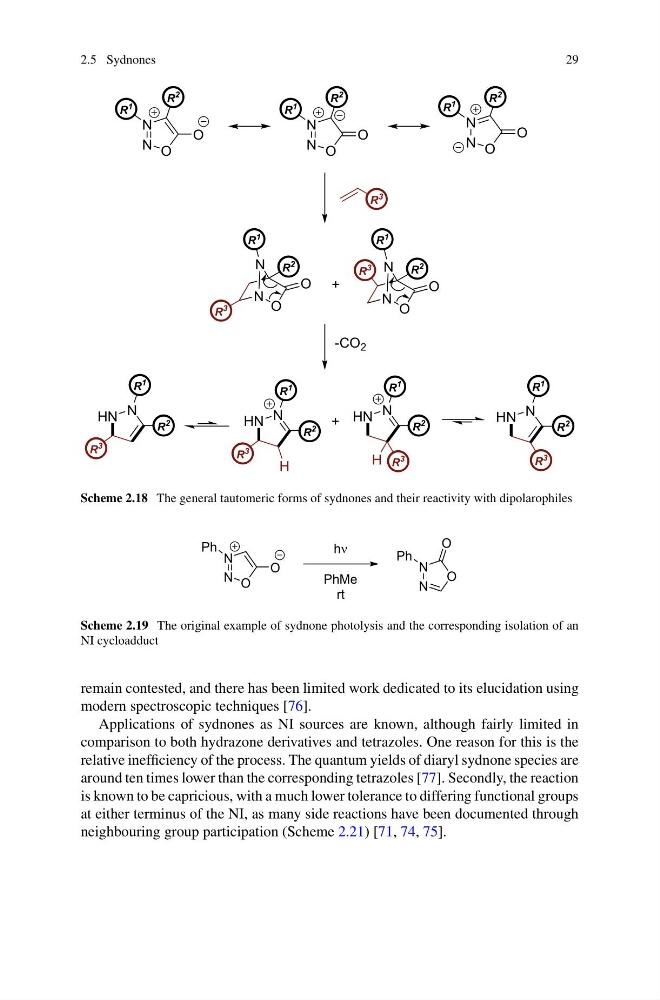
Scheme 2.18 The general tautomeric forms of sydnones and their reactivity with dipolarophiles
N
N O
O
Ph
h
PhMe
rt
N
N
Ph
O
O
Scheme 2.19 The original example of sydnone photolysis and the corresponding isolation of an
NI cycloadduct
remain contested, and there has been limited work dedicated to its elucidation using
modern spectroscopic techniques [76].
Applications of sydnones as NI sources are known, although fairly limited in
comparison to both hydrazone derivatives and tetrazoles. One reason for this is the
relative inefficiency of the process. The quantum yields of diaryl sydnone species are
around ten times lower than the corresponding tetrazoles [77]. Secondly, the reaction
is known to be capricious, with a much lower tolerance to differing functional groups
at either terminus of the NI, as many side reactions have been documented through
neighbouring group participation (Scheme 2.21) [71, 74, 75].
29
N
N O
O
N
N O
O
N
N O
O
N O
N
O
N O
N
O
+
-CO 2
HN N
HN N
H
HN N
HN N
H
+
R
1
R
2
R
1
R
2
R
2
R
1
R
1
R
1
R
1
R
1
R
2
R
2
R
2
R
2
R
1
R
1
R
2
R
2
R
3
R
3
R
3
R
3
R
3
R
3
R
3
Scheme 2.18 The general tautomeric forms of sydnones and their reactivity with dipolarophiles
N
N O
O
Ph
h
PhMe
rt
N
N
Ph
O
O
Scheme 2.19 The original example of sydnone photolysis and the corresponding isolation of an
NI cycloadduct
remain contested, and there has been limited work dedicated to its elucidation using
modern spectroscopic techniques [76].
Applications of sydnones as NI sources are known, although fairly limited in
comparison to both hydrazone derivatives and tetrazoles. One reason for this is the
relative inefficiency of the process. The quantum yields of diaryl sydnone species are
around ten times lower than the corresponding tetrazoles [77]. Secondly, the reaction
is known to be capricious, with a much lower tolerance to differing functional groups
at either terminus of the NI, as many side reactions have been documented through
neighbouring group participation (Scheme 2.21) [71, 74, 75].