

14
2 The Generation of Nitrile Imine Derivatives
X
N
NH
N
N
base
baseH
+ X
-
+
+
R
2
R
1
R
1
R
2
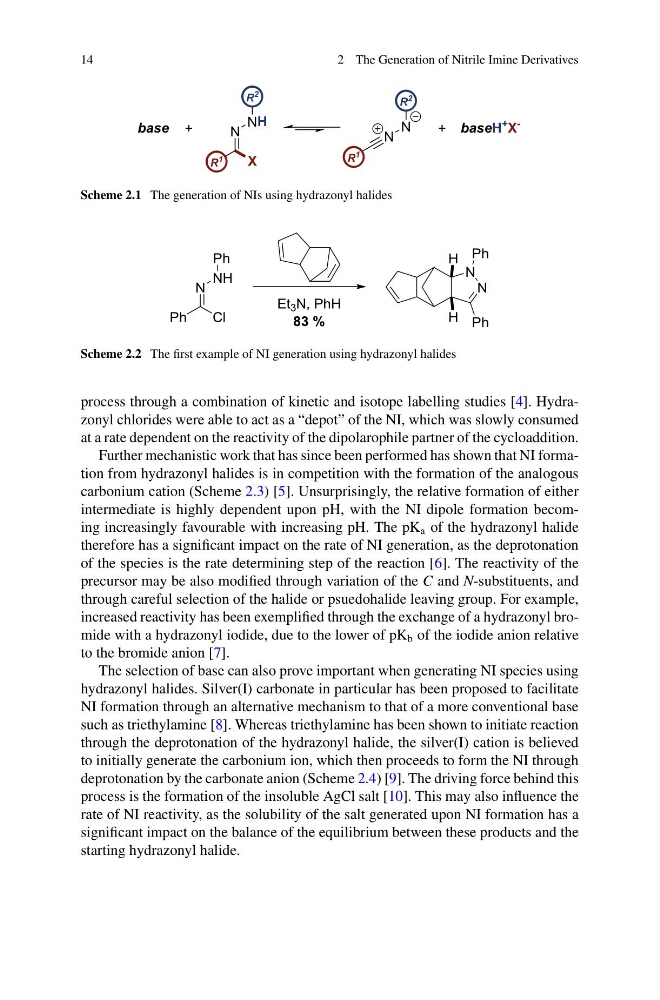
Scheme 2.1 The generation of NIs using hydrazonyl halides
Ph
Cl
N
NH
Ph
Ph
N
N
Ph
Et 3 N, PhH
83 %
H
H
Scheme 2.2 The first example of NI generation using hydrazonyl halides
process through a combination of kinetic and isotope labelling studies [4]. Hydrazonyl chlorides were able to act as a “depot” of the NI, which was slowly consumed
at a rate dependent on the reactivity of the dipolarophile partner of the cycloaddition.
Further mechanistic work that has since been performed has shown that NI formation from hydrazonyl halides is in competition with the formation of the analogous
carbonium cation (Scheme 2.3) [5]. Unsurprisingly, the relative formation of either
intermediate is highly dependent upon pH, with the NI dipole formation becoming increasingly favourable with increasing pH. The pK a of the hydrazonyl halide
therefore has a significant impact on the rate of NI generation, as the deprotonation
of the species is the rate determining step of the reaction [6]. The reactivity of the
precursor may be also modified through variation of the C and N-substituents, and
through careful selection of the halide or psuedohalide leaving group. For example,
increased reactivity has been exemplified through the exchange of a hydrazonyl bromide with a hydrazonyl iodide, due to the lower of pK b of the iodide anion relative
to the bromide anion [7].
The selection of base can also prove important when generating NI species using
hydrazonyl halides. Silver(I) carbonate in particular has been proposed to facilitate
NI formation through an alternative mechanism to that of a more conventional base
such as triethylamine [8]. Whereas triethylamine has been shown to initiate reaction
through the deprotonation of the hydrazonyl halide, the silver(I) cation is believed
to initially generate the carbonium ion, which then proceeds to form the NI through
deprotonation by the carbonate anion (Scheme 2.4) [9]. The driving force behind this
process is the formation of the insoluble AgCl salt [10]. This may also influence the
rate of NI reactivity, as the solubility of the salt generated upon NI formation has a
significant impact on the balance of the equilibrium between these products and the
starting hydrazonyl halide.
2 The Generation of Nitrile Imine Derivatives
X
N
NH
N
N
base
baseH
+ X
-
+
+
R
2
R
1
R
1
R
2
Scheme 2.1 The generation of NIs using hydrazonyl halides
Ph
Cl
N
NH
Ph
Ph
N
N
Ph
Et 3 N, PhH
83 %
H
H
Scheme 2.2 The first example of NI generation using hydrazonyl halides
process through a combination of kinetic and isotope labelling studies [4]. Hydrazonyl chlorides were able to act as a “depot” of the NI, which was slowly consumed
at a rate dependent on the reactivity of the dipolarophile partner of the cycloaddition.
Further mechanistic work that has since been performed has shown that NI formation from hydrazonyl halides is in competition with the formation of the analogous
carbonium cation (Scheme 2.3) [5]. Unsurprisingly, the relative formation of either
intermediate is highly dependent upon pH, with the NI dipole formation becoming increasingly favourable with increasing pH. The pK a of the hydrazonyl halide
therefore has a significant impact on the rate of NI generation, as the deprotonation
of the species is the rate determining step of the reaction [6]. The reactivity of the
precursor may be also modified through variation of the C and N-substituents, and
through careful selection of the halide or psuedohalide leaving group. For example,
increased reactivity has been exemplified through the exchange of a hydrazonyl bromide with a hydrazonyl iodide, due to the lower of pK b of the iodide anion relative
to the bromide anion [7].
The selection of base can also prove important when generating NI species using
hydrazonyl halides. Silver(I) carbonate in particular has been proposed to facilitate
NI formation through an alternative mechanism to that of a more conventional base
such as triethylamine [8]. Whereas triethylamine has been shown to initiate reaction
through the deprotonation of the hydrazonyl halide, the silver(I) cation is believed
to initially generate the carbonium ion, which then proceeds to form the NI through
deprotonation by the carbonate anion (Scheme 2.4) [9]. The driving force behind this
process is the formation of the insoluble AgCl salt [10]. This may also influence the
rate of NI reactivity, as the solubility of the salt generated upon NI formation has a
significant impact on the balance of the equilibrium between these products and the
starting hydrazonyl halide.