

108
4 Applications of Nitrile Imine Derivatives
O
N
F
F
O 2 S
N
CF 3
F
NH
TsHN
N
F
F
O 2 S
N
CF 3
F
N NTs
Tf 2 O
2,6t Bu-4-Me-Py, DCM
-15
o C, 2 h
24 %
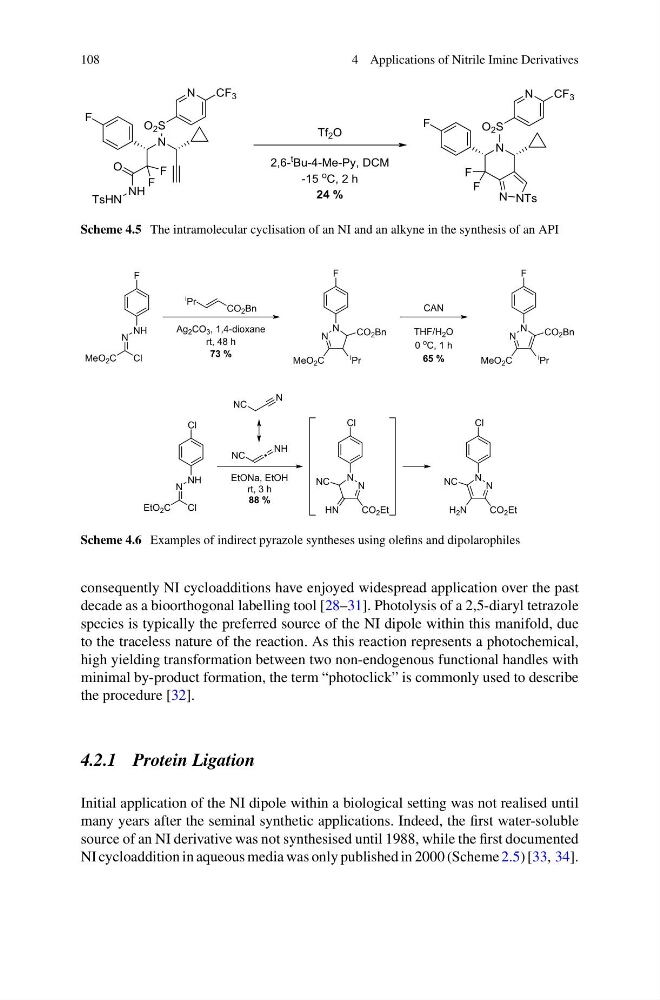
Scheme 4.5 The intramolecular cyclisation of an NI and an alkyne in the synthesis of an API
Ag 2 CO 3 , 1,4-dioxane
rt, 48 h
73 %
MeO 2 C
N
Cl
NH
F
MeO 2 C
N
N
F
i Pr
CO 2 Bn
i
Pr
CO 2 Bn
EtONa, EtOH
rt, 3 h
88 %
EtO 2 C
N
Cl
NH
Cl
NC
N
•
NC
NH
CO 2 Et
N
N
Cl
NC
HN
CO 2 Et
N
N
Cl
NC
H 2 N
THF/H 2 O
0
o C, 1 h
65 %
MeO 2 C
N
N
F
i Pr
CO 2 Bn
CAN
Scheme 4.6 Examples of indirect pyrazole syntheses using olefins and dipolarophiles
consequently NI cycloadditions have enjoyed widespread application over the past
decade as a bioorthogonal labelling tool [28–31]. Photolysis of a 2,5-diaryl tetrazole
species is typically the preferred source of the NI dipole within this manifold, due
to the traceless nature of the reaction. As this reaction represents a photochemical,
high yielding transformation between two non-endogenous functional handles with
minimal by-product formation, the term “photoclick” is commonly used to describe
the procedure [32].
4.2.1 Protein Ligation
Initial application of the NI dipole within a biological setting was not realised until
many years after the seminal synthetic applications. Indeed, the first water-soluble
source of an NI derivative was not synthesised until 1988, while the first documented
NI cycloaddition in aqueous media was only published in 2000 (Scheme 2.5) [33, 34].
4 Applications of Nitrile Imine Derivatives
O
N
F
F
O 2 S
N
CF 3
F
NH
TsHN
N
F
F
O 2 S
N
CF 3
F
N NTs
Tf 2 O
2,6t Bu-4-Me-Py, DCM
-15
o C, 2 h
24 %
Scheme 4.5 The intramolecular cyclisation of an NI and an alkyne in the synthesis of an API
Ag 2 CO 3 , 1,4-dioxane
rt, 48 h
73 %
MeO 2 C
N
Cl
NH
F
MeO 2 C
N
N
F
i Pr
CO 2 Bn
i
Pr
CO 2 Bn
EtONa, EtOH
rt, 3 h
88 %
EtO 2 C
N
Cl
NH
Cl
NC
N
•
NC
NH
CO 2 Et
N
N
Cl
NC
HN
CO 2 Et
N
N
Cl
NC
H 2 N
THF/H 2 O
0
o C, 1 h
65 %
MeO 2 C
N
N
F
i Pr
CO 2 Bn
CAN
Scheme 4.6 Examples of indirect pyrazole syntheses using olefins and dipolarophiles
consequently NI cycloadditions have enjoyed widespread application over the past
decade as a bioorthogonal labelling tool [28–31]. Photolysis of a 2,5-diaryl tetrazole
species is typically the preferred source of the NI dipole within this manifold, due
to the traceless nature of the reaction. As this reaction represents a photochemical,
high yielding transformation between two non-endogenous functional handles with
minimal by-product formation, the term “photoclick” is commonly used to describe
the procedure [32].
4.2.1 Protein Ligation
Initial application of the NI dipole within a biological setting was not realised until
many years after the seminal synthetic applications. Indeed, the first water-soluble
source of an NI derivative was not synthesised until 1988, while the first documented
NI cycloaddition in aqueous media was only published in 2000 (Scheme 2.5) [33, 34].